Modern Dentistry, Timeless Smiles.

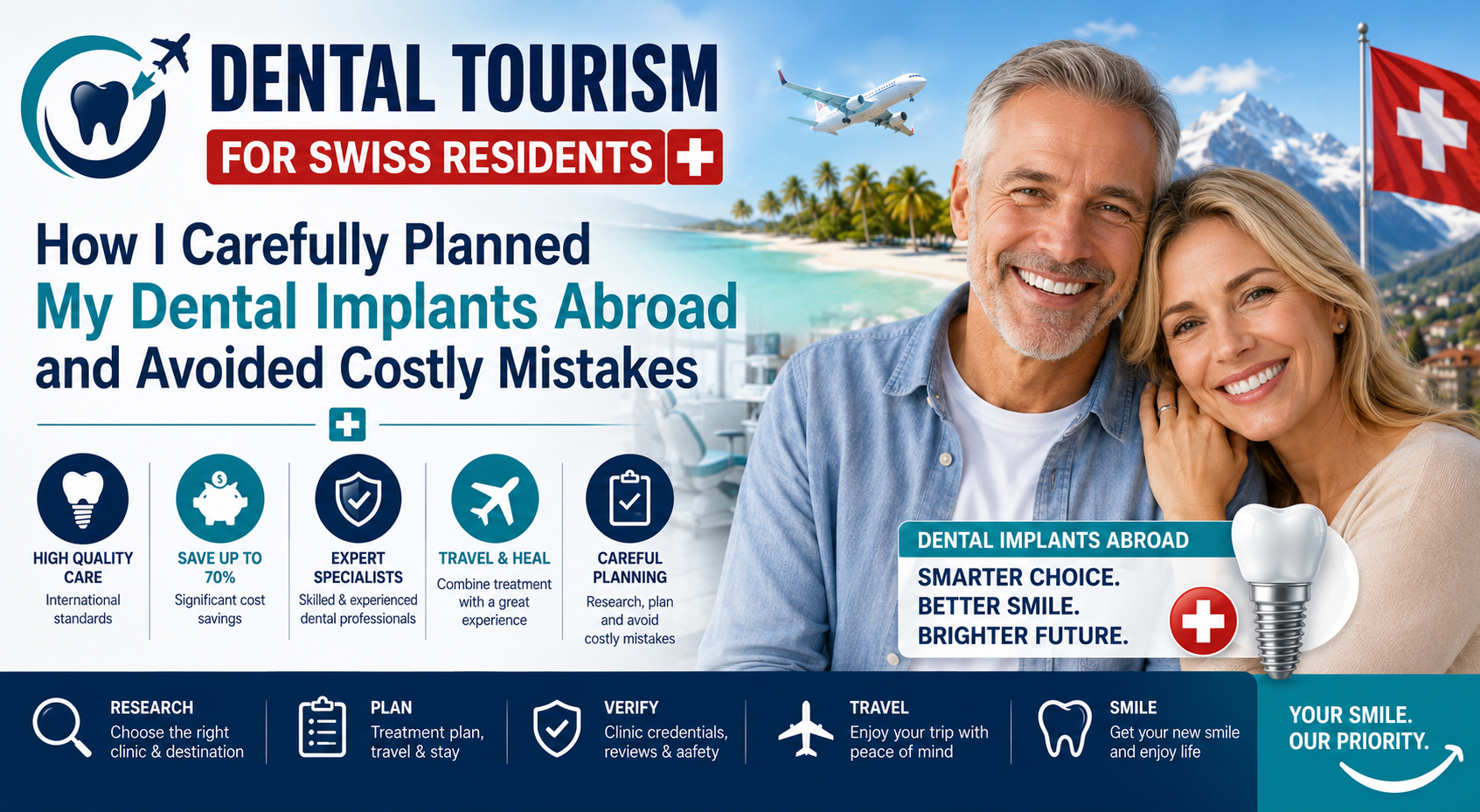
Dental Tourism for Swiss Residents: How I Carefully Planned My Dental Implants Abroad and Avoided Costly Mistakes
Language :
Topics:
When My Swiss Dental Quote Arrived, I Knew I Needed a Plan
I wasn't shocked when my dentist told me I needed extensive dental work.
Deep down, I had known for years.
Several teeth were failing.
Old crowns were reaching the end of their lifespan.
I had missing teeth that made chewing difficult.
What shocked me was the treatment estimate.
CHF 42,000.
I stared at the document for several minutes.
My first thought wasn't about the procedure.
It was about how I would pay for it.
Like many Swiss residents, I have always appreciated the quality of healthcare in Switzerland. We are fortunate to have access to highly trained professionals, advanced technology, and some of the world's most respected dental clinics.
But there is no denying one reality:
Swiss dentistry is expensive.
Very expensive.
As I began researching alternatives, I discovered that thousands of Swiss residents travel abroad every year for dental treatment.
At first, the idea made me nervous.
Would the quality be lower?
Would I have legal protection?
What would happen if something went wrong?
Would I save money or create a bigger problem?
Instead of rushing into a decision, I spent months researching dental tourism.
Looking back, that careful planning may have saved me thousands of francs and prevented serious mistakes.
If you're considering dental treatment outside Switzerland, I want to share what I learned during that journey.
Why So Many Swiss Residents Consider Dental Tourism
The answer is surprisingly simple.
The price difference can be enormous.
In Switzerland, major dental treatments such as:
- Dental implants
- All-on-4 restorations
- Full-mouth rehabilitation
- Multiple crowns
- Extensive bridgework
can easily cost tens of thousands of francs.
Many patients discover that the same procedures can cost 40% to 70% less in other countries.
When you're facing a CHF 30,000, CHF 40,000, or CHF 50,000 treatment plan, those savings become difficult to ignore.
I quickly realized I wasn't alone.
Friends, colleagues, and neighbors all knew someone who had traveled abroad for dental care.
Some went to Germany.
Others chose Hungary.
A few traveled to Turkey.
Many reported positive experiences.
However, nearly everyone gave me the same warning:
"Don't choose based on price alone."
That advice proved invaluable.
The Reality of Swiss Dental Costs
Before comparing foreign clinics, I wanted to understand why Swiss dentistry costs so much.
The reasons became clear.
Swiss clinics often invest heavily in:
- Digital imaging technology
- CBCT scanners
- CAD/CAM manufacturing
- Premium implant systems
- Highly trained specialists
Additionally, Switzerland has:
- High labor costs
- Expensive real estate
- Strict healthcare regulations
The result is exceptional quality—but also exceptional prices.
For routine cleanings and small fillings, the difference may be manageable.
For major implant reconstruction, the financial burden can become overwhelming.
Why Insurance Usually Doesn't Solve the Problem
One of my biggest frustrations involved insurance.
Many people assume health insurance will help.
Unfortunately, Swiss basic health insurance generally does not cover routine dental treatment.
That means procedures such as:
- Implants
- Crowns
- Bridges
- Dentures
typically come directly from your own pocket.
Some supplementary dental plans provide assistance.
However, many have:
- Long waiting periods
- Annual reimbursement limits
- Exclusions for pre-existing conditions
In my case, insurance would cover only a small fraction of the total treatment.
The majority remained my responsibility.
That reality pushed me to investigate dental tourism more seriously.
Why I Refused to Rush the Decision
When people discover they can save tens of thousands of francs abroad, it's tempting to book immediately.
I almost did.
Then I started reading patient experiences online.
Some were excellent.
Others were nightmares.
I noticed a pattern.
Patients who had problems often skipped important planning steps.
Patients who had successful outcomes treated the process like a serious medical decision rather than a holiday purchase.
That distinction became my guiding principle.
Step One: Get a Diagnosis in Switzerland First
This was perhaps the smartest decision I made.
Even if you plan to receive treatment abroad, start locally.
I scheduled consultations with Swiss implant specialists and obtained:
- Clinical examinations
- Panoramic imaging
- CBCT scans
- Written treatment plans
These consultations cost money.
However, they provided something incredibly valuable:
An independent diagnosis.
Without that baseline, I would have had no way to evaluate recommendations from overseas clinics.
Why a Swiss Treatment Plan Matters
Imagine sending an inquiry to an international clinic.
Without any records, they may suggest:
- Additional implants
- Additional crowns
- Additional procedures
You would have no reference point.
A Swiss treatment plan gives you leverage.
You already know:
- Which teeth need treatment
- How many implants are necessary
- Whether bone loss exists
- What alternative options are available
This helps prevent unnecessary treatment recommendations.
Comparing Quotes Properly
One lesson I learned quickly:
Not all quotes are comparable.
A clinic may advertise:
"Full-mouth implants from CHF 12,000."
Sounds fantastic.
But what exactly does that include?
I learned to compare quotes line by line.
Questions I asked included:
- Are extractions included?
- Are temporary teeth included?
- Is the final bridge included?
- Are CBCT scans included?
- Are follow-up visits included?
- Is sedation included?
The total price often changed significantly once hidden costs were added.
Understanding Implant Brands
During my research, I encountered major differences in implant systems.
Some clinics used premium international brands.
Others used lesser-known systems.
I wasn't interested in the cheapest implant available.
I wanted proven long-term reliability.
Common premium brands included:
- Straumann
- Nobel Biocare
- Astra Tech
When comparing quotes, I made sure I was comparing similar products.
A lower quote may not represent a better value if inferior materials are being used.
Why Germany Became My First Choice
For many Swiss residents, Germany feels like the most natural starting point.
The advantages are obvious.
Close Proximity
Travel is simple.
Many patients can drive.
This reduces transportation costs significantly.
Similar Standards
Germany maintains strong healthcare regulations and professional oversight.
Easier Follow-Up
If adjustments are needed, returning is relatively straightforward.
For residents living near the border, Germany often provides an attractive balance between cost savings and convenience.
Hungary: Europe's Dental Tourism Leader
The more I researched, the more often Hungary appeared.
Many patients consider Hungary the dental tourism capital of Europe.
Entire clinics have been designed specifically for international patients.
Advantages include:
- Significant cost savings
- Extensive implant experience
- English-speaking coordinators
- Established international reputations
Many clinics have treated Swiss, German, Austrian, and British patients for decades.
That history gave me confidence.
Turkey's Growing Popularity
Turkey has become increasingly popular for major cosmetic and restorative procedures.
The advertised packages can be very attractive.
Many include:
- Hotel accommodation
- Airport transfers
- Treatment coordination
- Translation services
For extensive procedures such as All-on-4 implants, the financial savings can be substantial.
However, I learned to evaluate these offers carefully.
A beautiful hotel should never influence a medical decision.
The quality of clinical care must remain the primary consideration.
The Questions I Asked Every Clinic
Once I narrowed my options, I prepared a list of questions.
These conversations revealed a great deal about each provider.
What Implant System Do You Use?
A professional clinic should answer immediately.
If responses seemed vague, I considered that a warning sign.
Who Performs the Surgery?
I wanted specific information about:
- Qualifications
- Experience
- Specialization
Implant surgery is highly technical.
Experience matters.
How Many Similar Cases Have You Completed?
A clinic performing hundreds of full-mouth implant cases annually generally inspires greater confidence than one performing only a handful.
What Is Your Success Rate?
No treatment guarantees perfection.
However, reputable clinics should openly discuss outcomes and risks.
Can I Speak with Previous Patients?
Some clinics offered patient testimonials and case studies.
This was extremely helpful.
Language Matters More Than Many People Realize
Communication became one of my highest priorities.
Dental treatment involves complex decisions.
You must understand:
- Risks
- Benefits
- Alternatives
- Instructions
Misunderstandings can create serious complications.
I deliberately chose clinics where communication was fluent and professional.
If I ever felt uncertain during discussions, I moved on.
The Most Important Question of All
Eventually, I realized there was one question more important than every other.
What happens if something goes wrong after I return to Switzerland?
This issue separates excellent clinics from average ones.
I asked every provider:
"If I develop a complication after returning home, what is your process?"
Their answers varied dramatically.
Some offered:
- Remote consultations
- Partner clinics
- Warranty programs
- Emergency support
Others provided vague responses.
That told me everything I needed to know.
Understanding the True Cost of Dental Tourism
Many advertisements focus on treatment prices.
But treatment fees represent only part of the equation.
I created a detailed budget that included everything.
Flights
Some procedures require multiple visits.
Airfare can add up quickly.
Accommodation
Hotels are not free.
Extended treatment plans may require longer stays.
Transportation
Airport transfers, taxis, trains, and local transportation all contribute to total expenses.
Meals
While not enormous, food expenses still matter when calculating the true cost.
Lost Income
This was an important consideration.
Time away from work has a financial value.
Many patients forget to include it.
Why I Created an Emergency Fund
One recommendation appeared repeatedly during my research.
Always keep a contingency fund.
No matter how carefully you plan, unexpected issues can occur.
Examples include:
- Loose crowns
- Temporary bridge fractures
- Minor infections
- Emergency adjustments
Having emergency funds available provides peace of mind.
Understanding Follow-Up Care
Many people focus entirely on surgery day.
In reality, successful implant treatment continues for months.
Healing requires monitoring.
Adjustments may be necessary.
Questions may arise.
A good provider remains accessible long after payment has been made.
This aspect often matters more than the initial procedure itself.
The Legal Reality Few Patients Consider
When treatment occurs in Switzerland, legal protections are relatively straightforward.
When treatment occurs abroad, things become more complicated.
Different countries have:
- Different regulations
- Different legal systems
- Different complaint processes
This doesn't mean treatment abroad is unsafe.
It simply means patients should understand the practical realities before making a decision.
When Dental Tourism Makes the Most Sense
After months of research, I reached an important conclusion.
Dental tourism generally offers the greatest value for major procedures.
Examples include:
- Full-mouth implants
- All-on-4 treatment
- Extensive bridge reconstruction
- Multiple implants
When savings reach CHF 10,000, CHF 20,000, or even CHF 30,000, the additional planning effort can be worthwhile.
When Staying Local May Be Better
Not every procedure justifies international travel.
For smaller treatments such as:
- Single fillings
- Dental cleanings
- Minor repairs
- Simple extractions
the benefits of continuity often outweigh potential savings.
Travel costs and logistical complexity can eliminate much of the financial advantage.
What Ultimately Guided My Decision
After countless hours of research, I realized something important.
The goal wasn't finding the cheapest clinic.
The goal was finding the best balance of:
- Quality
- Safety
- Experience
- Accountability
- Value
Those factors matter far more than a promotional discount.
Dental implants are not a holiday souvenir.
They are a long-term medical investment.
The consequences of poor treatment can be costly and emotionally devastating.
My Final Advice to Anyone Considering Dental Tourism
If you're a Swiss resident considering dental treatment abroad, approach the process carefully.
Start with a professional diagnosis in Switzerland.
Compare detailed treatment plans.
Verify credentials.
Research implant brands.
Understand follow-up arrangements.
Calculate the true cost, not just the advertised cost.
Most importantly, prioritize quality over price.
A successful dental implant restoration can improve your confidence, health, and quality of life for many years.
A poorly planned decision can create complications that cost far more than the original savings.
Dental tourism can absolutely be a smart financial strategy.
Many Swiss residents have achieved excellent results while saving significant amounts of money.
The key is preparation.
Treat the process as a serious medical decision, ask difficult questions, and never allow a low price alone to determine where you place your trust.
Your smile—and your long-term oral health—deserve that level of care.
Can tooth extraction cause infection? Mild inflammation is normal, but increasing swelling, fever, or severe pain may indicate infection. Learn more about post-extraction infection warning signs in this detailed guide.
Book a consultation with our Cebu dental specialists for proper evaluation and care.
Ready to get expert guidance?
If you’re experiencing severe pain or delayed healing, book a consultation with our Cebu dental specialists to get proper evaluation and care.
Consultation or contact page .
Book a Consultation
For severe discomfort or delayed healing, book a consultation with our Cebu dental specialists today.
Looking for a dentist? Browse our Cebu dental directory to find trusted clinics near you.
Medical Review and Clinical Basis
This article is based on clinical dental guidelines and real patient recovery patterns observed after tooth extraction procedures. The information reflects common post-extraction healing stages, including normal clot formation, gum tissue repair, and signs of possible complications such as dry socket or infection.
While mild discomfort is expected after a dental extraction, worsening pain after Day 3, bad odor, exposed bone, or spreading pain may require professional evaluation. These symptoms are consistent with known post-extraction complications described in standard dental practice.
About Cebu Dental Implants
Cebu Dental Implants provides comprehensive tooth extraction, surgical procedures, and dental implant services in the Philippines. Our team evaluates post-extraction healing, manages complications such as dry socket, and advises patients on proper aftercare to prevent infection and delayed healing.
If you experience severe pain or unusual symptoms after extraction, early professional assessment is recommended to prevent further complications.
Important Medical Disclaimer
This content is for educational purposes only and does not replace professional dental diagnosis. Every patient heals differently. If symptoms worsen or do not improve within a few days, consult a licensed dentist for proper evaluation and treatment.
Author
This article was prepared by the Cebu Dental Implants content team in consultation with licensed dental professionals experienced in tooth extraction and implant procedures.
Related Clinical Cases
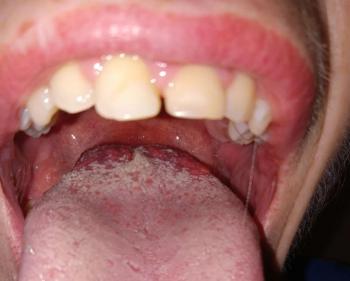
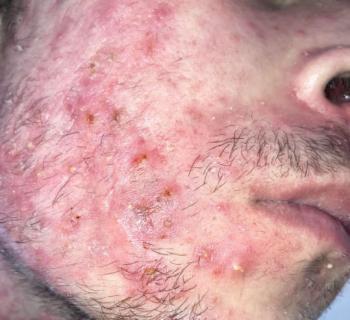
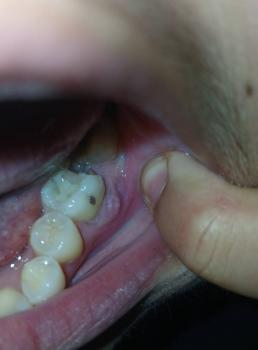
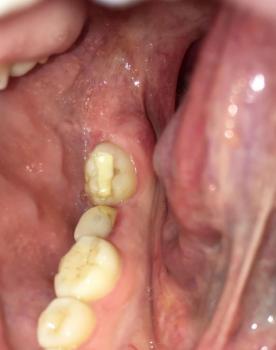
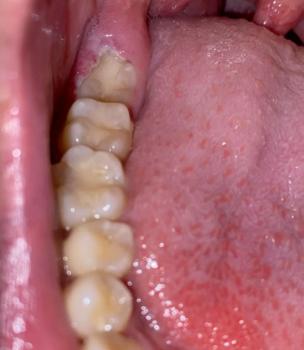
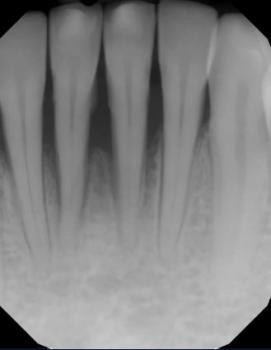
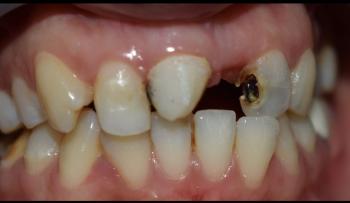
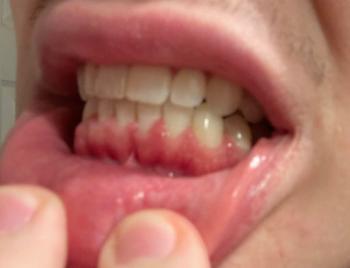
Patients with lower front gum inflammation may also experience tartar buildup, periodontal disease, gum abscesses, or tooth decay. Explore these related clinical case studies.
Other topics:
Other Dental Clinic