Your Smile, Our Passion.

Cracked Tooth Syndrome: Understanding the Hidden Tooth Fracture, Warning Signs, Diagnosis, and When It Becomes a Medical Emergency
Language :
Topics:
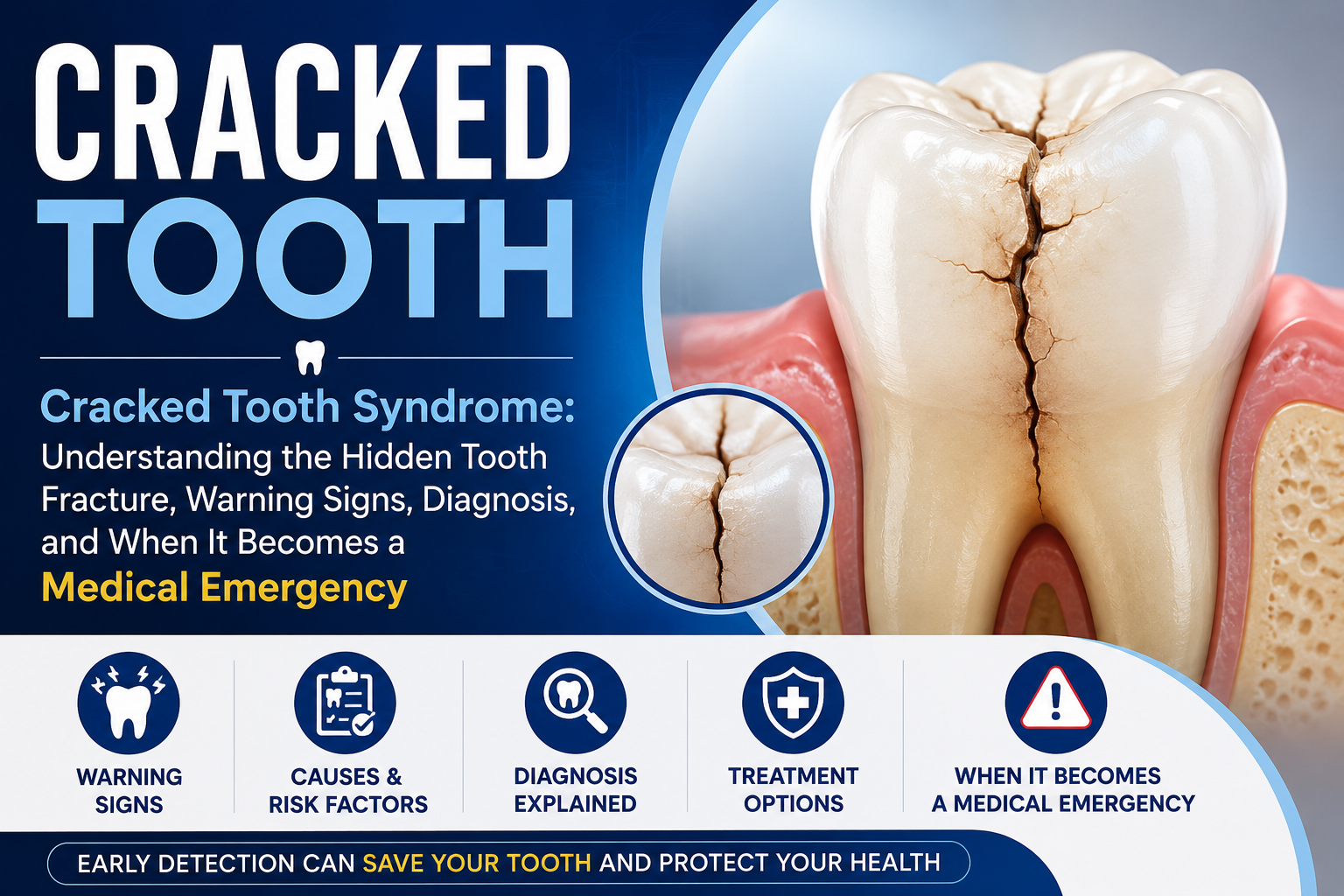
Cracked Tooth Syndrome (CTS) is one of the most challenging dental conditions to diagnose because the fracture is often so small that it cannot be seen with the naked eye. Many patients are surprised to learn that a seemingly healthy tooth can develop a tiny crack capable of causing significant pain and sensitivity. Unlike a broken tooth with an obvious fracture, a cracked tooth frequently appears normal during a routine examination, making diagnosis dependent on a careful clinical evaluation and the patient's description of symptoms.
A crack usually develops in a living tooth that has been subjected to repeated stress over many years. Molars and premolars are affected most often because they absorb tremendous chewing forces every day. Even a microscopic fracture can flex slightly when you bite down. This movement irritates the sensitive tissues inside the tooth and produces the characteristic symptoms of Cracked Tooth Syndrome.
One of the most important facts patients should understand is that tooth fractures do not heal naturally. Unlike bones, which possess living cells capable of repairing fractures, tooth enamel cannot regenerate once it has cracked. Every day that normal chewing continues, the crack may gradually become deeper and longer. What begins as a minor structural defect can eventually involve the dental pulp, extend below the gumline, or split the tooth beyond repair.
Early diagnosis often allows dentists to preserve the tooth using conservative treatment. Waiting until the pain becomes severe or continuous may limit treatment options and increase the likelihood that root canal therapy or extraction will become necessary.
Understanding the warning signs of Cracked Tooth Syndrome can help you seek treatment before irreversible damage occurs.
First Rule Out a Dental Medical Emergency
Before discussing the symptoms and treatment of Cracked Tooth Syndrome, it is essential to determine whether your condition represents a dental emergency that requires immediate medical attention rather than a routine dental appointment.
Most cracked teeth are not life-threatening. However, bacteria may enter the crack and infect the inner pulp of the tooth. If the infection spreads beyond the tooth into the surrounding soft tissues of the face or neck, it can develop into facial cellulitis, a serious bacterial infection that requires urgent medical treatment.
Although uncommon, facial cellulitis can spread rapidly through the facial spaces and neck. In severe cases, it may compromise the airway or spread into deeper tissues, becoming a medical emergency.
Seek immediate emergency medical care or go to the nearest emergency department if you experience any of the following symptoms:
- Difficulty breathing
- Tightness in the throat
- Difficulty swallowing
- Excessive drooling
- Rapidly increasing facial swelling
- Swelling extending toward the eye
- Swelling spreading into the neck
- Swelling extending toward the chest
- High fever
- Chills
- Extreme fatigue
- Confusion
- Disorientation
- Severe headache
- Stiff neck
These symptoms should never be ignored. Emergency physicians and dentists work together to control the infection, protect the airway when necessary, and eliminate the source of the infection before serious complications develop.
If none of these emergency warning signs are present, your symptoms may be consistent with Cracked Tooth Syndrome, and you should arrange a prompt dental examination.
What Is Cracked Tooth Syndrome?
Cracked Tooth Syndrome refers to a small, incomplete fracture that usually begins on the chewing surface of a tooth and extends inward. Unlike a tooth that has completely broken into separate pieces, the fractured segments remain connected.
This tiny crack creates movement every time you chew. When pressure is applied, the crack may open slightly. When the pressure is released, the crack closes again. This repeated movement irritates the delicate pulp tissue inside the tooth, producing pain that is often difficult to explain.
The condition most commonly affects:
- First molars
- Second molars
- Premolars
- Teeth with large fillings
- Teeth exposed to heavy chewing forces
Patients often describe the discomfort as unpredictable. One bite may feel completely normal, while the next causes an intense, sharp pain.
Because the crack is frequently microscopic, standard dental X-rays may not reveal it. Diagnosis often relies on a combination of clinical examination, specialized tests, and the patient's history.
Why Do Teeth Crack?
Cracks rarely occur from a single event alone. More often, they develop gradually from years of accumulated stress.
Aging of the Tooth
As people age, teeth undergo millions of chewing cycles. Even healthy enamel experiences microscopic wear over time. Repeated mechanical stress may eventually create tiny fractures that slowly enlarge.
Grinding and Clenching (Bruxism)
One of the most common causes of Cracked Tooth Syndrome is unconscious grinding or clenching of the teeth.
Many individuals grind their teeth during sleep without realizing it. Others clench during periods of stress or concentration throughout the day.
These excessive forces repeatedly compress the tooth structure, eventually producing fatigue cracks similar to those seen in metal that has been bent repeatedly.
Large Dental Fillings
Teeth restored with large fillings contain less natural tooth structure.
Although modern filling materials are durable, they cannot completely replace the strength of healthy enamel and dentin. As the remaining tooth walls become thinner, they become more susceptible to cracking under normal chewing forces.
Chewing Hard Foods
Suddenly biting on a hard object can generate tremendous force.
Common examples include:
- Ice cubes
- Unpopped popcorn kernels
- Hard candies
- Fruit pits
- Bones hidden in meat
- Hard nuts
A single unexpected bite may initiate a crack that gradually worsens over time.
Trauma
Sports injuries, falls, automobile accidents, or blows to the face may create fractures that initially cause little discomfort but become symptomatic weeks or months later.
Sudden Temperature Changes
Rapid temperature changes can place stress on teeth. For example, drinking very hot coffee immediately followed by ice water causes the tooth structure to expand and contract. While healthy teeth generally tolerate these changes, teeth with existing weaknesses may be more susceptible to cracking.
Common Symptoms of Cracked Tooth Syndrome
Cracked Tooth Syndrome is often called the "great imitator" because its symptoms resemble those of cavities, gum disease, sinus pain, or nerve inflammation.
Pain When Releasing Your Bite
The hallmark symptom is a sudden, sharp pain that occurs when you release your bite rather than when you bite down.
As chewing pressure is released, the cracked portions of the tooth snap back together, briefly compressing or irritating the dental pulp.
Many patients describe this sensation as a quick electric shock.
Intermittent Pain
Unlike the continuous pain associated with an abscess, discomfort from CTS frequently comes and goes.
Symptoms may disappear for days or weeks before returning unexpectedly.
This inconsistency often delays diagnosis because patients believe the problem has resolved on its own.
Sensitivity to Temperature
Many cracked teeth become sensitive to:
- Cold drinks
- Ice cream
- Hot coffee
- Tea
- Cold air
Some patients notice lingering discomfort after the temperature stimulus has been removed.
Sensitivity to Sweet Foods
Sugar can penetrate microscopic openings in the crack, stimulating the pulp and producing brief but intense discomfort.
Sweet beverages, candy, desserts, and sugary snacks may all trigger symptoms.
Difficulty Identifying the Tooth
One of the most frustrating aspects of Cracked Tooth Syndrome is that patients often cannot identify which tooth hurts.
Pain may seem to move from one side of the mouth to another because pressure travels through multiple teeth during chewing.
This makes professional evaluation especially important.
Mild Gum Swelling
If bacteria enter the crack, localized inflammation may develop around the affected tooth.
You may notice:
- Tender gums
- Slight swelling
- Pain when touching the gum
- Occasional discomfort while flossing
Localized swelling does not necessarily indicate a severe infection, but it should always be evaluated by a dentist.
How Dentists Diagnose Cracked Tooth Syndrome
Diagnosing Cracked Tooth Syndrome requires careful detective work because no single test can identify every crack.
Your dentist will begin by reviewing your symptoms in detail, including when the pain occurs, what foods trigger discomfort, and whether the pain is constant or intermittent. This history often provides important clues.
Next, a thorough clinical examination is performed. The dentist may inspect the tooth under magnification and use a bright curing light or transillumination to help reveal fine fracture lines that are not visible under normal lighting. A special bite test using a cotton roll or a dedicated bite-testing instrument may reproduce the characteristic pain that occurs when biting pressure is released.
Dental X-rays are usually taken to evaluate the surrounding bone, existing fillings, and the health of the tooth's root. Although X-rays often do not show the crack itself, they can help rule out other causes of pain and identify complications such as bone loss or infection. In some situations, cone beam computed tomography (CBCT), a type of three-dimensional dental scan, may provide additional information, although even CBCT cannot detect every microscopic crack.
The goal of diagnosis is not only to confirm the presence of a crack but also to determine how far it extends. This information is essential because treatment options and the long-term outlook for the tooth depend largely on the depth and direction of the fracture.
Can tooth extraction cause infection? Mild inflammation is normal, but increasing swelling, fever, or severe pain may indicate infection. Learn more about post-extraction infection warning signs in this detailed guide.
Book a consultation with our Cebu dental specialists for proper evaluation and care.
Ready to get expert guidance?
If you’re experiencing severe pain or delayed healing, book a consultation with our Cebu dental specialists to get proper evaluation and care.
Consultation or contact page .
Book a Consultation
For severe discomfort or delayed healing, book a consultation with our Cebu dental specialists today.
Looking for a dentist? Browse our Cebu dental directory to find trusted clinics near you.
Medical Review and Clinical Basis
This article is based on clinical dental guidelines and real patient recovery patterns observed after tooth extraction procedures. The information reflects common post-extraction healing stages, including normal clot formation, gum tissue repair, and signs of possible complications such as dry socket or infection.
While mild discomfort is expected after a dental extraction, worsening pain after Day 3, bad odor, exposed bone, or spreading pain may require professional evaluation. These symptoms are consistent with known post-extraction complications described in standard dental practice.
About Cebu Dental Implants
Cebu Dental Implants provides comprehensive tooth extraction, surgical procedures, and dental implant services in the Philippines. Our team evaluates post-extraction healing, manages complications such as dry socket, and advises patients on proper aftercare to prevent infection and delayed healing.
If you experience severe pain or unusual symptoms after extraction, early professional assessment is recommended to prevent further complications.
Important Medical Disclaimer
This content is for educational purposes only and does not replace professional dental diagnosis. Every patient heals differently. If symptoms worsen or do not improve within a few days, consult a licensed dentist for proper evaluation and treatment.
Author
This article was prepared by the Cebu Dental Implants content team in consultation with licensed dental professionals experienced in tooth extraction and implant procedures.
Related Clinical Cases
Patients with lower front gum inflammation may also experience tartar buildup, periodontal disease, gum abscesses, or tooth decay. Explore these related clinical case studies.


Other topics:
Other Dental Clinic