Healthy Teeth, Happy Life.

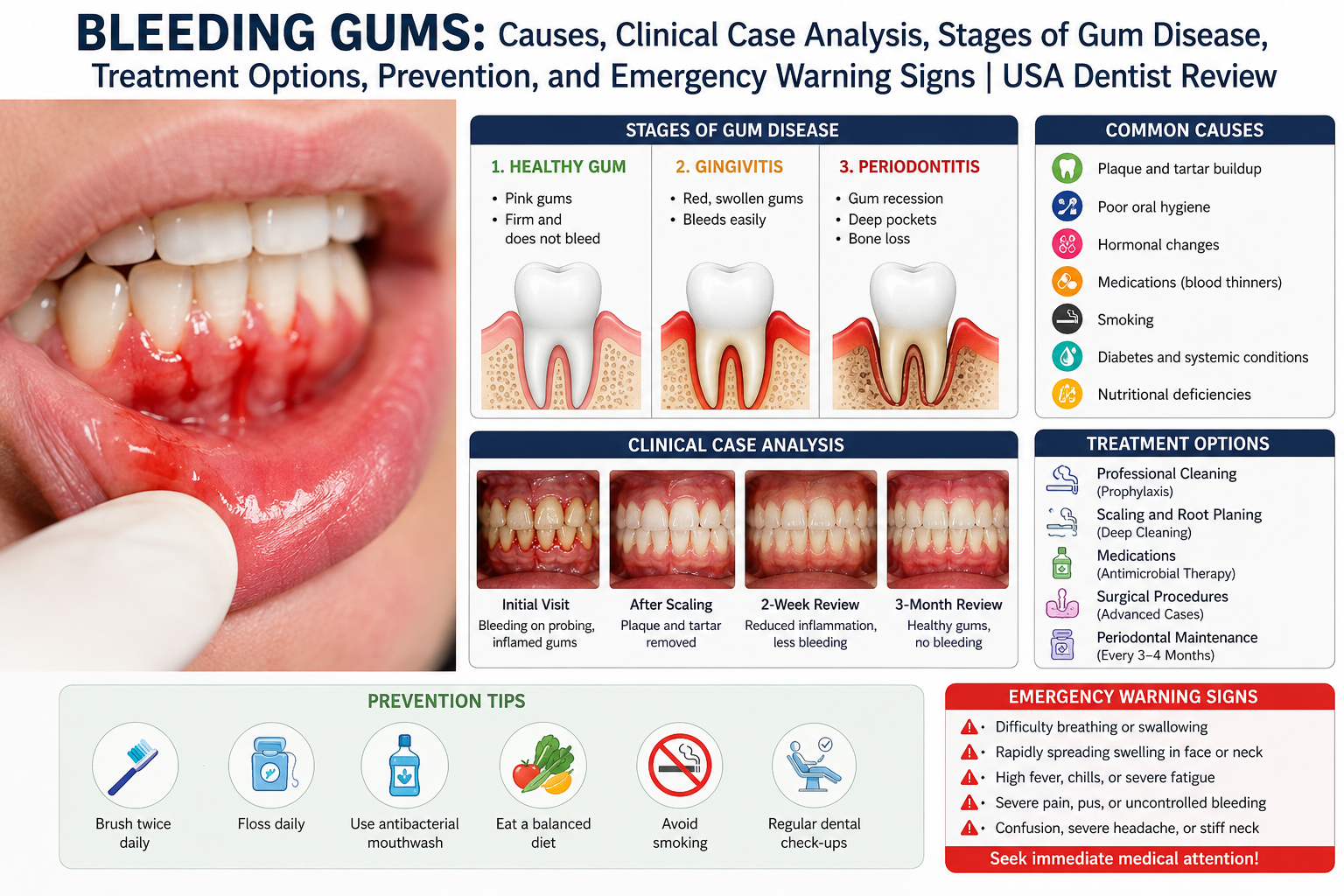
Bleeding Gums: Causes, Clinical Case Analysis, Stages of Gum Disease, Treatment Options, Prevention, and Emergency Warning Signs | USA Dentist Review
Language :
Topics:
Clinical Review: Causes, Case Analysis, and Treatment of Bleeding Gums
A USA Dentist's Comprehensive Guide to Healthy Gums, Early Detection, and Advanced Periodontal Care
Reviewed by a USA Dental Clinical Expert
Bleeding gums are one of the earliest and most important warning signs that something is wrong with your oral health. Many people dismiss a small amount of blood while brushing or flossing as "normal," but healthy gums should not bleed during routine oral hygiene.
As a practicing dentist, I frequently remind patients that bleeding gums are often the body's first signal of inflammation. Left untreated, this seemingly minor symptom can progress into advanced periodontal disease, resulting in irreversible bone destruction, loose teeth, chronic infection, and tooth loss. In rare but serious situations, untreated dental infections can spread beyond the mouth, becoming a life-threatening medical emergency.
This clinical review explains the causes of bleeding gums, how dentists diagnose the condition, treatment options available in the United States, and the warning signs that require immediate emergency medical care.
Understanding Why Gums Bleed
Your gums contain thousands of tiny blood vessels that nourish the tissue surrounding your teeth. When bacteria accumulate along the gumline, the body's immune system responds with inflammation.
Inflamed tissue becomes:
-
Red
-
Swollen
-
Tender
-
Fragile
-
More likely to bleed
Most bleeding occurs while:
-
Brushing teeth
-
Flossing
-
Eating crunchy foods
-
Receiving professional dental cleanings
The bleeding itself is not the disease—it is a symptom that inflammation is already present.
The Most Common Cause: Dental Plaque
Every day, bacteria naturally form a sticky film called dental plaque on the teeth.
These bacteria feed on sugars and carbohydrates, producing toxins that irritate the gums.
Without daily removal:
-
Plaque thickens
-
Bacterial populations increase
-
The immune system releases inflammatory chemicals
-
Gum tissue begins to bleed
If plaque remains for several days, minerals from saliva harden it into calculus (tartar).
Unlike plaque, tartar cannot be removed with a toothbrush. It must be professionally removed by a dental hygienist or dentist.
Stage One: Gingivitis
What Is Gingivitis?
Gingivitis is the earliest stage of gum disease.
At this stage:
-
Only the gum tissue is inflamed.
-
Bone supporting the teeth remains healthy.
-
Periodontal ligament remains intact.
-
No permanent damage has occurred.
This makes gingivitis completely reversible.
Common Symptoms
Patients often notice:
-
Bleeding while brushing
-
Bleeding during flossing
-
Puffy gums
-
Bright red gum margins
-
Mild tenderness
-
Persistent bad breath
-
Metallic taste
Some patients experience no pain at all, which is why gingivitis often goes untreated.
Clinical Case Example
A 34-year-old office worker reports:
"Every morning my sink turns pink when I brush my teeth."
Clinical examination reveals:
-
Heavy plaque accumulation
-
Mild tartar deposits
-
Inflamed gums
-
Bleeding on probing
-
No bone loss on X-rays
Diagnosis:
Plaque-induced gingivitis
Treatment:
-
Professional dental cleaning
-
Oral hygiene instruction
-
Daily flossing
-
Soft-bristle toothbrush
Four weeks later:
-
Bleeding resolved
-
Gum color returned to healthy pink
-
Inflammation eliminated
This is a classic example of reversible gum disease.
Stage Two: Periodontitis
When gingivitis is ignored for months or years, bacteria migrate beneath the gums.
The body continues fighting infection, but unfortunately the immune response begins destroying the tissues supporting the teeth.
This advanced condition is called periodontitis.
What Happens During Periodontitis?
Instead of remaining attached tightly around the tooth, gums begin separating.
This creates:
-
Deep periodontal pockets
-
Oxygen-poor environments
-
Increased bacterial growth
-
Chronic inflammation
Eventually:
-
Bone dissolves
-
Periodontal ligament breaks down
-
Teeth become loose
-
Teeth may shift position
-
Tooth loss becomes possible
Unlike gingivitis, bone loss cannot regenerate naturally.
Signs of Advanced Periodontitis
Symptoms include:
-
Persistent bleeding gums
-
Receding gums
-
Teeth appearing longer
-
Bad breath
-
Bad taste
-
Pus around gums
-
Loose teeth
-
Pain when chewing
-
Tooth movement
-
Spaces developing between teeth
Many patients are surprised that advanced periodontitis can remain relatively painless until severe damage has already occurred.
Why Do Some People Develop Gum Disease Faster?
Several factors increase risk beyond poor brushing alone.
Smoking
Smoking is one of the strongest risk factors.
Nicotine:
-
Reduces blood flow
-
Slows healing
-
Suppresses immune response
-
Masks bleeding
Ironically, smokers may have severe periodontal disease with very little bleeding.
Diabetes
Poorly controlled diabetes increases susceptibility to infection.
High blood sugar:
-
Weakens immune defenses
-
Delays wound healing
-
Encourages bacterial growth
-
Accelerates bone destruction
Likewise, severe periodontal disease can make diabetes harder to control, creating a two-way relationship.
Hormonal Changes
Hormonal fluctuations increase gum sensitivity.
Examples include:
-
Pregnancy
-
Puberty
-
Menopause
-
Menstrual cycle changes
Pregnancy gingivitis commonly develops during the second trimester because increased hormone levels amplify the inflammatory response to plaque.
Nutritional Deficiencies
Vitamin C is essential for collagen formation and healthy connective tissue.
Deficiency may cause:
-
Swollen gums
-
Easy bleeding
-
Delayed healing
-
Loose teeth in severe cases
Vitamin K deficiency may also impair normal blood clotting and contribute to prolonged bleeding.
Blood-Thinning Medications
Patients taking medications such as:
-
Warfarin
-
Apixaban
-
Rivaroxaban
-
Dabigatran
-
Aspirin
-
Clopidogrel
may notice gums bleed more easily.
These medications do not cause gum disease but can make inflamed gums bleed more noticeably.
Blood Disorders
Persistent unexplained gum bleeding can occasionally indicate systemic illness.
Conditions include:
-
Leukemia
-
Thrombocytopenia
-
Platelet disorders
-
Clotting disorders
If bleeding is severe without obvious plaque buildup, further medical evaluation may be necessary.
Aggressive Tooth Brushing
Using:
-
Hard-bristle brushes
-
Excessive force
-
Abrasive toothpaste
can traumatize healthy gums.
Dentists recommend using a soft-bristled toothbrush with gentle circular motions rather than vigorous scrubbing.
How Dentists Diagnose Bleeding Gums
A comprehensive periodontal examination typically includes:
-
Medical history review
-
Medication review
-
Gum inspection
-
Plaque assessment
-
Bleeding index
-
Pocket depth measurements
-
Tooth mobility testing
-
Dental X-rays
-
Bone level evaluation
Healthy gum pockets generally measure 1–3 mm.
Measurements of 4 mm or greater, particularly with bleeding, may indicate periodontal disease.
Professional Treatment Options
Professional Dental Cleaning
Patients with gingivitis typically require:
-
Plaque removal
-
Tartar removal
-
Tooth polishing
-
Oral hygiene education
Professional cleaning removes deposits that cannot be eliminated with home brushing.
Scaling and Root Planing (Deep Cleaning)
Scaling and Root Planing (SRP) is considered the standard non-surgical treatment for periodontitis in the United States.
Scaling removes:
-
Plaque
-
Calculus
-
Bacteria beneath the gums
Root planing smooths the root surfaces, making it more difficult for bacteria to reattach and allowing the gum tissue to heal and reattach more effectively.
Local anesthesia is commonly used to improve patient comfort.
Periodontal Maintenance
Following successful treatment, patients with periodontal disease usually enter a periodontal maintenance program.
Appointments are typically scheduled every 3 to 4 months, depending on individual risk factors.
Maintenance visits include:
-
Pocket evaluation
-
Removal of recurrent tartar
-
Monitoring gum health
-
Reinforcement of home care
Regular maintenance greatly reduces the risk of disease recurrence.
Surgical Periodontal Therapy
Patients with severe disease may require referral to a periodontist.
Possible treatments include:
Flap Surgery
The gums are gently lifted to allow direct access for cleaning deep bacterial deposits before being repositioned.
Bone Grafting
Bone graft materials may be placed to rebuild areas destroyed by periodontal disease when appropriate.
Soft Tissue Grafting
Gum grafting can cover exposed roots and reduce sensitivity caused by recession.
Guided Tissue Regeneration
Special membranes encourage selective regeneration of bone and supporting tissues in certain defects.
Laser Periodontal Therapy
Some specialists use dental lasers as an adjunct to conventional treatment to reduce bacterial load and promote healing. Suitability varies depending on the clinical case and the dentist's treatment approach.
Antimicrobial Therapy
Dentists may prescribe antimicrobial treatments when indicated.
Options include:
-
Chlorhexidine mouth rinse
-
Local antibiotic gels
-
Antibiotic microspheres
-
Systemic antibiotics in selected cases
Antibiotics are used as an adjunct to mechanical cleaning and are not a substitute for removing plaque and tartar.
Daily Home Care Recommendations
Successful periodontal treatment depends heavily on home care.
Dentists generally recommend:
-
Brush twice daily for two minutes.
-
Use a soft-bristled toothbrush or electric toothbrush.
-
Clean between teeth daily with floss or interdental brushes.
-
Consider a water flosser if recommended by your dentist.
-
Use an antibacterial mouth rinse when appropriate.
-
Replace toothbrushes every three to four months.
-
Maintain regular dental examinations.
-
Eat a balanced diet rich in vitamins and minerals.
-
Stop smoking or using tobacco products.
-
Control blood sugar if you have diabetes.
Consistency is more important than brushing aggressively.
Can Bleeding Gums Heal?
Yes—if the cause is gingivitis.
With:
-
Professional cleaning
-
Proper brushing
-
Daily flossing
-
Good nutrition
-
Regular dental visits
Most patients experience noticeable improvement within one to three weeks.
However, once periodontitis has destroyed supporting bone, treatment focuses on controlling the disease and preserving the remaining structures rather than completely reversing the damage.
Warning Signs That Require Immediate Emergency Care
Although most bleeding gums are not emergencies, untreated dental infections can spread beyond the teeth and gums.
A severe infection may develop into dental-origin facial cellulitis, a rapidly spreading bacterial infection involving the face, jaw, or neck.
This condition can obstruct the airway or spread into the bloodstream (sepsis), making it a true medical emergency.
Seek immediate care at the nearest emergency department if bleeding gums or dental pain occur together with:
-
Difficulty breathing
-
Tightness in the throat
-
Difficulty swallowing
-
Excessive drooling
-
Rapidly spreading facial or neck swelling
-
Swelling extending toward the eyes or chest
-
High fever
-
Chills
-
Extreme fatigue
-
Confusion
-
Severe headache
-
Stiff neck
-
Difficulty opening the mouth (trismus)
These symptoms require urgent evaluation by medical professionals and should never be ignored.
Preventing Bleeding Gums
Most cases of gum disease are preventable.
Simple habits can significantly reduce your risk:
-
Brush thoroughly but gently.
-
Floss every day.
-
Schedule regular professional cleanings.
-
Avoid tobacco.
-
Limit sugary foods and beverages.
-
Stay hydrated.
-
Eat a nutrient-rich diet.
-
Control systemic conditions such as diabetes.
-
Seek dental care promptly if bleeding persists.
Early intervention almost always results in simpler, less invasive treatment.
Final Thoughts from a USA Dentist
Bleeding gums should never be considered a normal part of brushing or flossing. They are your body's early warning system, signaling inflammation that deserves professional attention. In many cases, prompt treatment during the gingivitis stage can completely reverse the disease and restore healthy gum tissue.
If ignored, however, chronic inflammation may progress to periodontitis—an irreversible condition that damages the bone supporting your teeth and significantly increases the risk of tooth loss. Regular dental examinations, professional cleanings, and consistent home care remain the most effective strategies for protecting your smile throughout life.
If your gums bleed repeatedly for more than one week despite improving your oral hygiene, or if bleeding is accompanied by swelling, persistent pain, pus, loose teeth, or any signs of spreading infection, schedule a dental evaluation as soon as possible. Early diagnosis and timely treatment offer the best opportunity to preserve both your oral health and your overall well-being.
Can tooth extraction cause infection? Mild inflammation is normal, but increasing swelling, fever, or severe pain may indicate infection. Learn more about post-extraction infection warning signs in this detailed guide.
Book a consultation with our Cebu dental specialists for proper evaluation and care.
Ready to get expert guidance?
If you’re experiencing severe pain or delayed healing, book a consultation with our Cebu dental specialists to get proper evaluation and care.
Consultation or contact page .
Book a Consultation
For severe discomfort or delayed healing, book a consultation with our Cebu dental specialists today.
Looking for a dentist? Browse our Cebu dental directory to find trusted clinics near you.
Medical Review and Clinical Basis
This article is based on clinical dental guidelines and real patient recovery patterns observed after tooth extraction procedures. The information reflects common post-extraction healing stages, including normal clot formation, gum tissue repair, and signs of possible complications such as dry socket or infection.
While mild discomfort is expected after a dental extraction, worsening pain after Day 3, bad odor, exposed bone, or spreading pain may require professional evaluation. These symptoms are consistent with known post-extraction complications described in standard dental practice.
About Cebu Dental Implants
Cebu Dental Implants provides comprehensive tooth extraction, surgical procedures, and dental implant services in the Philippines. Our team evaluates post-extraction healing, manages complications such as dry socket, and advises patients on proper aftercare to prevent infection and delayed healing.
If you experience severe pain or unusual symptoms after extraction, early professional assessment is recommended to prevent further complications.
Important Medical Disclaimer
This content is for educational purposes only and does not replace professional dental diagnosis. Every patient heals differently. If symptoms worsen or do not improve within a few days, consult a licensed dentist for proper evaluation and treatment.
Author
This article was prepared by the Cebu Dental Implants content team in consultation with licensed dental professionals experienced in tooth extraction and implant procedures.
Related Clinical Cases
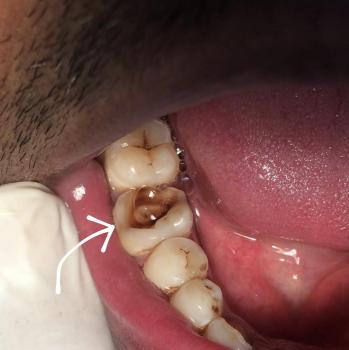
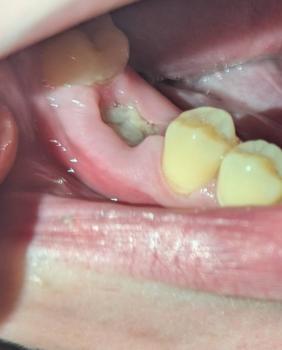
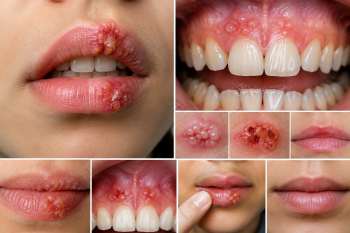
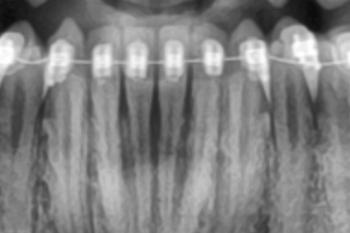
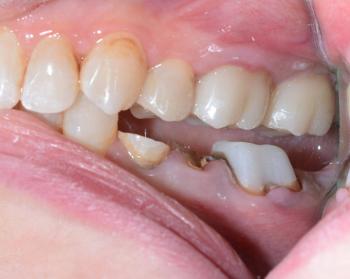
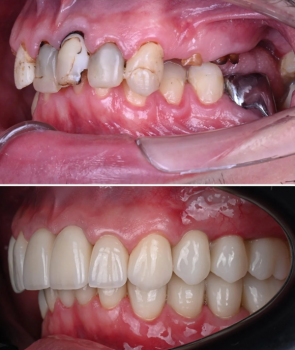
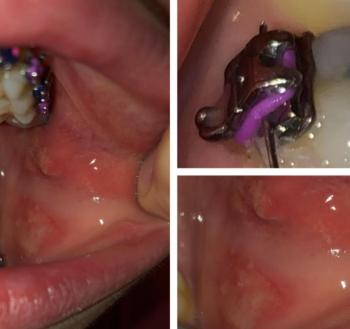
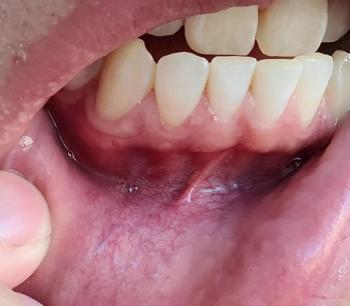
Patients with lower front gum inflammation may also experience tartar buildup, periodontal disease, gum abscesses, or tooth decay. Explore these related clinical case studies.
Other topics:
Other Dental Clinic