We Bring Back the Sparkle in Your Smile.

Best Options for Missing Teeth: Dental Implants, Bridges & Dentures
Losing a tooth can affect more than your smile. Missing teeth can make chewing more difficult, change the way your teeth fit together, and contribute to bone loss in the area where the tooth was lost.
The good news is that several effective treatments are available in the United States. The best choice depends on the number and location of missing teeth, your gum and bone health, your overall health, your budget, and your personal preferences.
Here are the three main options to discuss with your dentist.
1. Dental Implants
Dental implants are often considered one of the most natural-looking and functional options for replacing missing teeth.
An implant uses a small titanium or zirconia post that is placed into the jawbone to replace the missing tooth root. After the implant heals and becomes integrated with the bone, a connector called an abutment and a dental crown are placed on top.
Advantages of Dental Implants
-
Look and function similar to natural teeth
-
Replace the tooth root as well as the visible tooth
-
Help maintain the jawbone around the implant
-
Do not require cutting down healthy neighboring teeth
-
Can be used for a single tooth, several teeth, or full-arch treatment
Disadvantages
-
Higher initial cost than many other options
-
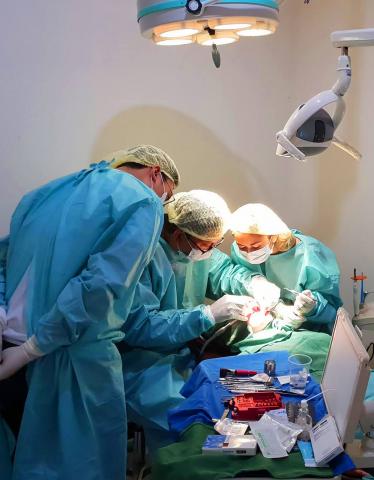
Requires a surgical procedure
-
Treatment can take several months
-
Adequate bone volume and healthy gums are important
In some patients, bone grafting may be recommended if there is not enough bone to support an implant.
2. Fixed Dental Bridges
A dental bridge can replace a missing tooth without placing an implant.
A traditional bridge typically uses the teeth next to the missing space as supports. Crowns are placed over those teeth, with an artificial tooth, called a pontic, suspended between them.
Advantages of Dental Bridges
-
Fixed in place
-
Usually faster than implant treatment
-
Does not require implant surgery
-
Can restore chewing and appearance
-
May be covered by some dental insurance plans
Disadvantages
-
Healthy neighboring teeth usually need to be prepared
-
Does not replace the missing tooth root
-
Bone loss can continue underneath the missing-tooth area
-
The supporting teeth require careful long-term maintenance
A bridge may be a practical choice when an implant is not appropriate or when a patient prefers a shorter treatment process.
3. Removable Partial or Full Dentures
Dentures are another common way to replace missing teeth. Partial dentures replace some missing teeth, while complete dentures replace an entire arch of teeth.
Depending on the design, dentures may use an acrylic base, metal framework, clasps, or other components to improve support and retention.
Advantages of Dentures
-
Generally less expensive upfront
-
Can replace several missing teeth at once
-
No implant surgery is required
-
Treatment can often be completed relatively quickly
-
Useful when multiple teeth are missing
Disadvantages
-
Can move or feel less stable than fixed teeth
-
Chewing efficiency may be reduced
-
Must be removed and cleaned regularly
-
Dentures may require adjustments, relining, or replacement over time
-
Bone shrinkage can continue after teeth are lost
For patients who want improved stability, implant-supported dentures may provide a middle ground between conventional dentures and fixed implant restorations.
How Much Does Tooth Replacement Cost in the United States?
The cost varies significantly depending on the treatment, location, dentist, materials, and complexity of the case.
A single dental implant with the implant, abutment, and crown can commonly cost several thousand dollars. Bridges and conventional dentures generally have a lower initial cost.
Dental insurance coverage also varies. Some plans provide benefits toward bridges or dentures, while implant coverage may be limited or subject to specific conditions.
Many U.S. dental practices also offer financing or monthly payment options.
Which Option Is Best for You?
There is no single tooth-replacement solution that is best for everyone.
Your dentist may evaluate:
-
How many teeth are missing
-
Where the teeth are missing
-
The condition of your gums
-
Jawbone volume and density
-
The health of neighboring teeth
-
Your ability to maintain good oral hygiene
-
Your budget and insurance coverage
-
How long you want the treatment to last
-
Whether you prefer a fixed or removable restoration
For implant treatment, your dentist may recommend dental X-rays or a 3D CBCT scan to evaluate the available bone and important anatomical structures.
Dental Implant vs. Bridge vs. Denture
| Treatment | Fixed? | Surgery? | Helps Preserve Bone? | Typical Initial Cost |
|---|---|---|---|---|
| Dental Implant | Yes | Yes | Yes, around implant | Higher |
| Dental Bridge | Yes | No implant surgery | No | Moderate |
| Partial Denture | No | No | No | Lower |
| Full Denture | No | No | No | Lower |
These are general comparisons. Your actual treatment options and costs can vary considerably.
The Bottom Line
Dental implants, fixed bridges, and dentures can all successfully replace missing teeth. The right option depends on your oral health, bone condition, treatment goals, budget, and lifestyle.
If you are considering replacing a missing tooth, schedule a comprehensive examination with a qualified U.S.-licensed dentist. A personalized evaluation is the best way to determine which treatment is appropriate for your situation.
Related Clinical Cases
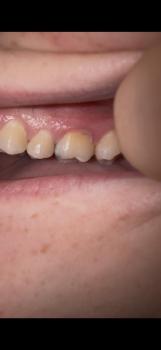
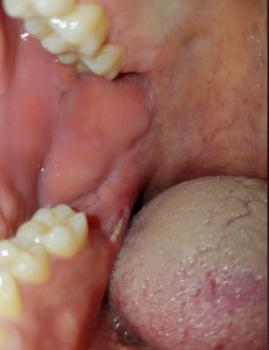
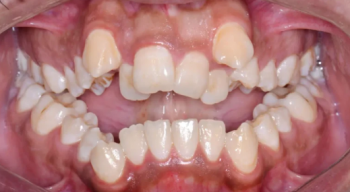
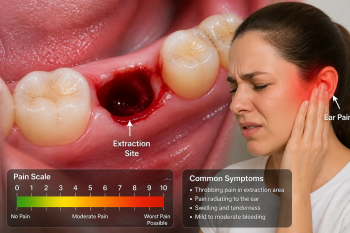
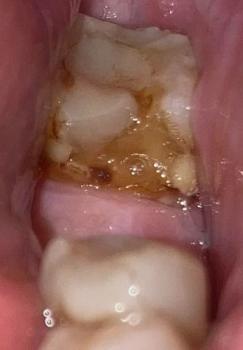
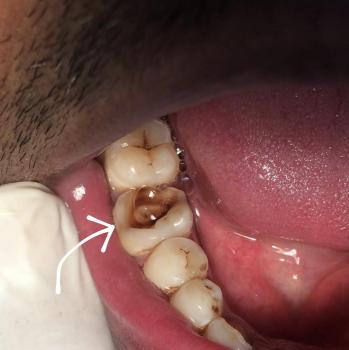
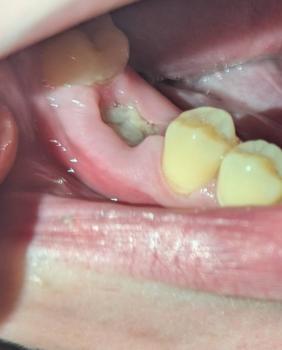
Patients with lower front gum inflammation may also experience tartar buildup, periodontal disease, gum abscesses, or tooth decay. Explore these related clinical case studies.

Other topics:
Other Dental Clinic