Your Smile, Perfected with Precision.

White Tissue After Tooth Extraction (Is It Normal?)
Language :
Topics:
A clinical guide from a U.S. dental implant & bone graft specialist practicing in Arkansas
Introduction: That “White Stuff” After Extraction—Should You Worry?
If you’ve recently had a tooth removed and noticed a white or yellowish layer forming in the socket, you’re not alone. In my Arkansas practice, this is one of the most common post-extraction concerns I hear:
“Doctor, I see something white in the hole—did something go wrong?”
In most cases, the answer is reassuring: it’s a normal part of healing. But not always.
The key is understanding what normal healing looks like versus signs of complications like Dry Socket or infection. This guide will walk you through the science, timeline, and warning signs—so you can respond appropriately and protect your recovery.
What Is the White Tissue After Tooth Extraction?
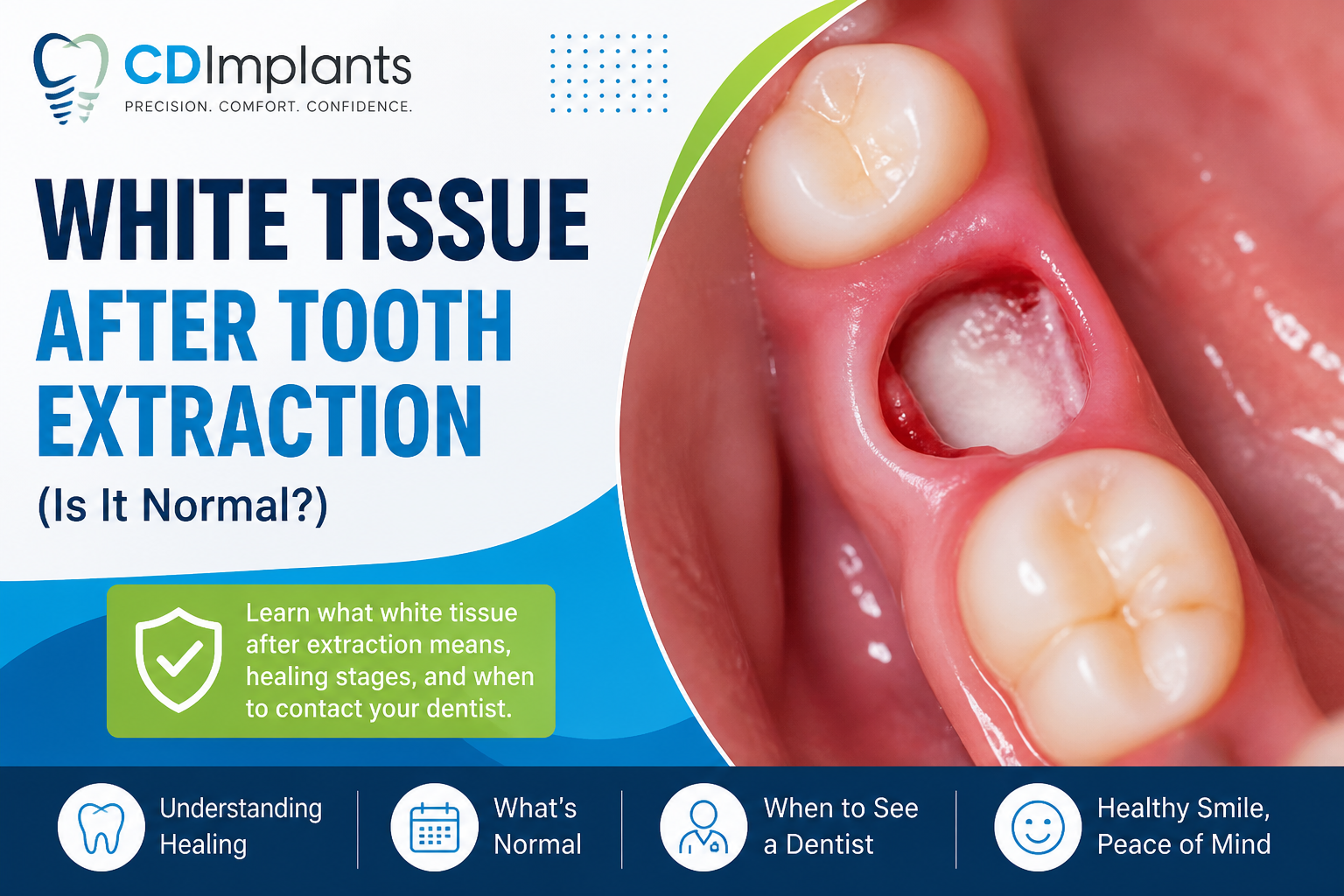
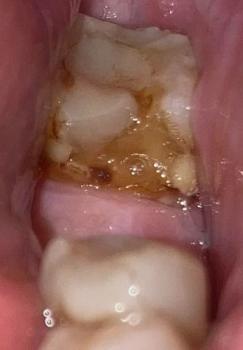
That white or pale layer you see is usually fibrin, a protein that forms as part of your body’s natural healing response.
What Fibrin Does
- Covers and protects the extraction site
- Supports tissue regeneration
- Acts as a scaffold for new cells
Think of it as a biological bandage—it’s not pus, and it’s not bone (in most cases). It’s your body doing exactly what it should.
The Normal Healing Timeline (What You’ll See)
Healing progresses in visible stages. Here’s what typically happens:
Day 1: Blood Clot Formation
- Dark red clot fills the socket
- Mild bleeding and swelling
Days 2–3: White/Yellow Layer Appears
- Fibrin begins forming
- White or cream-colored tissue becomes visible
This is where most patients start to worry—but it’s normal.
Days 4–7: Tissue Stabilization
- White layer thickens slightly
- Pain decreases
- Gum edges begin closing
Week 2: Surface Healing
- Socket appears smaller
- White tissue gradually blends with gum color
Weeks 3–4+: Bone Healing Begins
- Internal bone regeneration starts
- Surface looks mostly healed
When White Tissue Is Normal
From a clinical standpoint, white tissue is normal if:
- Pain is decreasing daily
- No swelling or only mild swelling
- No fever
- No foul smell or pus
- Healing is progressing steadily
In these cases, what you’re seeing is healthy granulation tissue and fibrin.
When White Tissue Is NOT Normal
There are situations where white material may indicate a problem.
1. Dry Socket (Alveolar Osteitis)
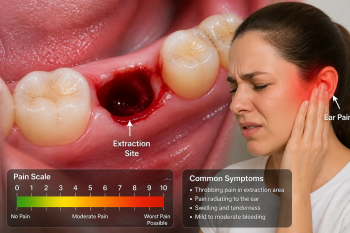
This occurs when the blood clot is lost.
Signs:
- Severe pain 2–5 days after extraction
- Visible bone (often white)
- Radiating pain to ear or jaw
This is not normal healing and requires treatment.
2. Infection
White or yellow material could be pus.
Signs:
- Swelling
- Fever
- Bad taste or odor
- Persistent or worsening pain
Infections need prompt care, often with antibiotics.
Key Differences: Normal vs Problematic White Tissue
| Feature | Normal Healing | Dry Socket | Infection |
|---|---|---|---|
| Appearance | Thin white layer | Empty socket or bone | Thick pus |
| Pain | Decreasing | Severe, worsening | Persistent |
| Smell | Mild or none | Bad odor | Strong foul odor |
| Swelling | Minimal | Minimal | Significant |
| Fever | No | No | Possible |
Why This Matters for Dental Implants
As a bone graft and implant specialist, I pay close attention to early healing.
Healthy white tissue means:
- Proper clot formation
- Reduced risk of bone loss
- Better foundation for implants
Complications, on the other hand, can:
- Delay implant placement
- Require bone grafting
- Increase treatment cost and time
Common Patient Mistakes That Disrupt Healing
Even when healing starts correctly, certain habits can interfere.
Avoid These:
- Smoking within 72 hours
- Using straws
- Touching the socket
- Eating hard or crunchy foods
- Skipping oral hygiene
These actions can dislodge the clot and disrupt fibrin formation.
How to Support Healthy Healing
First 24 Hours
- Bite gently on gauze
- Rest
- Avoid disturbing the area
Days 2–7
- Rinse with warm saltwater
- Eat soft foods
- Maintain gentle brushing
Week 2+
- Resume normal hygiene
- Continue monitoring healing
Diet and Healing: What Helps
Best Foods
- Yogurt
- Eggs
- Mashed potatoes
- Smoothies
Avoid
- Chips
- Nuts
- Sticky candies
- Spicy foods
Good nutrition supports tissue regeneration and immune response.
Real Case Insight (Arkansas Practice)
A patient came in concerned about a white layer in the socket 3 days after extraction.
Symptoms:
- No swelling
- Mild discomfort
- No odor
Diagnosis: Normal fibrin formation
Outcome: Healed perfectly within 2 weeks.
Another patient:
Symptoms:
- Severe pain
- Bad odor
- Visible white bone
Diagnosis: Dry socket
Outcome: Required medicated dressing and follow-up care.
When Should You Call Your Dentist?
Don’t ignore symptoms if you experience:
- Severe pain after day 3
- Swelling or fever
- Thick discharge
- Persistent bad taste
Early intervention prevents complications.
Bone Grafting and White Tissue
If you had a bone graft placed:
- White particles may be visible (graft material)
- This is normal in early healing
- Do not disturb the area
Healing timeline may extend to 3–6 months for full integration.
Medical Perspective: What’s Happening Underneath
Even when you see white tissue, deeper healing includes:
- Blood vessel formation
- Tissue regeneration
- Bone remodeling
This process continues for months—even after the surface looks healed.
FAQ: White Tissue After Tooth Extraction
Is white tissue after extraction normal?
Yes, in most cases it’s fibrin and part of normal healing.
How long does the white layer last?
Typically a few days to a week before blending with gum tissue.
Can white tissue be infection?
Yes, if accompanied by swelling, pain, or odor.
Does dry socket look white?
Yes, exposed bone can appear white and is usually painful.
Should I remove the white tissue?
No—never disturb the healing site.
What if I see white particles after a bone graft?
This can be normal graft material—follow your dentist’s advice.
When should I worry?
If pain worsens, swelling appears, or symptoms don’t improve.
Related Topics You Should Explore
1. Signs of Dry Socket vs Infection
Learn how to identify complications early.
2. Tooth Extraction Healing Timeline
Understand each stage of recovery.
3. Bone Graft Before Dental Implants
Why grafting is often necessary for long-term success.
Final Thoughts from an Arkansas Expert
Seeing white tissue after a tooth extraction can be alarming—but in most cases, it’s a sign that your body is healing exactly as it should.
From my experience in Arkansas, the patients who heal best are those who:
- Understand the healing process
- Follow aftercare instructions
- Avoid unnecessary interference
If there’s one takeaway:
Not everything that looks unusual is a problem—but knowing the difference is what protects your recovery.
Can tooth extraction cause infection? Mild inflammation is normal, but increasing swelling, fever, or severe pain may indicate infection. Learn more about post-extraction infection warning signs in this detailed guide.
Book a consultation with our Cebu dental specialists for proper evaluation and care.
Ready to get expert guidance?
If you’re experiencing severe pain or delayed healing, book a consultation with our Cebu dental specialists to get proper evaluation and care.
Consultation or contact page .
Book a Consultation
For severe discomfort or delayed healing, book a consultation with our Cebu dental specialists today.
Looking for a dentist? Browse our Cebu dental directory to find trusted clinics near you.
Medical Review and Clinical Basis
This article is based on clinical dental guidelines and real patient recovery patterns observed after tooth extraction procedures. The information reflects common post-extraction healing stages, including normal clot formation, gum tissue repair, and signs of possible complications such as dry socket or infection.
While mild discomfort is expected after a dental extraction, worsening pain after Day 3, bad odor, exposed bone, or spreading pain may require professional evaluation. These symptoms are consistent with known post-extraction complications described in standard dental practice.
About Cebu Dental Implants
Cebu Dental Implants provides comprehensive tooth extraction, surgical procedures, and dental implant services in the Philippines. Our team evaluates post-extraction healing, manages complications such as dry socket, and advises patients on proper aftercare to prevent infection and delayed healing.
If you experience severe pain or unusual symptoms after extraction, early professional assessment is recommended to prevent further complications.
Important Medical Disclaimer
This content is for educational purposes only and does not replace professional dental diagnosis. Every patient heals differently. If symptoms worsen or do not improve within a few days, consult a licensed dentist for proper evaluation and treatment.
Author
This article was prepared by the Cebu Dental Implants content team in consultation with licensed dental professionals experienced in tooth extraction and implant procedures.
Related Clinical Cases
Patients with lower front gum inflammation may also experience tartar buildup, periodontal disease, gum abscesses, or tooth decay. Explore these related clinical case studies.

Other topics:
Other Dental Clinic
 |
 |
 |
 |