Transforming Smiles, Restoring Confidence.

Painful Tongue Lesion: Dental Expert Guide to Causes, Treatment, Healing, and Warning Signs
Image:
Severity:
Teeth Problems:
Understanding a Painful Tongue Lesion
A painful tongue lesion is an abnormal area on the tongue that may appear as an ulcer, red or white patch, small lump, blister-like area, or irritated wound. The discomfort may become more noticeable when eating, drinking, speaking, or moving the tongue.
According to general dental practice, the appearance of a tongue lesion must be interpreted alongside the patient's symptoms, medical history, duration of the lesion, and possible sources of irritation. Not every painful lesion is an infection, and not every ulcer is a simple mouth sore.
In this case-analysis guide, the primary goal is to explain possible causes, appropriate initial care, expected healing, and the circumstances in which a professional examination is necessary.
1. Dental Expert Assessment: What Could Cause the Lesion?
Several conditions can produce a painful area on the tongue.
Traumatic tongue ulcer
Accidentally biting the tongue, burning it with hot food, or repeatedly rubbing it against a sharp tooth can damage the surface tissue. A broken tooth, rough filling, or poorly fitting dental appliance may also cause repeated irritation.
A traumatic ulcer may have a shallow, raw center with a reddish border. Its appearance varies depending on the injury and stage of healing.
Recommended approach: A dentist should identify and address the source of repeated trauma. Avoiding further injury allows the tissue to heal.
Aphthous ulcer (canker sore)
Aphthous ulcers are painful sores that commonly develop on the movable, non-keratinized tissues of the mouth, including the underside of the tongue. They are not contagious and are different from cold sores caused by herpes simplex virus.
Minor aphthous ulcers often heal within approximately 7–14 days. Frequent or unusually severe ulcers may require assessment for contributing factors or an underlying condition.
Irritation or inflammation of the tongue
Glossitis refers to inflammation of the tongue. It may be associated with irritation, infection, allergic reactions, dry mouth, or nutritional deficiencies, among other causes.
Depending on the underlying condition, the tongue may appear red, smooth, swollen, or tender. Persistent symptoms warrant a clinical assessment rather than treatment based on appearance alone.
Oral infection
Some infections can cause tongue soreness or visible lesions. Oral candidiasis, for example, may produce white patches that can sometimes be wiped away, leaving irritated tissue. Other infections have different clinical features.
Antibiotics and antifungal medicines are not interchangeable. Treatment should be selected after a clinician determines whether an infection is present and identifies the likely cause.
Persistent or potentially serious oral lesion
A persistent ulcer, unexplained lump, thickened area, or red or white patch can occasionally indicate a potentially malignant disorder or oral cancer.
This does not mean that every painful tongue lesion is cancer. However, a lesion that does not heal, grows, bleeds without an obvious cause, or becomes associated with numbness or difficulty swallowing must not be ignored.
The American Dental Association recommends further evaluation of suspicious oral lesions and recognizes biopsy as the diagnostic standard when tissue examination is indicated.
2. Clinical Examination: How a Dentist Evaluates a Painful Tongue
A proper examination involves more than inspecting a photograph.
A dentist or oral medicine specialist may assess:
-
Location: Whether the lesion is on the tip, side, upper surface, or underside of the tongue.
-
Appearance: Its size, color, shape, borders, and whether the surface is ulcerated or raised.
-
Duration: When the lesion first appeared and whether it is getting smaller, larger, or more painful.
-
Possible trauma: Contact with a sharp tooth, broken restoration, denture, or orthodontic appliance.
-
Associated symptoms: Swelling, bleeding, fever, difficulty eating, numbness, or difficulty swallowing.
-
Medical history: Relevant medications, tobacco and alcohol exposure, previous ulcers, immune conditions, and nutritional concerns.
A biopsy, blood tests, or other investigations may be considered when the findings warrant them. Dental X-rays are not routinely required for an isolated tongue ulcer, although imaging may be appropriate if an underlying dental or jaw problem is suspected.
Important diagnostic limitation: The diagnosis cannot be confirmed from an image alone. The findings should be described as preliminary observations unless an appropriate clinical examination has established the cause.
3. Safe Home Care for a Painful Tongue Lesion
For a mild lesion that appears consistent with minor irritation and has no warning signs, the following measures may help reduce discomfort while healing occurs.
-
Rinse gently with salt water. Dissolve approximately half a teaspoon of salt in a glass of warm water, rinse, and spit it out. Do not swallow the rinse.
-
Choose soft, cool foods. Yogurt, soft eggs, porridge, and other foods that do not scrape the lesion may be more comfortable.
-
Avoid irritants. Temporarily avoid spicy, acidic, very hot, or rough foods and drinks that aggravate the sore.
-
Maintain gentle oral hygiene. Brush with a soft-bristled toothbrush and avoid scraping or repeatedly touching the lesion.
-
Avoid tobacco and alcohol. These can irritate oral tissues and may interfere with healing.
-
Address repeated dental trauma. Arrange a dental appointment if a sharp tooth, broken filling, or appliance is rubbing against the tongue.
A pharmacist or clinician can advise whether an appropriate pain-relief medicine or protective oral product is suitable for the individual.
Do not apply aspirin directly to the lesion, use household chemicals, or start antibiotics or antifungal medicines without appropriate advice.
4. Painful Tongue Lesion: Expected Healing Timeline
Healing depends on the cause, the severity of the injury, and whether the source of irritation has been removed.
Days 1–3: Initial inflammation
A minor traumatic ulcer may be tender, particularly during eating or speaking. The priority is to avoid further injury and keep the mouth clean.
Days 4–7: Early improvement
A simple traumatic ulcer or minor canker sore should generally begin to improve. Pain may decrease before the tissue has completely healed.
Days 8–14: Continued healing
Many minor traumatic ulcers and aphthous ulcers heal within one to two weeks. The lesion should progressively become less painful and smaller.
After two weeks: Reassessment is important
A tongue lesion that remains present after two weeks should be examined by a dentist or physician, especially if it has not improved. Do not wait for the end of the timeline if the lesion is enlarging, hard, unexplained, or otherwise suspicious.
Persistent lesions may require specialist referral or a biopsy to determine the cause.
5. When Is a Painful Tongue Lesion a Dental Emergency?
Seek emergency medical care immediately if tongue or mouth swelling causes difficulty breathing, difficulty swallowing saliva, or rapidly progressing swelling.
Arrange prompt professional assessment if the lesion is accompanied by:
-
Rapidly increasing pain or swelling.
-
Fever or feeling seriously unwell.
-
Significant or persistent bleeding.
-
A hard or enlarging lump.
-
Unexplained numbness or restricted tongue movement.
-
A persistent ulcer or red or white patch lasting two weeks or longer.
-
A neck lump or unexplained difficulty swallowing.
A suspicious lesion does not necessarily indicate cancer, but early assessment helps prevent delays in diagnosis.
6. Professional Dental Commentary
A painful tongue lesion should be approached by identifying its cause rather than treating every sore in the same way.
If the lesion is caused by repeated contact with a sharp tooth, correcting that source of trauma may be essential. If an ulcer is associated with a systemic condition, infection, or nutritional deficiency, the patient may need additional evaluation and cause-specific treatment.
If a lesion persists despite appropriate care, the clinician should reconsider the initial diagnosis rather than repeatedly prescribing symptomatic treatments.
Clinical takeaway: Most minor tongue injuries heal without complications. The safest approach combines gentle oral care, avoidance of further irritation, and timely professional assessment when healing is delayed or warning signs appear.
Frequently Asked Questions About Painful Tongue Lesions
1. What is the most common cause of a painful tongue lesion?
Common causes include accidental tongue biting, burns from hot food, irritation from sharp teeth or dental appliances, and aphthous ulcers. The precise cause depends on the lesion's appearance, location, history, and clinical examination.
2. How long does a painful tongue ulcer take to heal?
Many minor traumatic ulcers and canker sores heal within 7–14 days. Healing may take longer if the tongue is repeatedly injured or if an underlying condition is present. A lesion lasting two weeks or longer should be assessed professionally.
3. Can a sharp tooth cause a painful tongue lesion?
Yes. A chipped tooth, rough filling, or sharp cusp can repeatedly rub against the tongue and cause an ulcer. A dentist can assess the contact point and determine whether the tooth or restoration needs treatment.
4. Should I use antibiotics for a painful tongue ulcer?
Not routinely. Most minor traumatic and aphthous ulcers do not require antibiotics. Antibiotics are appropriate only for specific bacterial infections when a clinician determines they are necessary.
5. Can a painful tongue lesion be caused by vitamin deficiency?
Some nutritional deficiencies, including deficiencies of vitamin B12, folate, or iron, can contribute to tongue inflammation or oral symptoms. However, a painful lesion does not automatically mean a deficiency is present. Testing should be guided by the clinical history and examination.
6. Is a white spot on the tongue dangerous?
Not necessarily. White areas may result from irritation, coating, infection, or other conditions. A persistent white patch that cannot be explained should be examined by a dentist or physician, particularly if it lasts two weeks or longer.
7. Can a painful tongue lesion be a sign of oral cancer?
Occasionally. A persistent ulcer, unexplained lump, red or white patch, thickened tissue, numbness, or difficulty moving the tongue may require investigation. These symptoms have many possible causes, but they should not be ignored if they persist or worsen.
8. Should I scrape or pop a painful tongue lesion?
No. Scraping, squeezing, cutting, or puncturing the lesion may cause additional injury, bleeding, or infection. Gentle oral hygiene and professional assessment are safer.
9. When should I see a dentist for a painful tongue lesion?
Arrange an examination if the lesion is worsening, repeatedly returning, interfering with eating, or not improving. Any unexplained lesion persisting for two weeks or longer warrants prompt professional evaluation. Seek emergency care for breathing difficulty or rapidly progressive swelling.
10. Does every painful tongue lesion require a biopsy?
No. Many lesions have a recognizable benign cause and heal normally. A dentist or oral medicine specialist may recommend a biopsy if the lesion is suspicious, persistent, or cannot be adequately diagnosed through examination.
11. Can salt-water rinses cure a tongue lesion?
Salt-water rinses may help keep the area comfortable and clean, but they do not treat every underlying cause. They cannot replace evaluation for persistent lesions, significant infections, or suspicious tissue changes.
12. What is the difference between a tongue ulcer and glossitis?
A tongue ulcer is a break in the surface tissue, often appearing as a sore or shallow wound. Glossitis means inflammation of the tongue and may cause diffuse redness, tenderness, swelling, or a smooth appearance. A clinician can distinguish these and identify any underlying cause.
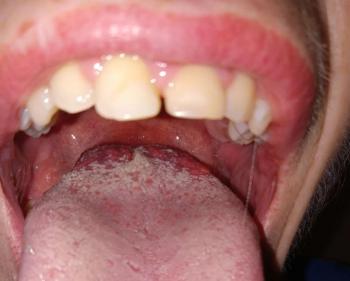
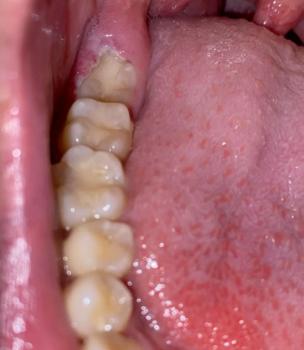
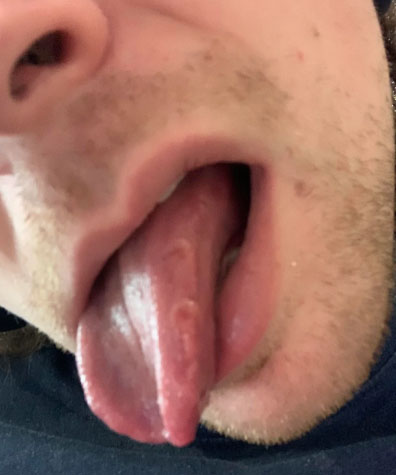
Teeth Case – Full Analysis and Provisional Diagnosis (Zoom 100%)
This assessment is based on visual inspection of the provided image only. A definitive diagnosis requires an in-person oral examination by a licensed dental or medical professional. Tongue lesions that persist or worsen must be clinically evaluated.
1. Visual Findings (Deep Examination)
-
Tongue (lateral and dorsal surface):
-
Visible linear fissure and localized circular lesions consistent with traumatic injury or irritation.
-
Surface appears mildly inflamed with areas of tenderness suggested by exposure and posture.
-
-
Surrounding oral tissues:
-
No obvious heavy swelling, but localized irritation is present.
-
-
Probable cause:
-
Repeated tongue biting, friction against sharp tooth edges, stress-related clenching, or accidental trauma.
-
-
Saliva and moisture:
-
Adequate saliva present, which supports healing if trauma is eliminated.
-
2. Most Likely Diagnosis (Provisional)
-
Traumatic tongue ulcer or fissure
-
Localized inflammatory tongue lesion
-
Repetitive mechanical irritation
3. Differential Diagnosis (If Lesion Persists)
-
Aphthous ulcer (canker sore)
-
Infected traumatic ulcer
-
Chronic irritation lesion
-
Less commonly, precancerous lesion if non-healing beyond 14 days
4. Recommended Treatment Process
Phase 1: Immediate Management (Days 1–3)
-
Identify and remove the cause of trauma (sharp tooth edge, fractured filling, or habitual biting).
-
Warm saline mouth rinses 2–3 times daily.
-
Topical protective oral gel or barrier paste as advised by a dentist.
-
Soft diet; avoid spicy, acidic, hot, or abrasive foods.
Phase 2: Healing Support (Days 4–7)
-
Maintain gentle oral hygiene.
-
Avoid alcohol and tobacco.
-
Use pain-relieving oral rinse if discomfort persists.
Phase 3: Re-evaluation (Days 8–14)
-
Lesion should significantly reduce in size and pain.
-
If no improvement or if pain worsens, immediate clinical evaluation is required.
Expected healing time:
-
Minor traumatic tongue injuries typically heal within 7–14 days once irritation stops.
5. If Healing Takes 14 Days – What May Scale Up
-
Persistent pain and ulceration
-
Secondary bacterial infection
-
Difficulty speaking, eating, or swallowing
-
Scar formation
-
Need for biopsy to rule out non-traumatic pathology
6. Home Care Recommendations (Interim)
-
Avoid repeated tongue movement against teeth.
-
Do not scrape, bite, or pick the lesion.
-
Stay hydrated.
-
Avoid very hot drinks.
7. Professional Commentary
Most tongue injuries are benign and heal rapidly when the source of trauma is removed. Any tongue lesion that does not heal within two weeks or shows growth, hardening, or bleeding must be examined promptly.
Visit Nearest Dental Clinic
Find a nearby dental clinic for proper oral examination and management:
https://cebudentalimplants.com/map-dental-clinic
Medical Disclaimer
This educational case analysis is intended to support oral-health awareness and does not establish a diagnosis for an individual patient. Photographs and online descriptions cannot replace an in-person examination by a licensed dentist, physician, or oral medicine specialist. Seek professional care for persistent, worsening, or suspicious tongue lesions.
Related Reading
Clinical References
-
American Dental Association — Cancer and Head and Neck Cancer
-
American Dental Association — Oral Cancer Guideline
-
NHS — Sore or White Tongue
Related Clinical Cases
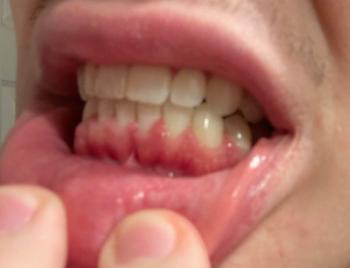
Patients with lower front gum inflammation may also experience tartar buildup, periodontal disease, gum abscesses, or tooth decay. Explore these related clinical case studies.