Because Every Tooth Deserves Care.

Immediate vs. Delayed Dental Implants: Clinical Case Analysis
Which is better: getting a dental implant immediately after tooth extraction or waiting several months?
This is one of the most common questions patients ask when considering dental implants in the United States.
Immediate implant placement and delayed implant placement are both established treatment approaches. The best option depends on the condition of the extraction site, available jawbone, gum health, infection status, and the patient's overall treatment needs.
This clinical case analysis compares both approaches and explains what patients should know before choosing an implant timeline.
What Is an Immediate Dental Implant?
An immediate dental implant is placed during the same appointment as tooth extraction.
After the tooth is removed, the dentist evaluates the extraction socket and surrounding bone. If the site is suitable, a titanium implant is inserted into the jawbone.
Typical Immediate Implant Timeline
-
Tooth extraction.
-
Evaluation of the socket and bone.
-
Implant placement during the same appointment.
-
Healing and osseointegration.
-
Abutment and final crown placement.
In selected cases, a temporary crown may be provided on the same day. However, an immediate implant does not automatically mean immediate placement of the permanent crown.
Potential Benefits
-
Fewer separate surgical appointments.
-
May shorten the period between extraction and implant placement.
-
Can help maintain the extraction site's contours when properly planned.
-
May be useful for selected front-tooth replacement cases.
Potential Limitations
-
Not suitable for every extraction site.
-
Requires sufficient bone support and implant stability.
-
Thin facial bone may create aesthetic challenges.
-
Additional grafting may still be needed.
-
Infection and other local conditions must be carefully evaluated.
What Is a Delayed Dental Implant?
A delayed dental implant is placed after the extraction site has had time to heal.
Typical Delayed Implant Timeline
-
Tooth extraction.
-
Healing of the extraction socket.
-
Bone grafting if required.
-
Implant placement after the site is ready.
-
Osseointegration.
-
Final crown placement.
The waiting period may allow the dentist to evaluate the healing ridge and plan implant placement based on the available bone.
Potential Benefits
-
Allows time for the extraction site to heal.
-
May be appropriate when substantial bone or soft-tissue healing is needed.
-
Provides time to manage certain local conditions.
-
May allow staged bone augmentation when indicated.
Potential Limitations
-
Longer overall treatment time in some cases.
-
Additional surgical appointments may be needed.
-
Bone resorption can occur during healing.
-
Bone grafting may be required if there is insufficient ridge volume.
-
A temporary denture or bridge may be needed while waiting.
Clinical Case Comparison
Case 1: Immediate Implant Placement
Patient Profile
A patient in the United States has a damaged upper front tooth that requires extraction.
The patient wants to restore the missing tooth with a dental implant and is interested in a same-day implant procedure.
Clinical Assessment
The dentist evaluates:
-
The condition of the tooth.
-
The surrounding facial bone.
-
The presence or absence of infection.
-
The amount of bone available for initial implant stability.
-
The gum tissue and aesthetic requirements.
-
The patient's medical history and healing considerations.
Treatment Plan
If the site is suitable, the dentist may remove the tooth and place the implant during the same appointment.
A temporary tooth may be used while the implant heals.
Clinical Considerations
Immediate placement can be helpful in selected cases, but it requires careful planning.
The front-tooth region can be particularly sensitive to changes in gum and bone contour. A patient with a thin facial bone plate may need a different treatment approach.
Patient Questions
Can I get my front tooth replaced on the same day?
Possibly. Immediate implant placement and a temporary restoration may be appropriate for selected patients.
Will I receive my permanent crown on the same day?
Not necessarily. The permanent crown is often placed after the implant has healed sufficiently.
Case 2: Delayed Implant Placement
Patient Profile
A patient had a molar extracted several months ago. The patient now wants a dental implant but is concerned about bone loss.
Clinical Assessment
The dentist examines the extraction site and evaluates:
-
Ridge width.
-
Bone height.
-
Gum condition.
-
The location of important anatomical structures.
-
Whether the patient needs a bone graft.
-
The planned implant position.
Treatment Plan
If the site has adequate bone, the dentist may proceed with implant placement.
If bone volume is insufficient, the patient may require bone augmentation before or during implant surgery.
Clinical Considerations
Waiting several months after extraction does not automatically make implant placement impossible.
However, the ridge may become narrower during healing. A patient who needs a bone graft may require additional treatment time.
Patient Questions
Is it too late to get an implant after 6 months?
No. Many patients can receive an implant months after extraction. The dentist must evaluate the actual bone condition.
Will I need a bone graft?
Not necessarily. The need for grafting depends on the amount and location of available bone and the planned implant position.
Immediate vs. Delayed Dental Implants
| Clinical parameter | Immediate placement | Delayed placement |
|---|---|---|
| Implant timing | Same day as extraction | After a healing period |
| Number of surgeries | May reduce separate surgical appointments | May involve staged procedures |
| Bone condition | Requires suitable bone and stability | Allows healing and reassessment |
| Infection | Must be carefully evaluated | May allow management before implant placement |
| Bone grafting | May be performed when indicated | May be performed before or during implant placement |
| Aesthetic concerns | Important in thin facial bone areas | Allows planning after healing |
| Total treatment time | May be shorter in selected cases | May be longer depending on healing and grafting |
Which Implant Approach Is Better for You?
There is no single implant timeline that is appropriate for every patient.
A dentist or oral surgeon may recommend immediate placement when the extraction site has favorable anatomy and the implant can be placed predictably.
A delayed approach may be recommended when the site needs additional healing, bone augmentation, or treatment of other local conditions.
Factors That Influence the Decision
1. Jawbone condition
The available bone must be evaluated for implant stability and proper positioning.
2. Gum health
Healthy gum tissue is important for healing and the appearance of the final restoration.
3. Infection
The dentist must assess any infection and determine whether immediate placement is appropriate.
4. Tooth location
Front teeth often have demanding aesthetic requirements. Back teeth may involve different bone and anatomical considerations.
5. Medical history
Certain health conditions, medications, and smoking habits may affect healing and implant treatment planning.
6. Patient expectations
Some patients prioritize fewer appointments, while others prefer a staged approach with additional healing time.
Dental Implant Success Rate: Immediate vs. Delayed
Patients often ask whether immediate dental implants have a lower success rate than delayed implants.
Research has reported high survival rates for both treatment approaches when patients are appropriately selected and treatment is properly performed.
However, the exact outcome depends on factors such as:
-
Implant position.
-
Bone quality and quantity.
-
Initial implant stability.
-
Infection and periodontal health.
-
Oral hygiene.
-
Smoking.
-
Overall health.
-
Follow-up care.
Important: A single success-rate percentage cannot predict the outcome for an individual patient. Immediate and delayed implants should be evaluated based on the specific clinical situation rather than assuming one approach is always superior.
Dental Insurance and Cost Considerations in the USA
Dental insurance coverage for implants varies by plan.
In the United States, coverage may depend on the specific procedure, plan exclusions, annual limits, and whether the treatment is considered a covered benefit.
Possible charges include:
-
Tooth extraction.
-
Bone grafting.
-
Implant placement.
-
Abutment.
-
Final dental crown.
-
Temporary restoration.
-
Imaging and consultations.
Does Delayed Implant Placement Cost More?
Not always.
A delayed approach may involve additional procedures, but the total cost depends on the patient's treatment needs.
An immediate implant may also require grafting, specialized restoration, or additional procedures.
Patients should request a written treatment estimate from their dental provider before beginning treatment.
Frequently Asked Questions About Immediate vs. Delayed Dental Implants
1. Is immediate dental implant placement better than delayed placement?
Both approaches have established clinical uses. The appropriate choice depends on bone, gum health, infection status, tooth location, and the patient's treatment plan.
2. Can every tooth receive an immediate dental implant?
No. Some extraction sites do not have adequate bone support or suitable conditions for immediate placement.
3. Can I get an immediate implant if my tooth is infected?
It depends on the type and severity of infection.
An active abscess or significant infection may make immediate placement unsuitable. However, not every infection automatically rules it out.
The dentist must evaluate the infection and surrounding bone before deciding.
4. Does an immediate implant stop bone loss?
Immediate placement may help maintain the extraction site's structure in selected cases, but it does not completely stop bone remodeling.
Bone loss can still occur around the implant and surrounding tissues.
5. How long after extraction can I get a delayed implant?
Delayed placement may occur after several months of healing. The exact timeline depends on the extraction site and whether grafting is required.
6. Is 6 months too long to wait for a dental implant?
No. Six months after extraction is not automatically too late.
The dentist can evaluate whether enough bone remains for implant placement or whether additional treatment is needed.
7. Will I need a bone graft if I wait for 6 months?
Not necessarily.
Some patients have sufficient bone for implant placement without grafting. Others may need augmentation because of ridge resorption or pre-existing bone loss.
8. Can I get a temporary tooth while waiting for a delayed implant?
Yes. Depending on the location and clinical situation, options may include a temporary removable partial denture, temporary bridge, or another provisional restoration.
9. How long does an immediate implant take to heal?
Implant healing often takes several months. Osseointegration commonly takes approximately 3 to 4 months, although the timeline varies.
10. Can a delayed implant have a high success rate?
Yes. Delayed implants can have high survival rates when properly planned and maintained.
The outcome depends on the patient's bone, implant placement, oral hygiene, and other clinical factors.
11. Does immediate implant placement hurt more?
Pain and swelling vary by patient and procedure.
Immediate placement combines extraction and implant surgery in one appointment, while delayed placement separates the procedures.
Your dentist will discuss pain management and recovery expectations.
12. Is immediate implant placement more expensive?
Not always.
The total cost depends on the procedures, materials, restoration, insurance, and whether grafting or other treatment is required.
13. Can smokers get immediate or delayed dental implants?
Smoking may increase the risk of complications and affect healing.
Your dentist should discuss smoking cessation and implant risks before treatment.
14. What if I have diabetes?
Diabetes does not automatically rule out dental implants. However, medical history and blood sugar control may influence surgical planning and healing.
Your dentist and medical provider can help determine whether implant treatment is appropriate.
15. Which approach is used for front teeth?
Both immediate and delayed implants may be used for front teeth.
The decision depends on facial bone thickness, gum tissue, aesthetic requirements, and implant stability.
16. Can I get a dental implant on the same day as extraction and a permanent crown?
A same-day temporary restoration may be possible in selected cases.
The permanent crown is generally placed after the implant has healed sufficiently.
17. What happens if the extraction site has severe bone loss?
The dentist may recommend bone grafting, ridge augmentation, or another treatment before implant placement.
The exact plan depends on the location and severity of bone loss.
18. How do I know which implant timeline is right for me?
Schedule an evaluation with a qualified dentist or oral surgeon.
The clinician can review your dental history, examine the extraction site, and use appropriate imaging to determine the best treatment plan.
Final Clinical Takeaway
Immediate and delayed dental implants are both used in modern implant dentistry.
Immediate placement may reduce the time between extraction and implant surgery for selected patients. Delayed placement may provide additional healing time when the extraction site requires it.
The most important factor is not simply how fast the implant is placed. It is whether the implant can be placed in a healthy, stable, and properly planned foundation.
A qualified dentist or oral surgeon should evaluate your individual case before recommending immediate or delayed implant placement.
Medical Disclaimer: This article is for general educational purposes only and does not replace a professional dental examination. Dental implant treatment, timing, and success vary by patient. Always consult a qualified dentist or oral surgeon for personalized advice.
Related Clinical Cases
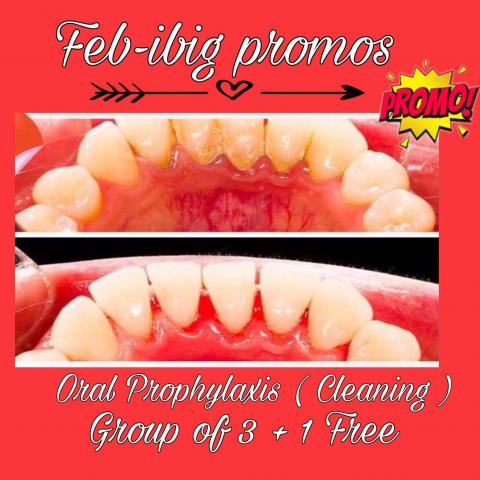
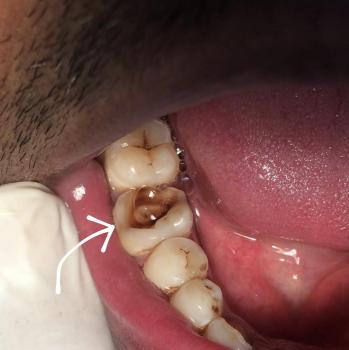
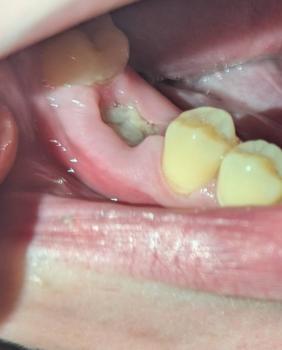
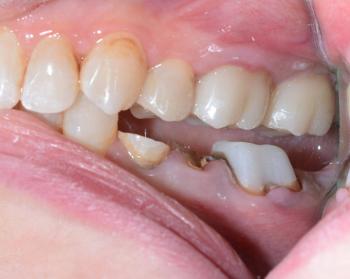
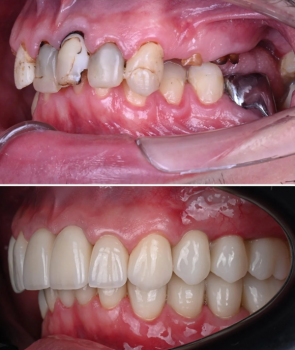
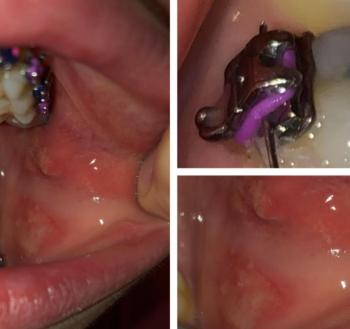
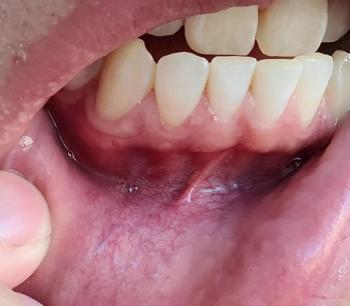
Patients with lower front gum inflammation may also experience tartar buildup, periodontal disease, gum abscesses, or tooth decay. Explore these related clinical case studies.

Other topics:
Other Dental Clinic