Transforming Smiles, Restoring Confidence.

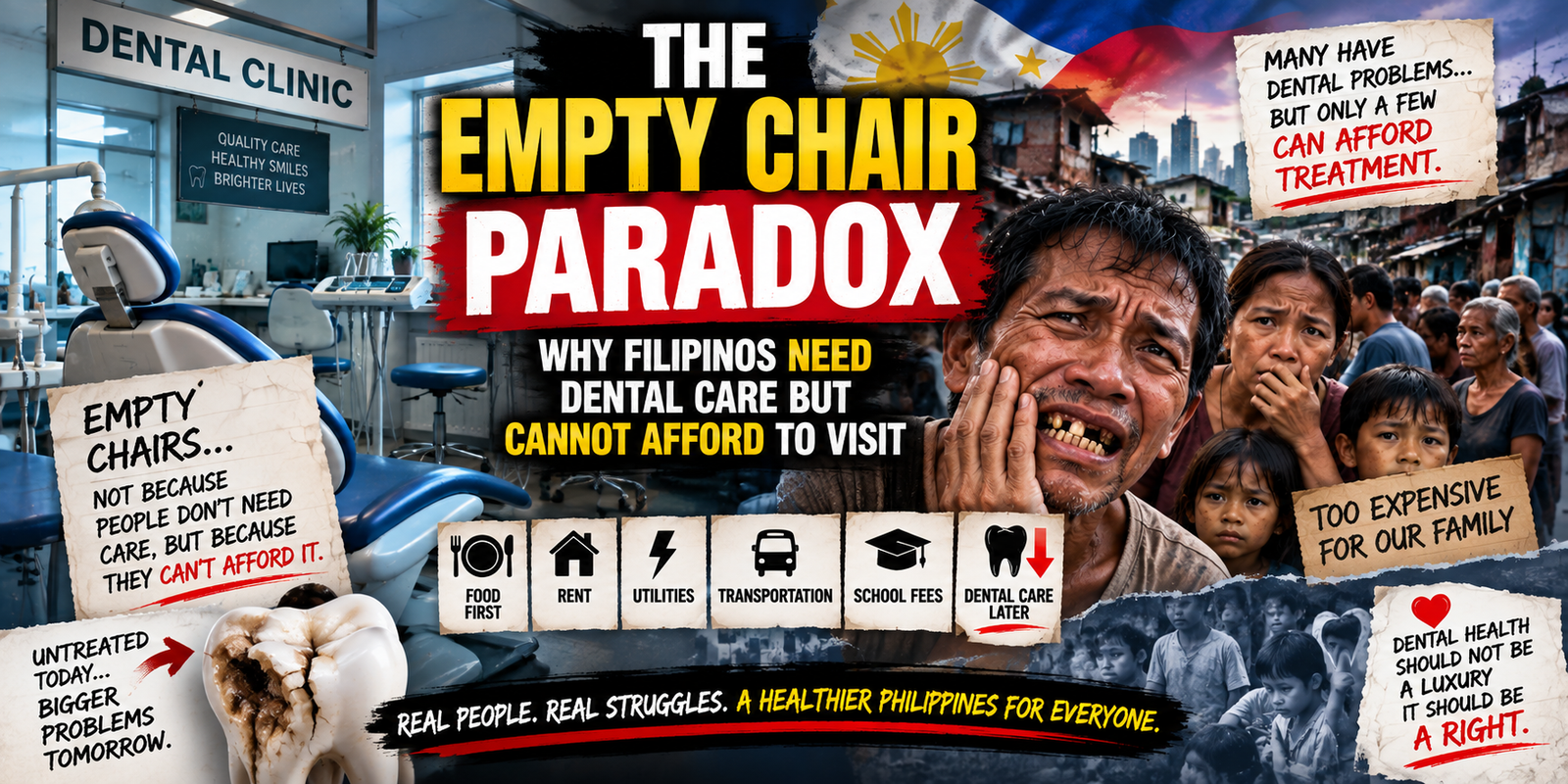
The Empty Chair Paradox: Why Filipinos Need Dental Care but Cannot Afford to Visit
Language :
Topics:
There is a difficult reality developing inside parts of the Philippine dental sector:
The need for dental care has not disappeared. The ability to pay for it has become the problem.
A dental clinic can have empty appointment slots while people in the surrounding community are living with cavities, broken teeth, missing teeth, gum disease and persistent dental pain.
That contradiction is at the heart of the problem.
The question is no longer simply:
"Do Filipinos need dental treatment?"
Millions clearly do.
The more difficult question is:
"Can they afford to get it?"
The Barrier Is Purchasing Power
For a family living on a tight budget, healthcare decisions are often connected directly to household cash flow.
Food must be purchased.
Rent must be paid.
Electricity and water cannot simply be ignored.
Transportation costs money.
Children need school expenses.
There may be debts, family obligations and other unexpected expenses.
When all of these bills arrive, dental treatment can become something that is postponed.
Not because the patient doesn't care.
Not because the patient doesn't understand the importance of oral health.
But because there may simply be no money left.
This is the painful difference between needing healthcare and being able to purchase healthcare.
The Waiting Game
One of the most concerning consequences is delayed treatment.
A person may notice a small cavity and decide to wait.
Someone may have a broken tooth but continue eating carefully around it.
Another person may have missing teeth but postpone getting a replacement.
A patient with bleeding gums may tell themselves that they will visit the dentist next month.
Then next month becomes six months.
Six months becomes a year.
And eventually, the dental problem may become much more complicated.
The patient wasn't necessarily ignoring their health.
They were trying to manage their finances.
When Pain Becomes the Appointment Reminder
For some patients, the dental clinic becomes less of a place for routine prevention and more of a destination for emergencies.
The appointment happens when:
-
The toothache becomes unbearable
-
The face begins to swell
-
Eating becomes difficult
-
A tooth breaks
-
An infection develops
-
Sleeping becomes difficult because of pain
At that point, the patient may no longer be thinking about long-term oral health.
They are thinking:
"Please make the pain stop."
This is a major difference between preventive dentistry and crisis dentistry.
Preventive care attempts to address problems early.
Crisis care happens after the problem has already become difficult to ignore.
The Empty Chair Paradox
This creates one of the strangest situations in dentistry.
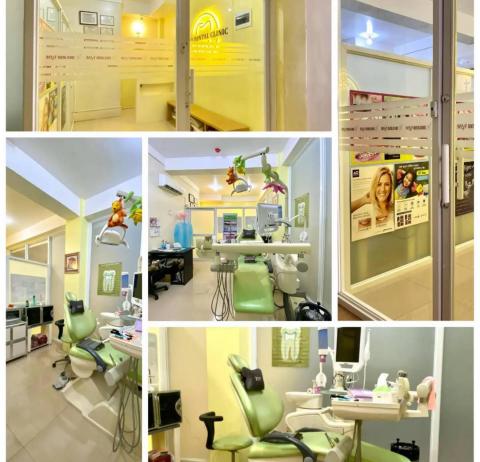
A clinic can have empty chairs.
But the community can have people with serious dental problems.
Why?
Because the absence of patients does not necessarily mean the absence of disease.
It can mean the price of treatment is higher than what some households can comfortably afford.
The dental chair is empty.
The tooth is still broken.
The cavity is still there.
The gum disease is still progressing.
The missing tooth is still missing.
The patient simply isn't coming through the door.
The Dentist Sees an Empty Appointment Book
From the perspective of the dentist, this creates another problem.
A clinic has fixed costs.
Rent doesn't disappear when the appointment book is empty.
Electricity still needs to be paid.
Staff still need to be compensated.
Dental materials still need to be purchased.
Laboratory work still costs money.
Equipment requires maintenance.
Licenses, taxes, technology and other expenses remain.
This means a clinic can experience a painful mismatch:
High community need + low patient purchasing power = low clinic revenue.
If that situation continues, a dentist may have to reconsider how the practice operates.
Some may reduce operating hours.
Some may reduce staff.
Some may relocate.
Some may focus more heavily on higher-value procedures.
And some may eventually consider closing or pursuing professional opportunities elsewhere.
That does not mean widespread dental-clinic closures are inevitable.
It means prolonged low patient volume combined with rising operating costs creates a genuine business risk.
The Patient Is Also Making a Rational Decision
It is easy to criticize someone for postponing dental care.
But imagine the household budget.
Suppose a family has limited money remaining after food, rent, transportation, utilities and school expenses.
The dentist recommends treatment costing tens of thousands of pesos.
The family knows the treatment is important.
But paying that amount could mean losing the money needed for essential household expenses.
What would you do?
For some families, postponing the dental procedure may be the only financially realistic choice available.
This is why the issue should not simply be described as "people don't care about their teeth."
Sometimes people care deeply.
They simply cannot afford the solution.
When Restorative Dentistry Becomes a Luxury
Restorative dentistry can involve significant expenses.
Crowns.
Bridges.
Dentures.
Root canal treatment.
Multiple restorations.
Dental implants.
Full-mouth rehabilitation.
For a higher-income household, these procedures may be manageable.
For a low-income family, the same treatment may represent months of disposable income.
That creates an uncomfortable divide.
One person sees a dental implant as a healthcare investment.
Another person sees the same procedure as financially impossible.
Both people may have the same missing tooth.
Their economic circumstances are what separate them.
The Oral-Health Inequality Problem
This can create an increasingly visible divide in society.
People with financial resources can seek treatment early.
People with fewer resources may wait.
Early treatment can sometimes prevent a problem from becoming more complicated.
Delayed treatment can sometimes result in more extensive intervention.
That means financial inequality can eventually become oral-health inequality.
The people who can afford preventive care may maintain their teeth more easily.
The people who cannot afford regular care may arrive only after significant problems develop.
This is not simply a dental issue.
It is a healthcare-access issue.
What Happens to Broken Teeth in Poor Communities?
This is perhaps the most difficult question.
Imagine a low-income community where many people have:
-
Broken teeth
-
Missing teeth
-
Cavities
-
Gum disease
-
Dental infections
-
Poor access to regular dental examinations
If private dental treatment is unaffordable, where do those people go?
Government hospitals and public dental programs can play an important role.
Community dental missions can help.
PhilHealth benefits can help eligible patients access covered services.
But the scale of the country's oral-health needs means that access, capacity and geographic availability remain important questions.
A government program can help thousands of people.
But the need may extend far beyond the number of available appointments.
The Role of Government
The Philippine government is not completely absent from dental healthcare.
PhilHealth has introduced a Preventive Oral Health Services in Primary Care benefit, and its provider data in 2026 listed hundreds of accredited facilities offering the package.
Government hospitals and local health programs also provide various dental services.
These programs matter.
But government assistance should not be interpreted as meaning every dental procedure is free or fully covered for every Filipino.
Complex restorative procedures can involve significant costs.
Specialized treatment may not be readily available everywhere.
And people living in remote or underserved communities can face additional barriers.
The challenge is therefore not simply creating programs.
It is making sure people can actually access appropriate care when they need it.
What Happens If Private Clinics Cannot Survive?
This is where the issue becomes bigger than individual businesses.
Private dentists provide a substantial portion of dental services in communities throughout the country.
If a clinic becomes financially unsustainable, the loss isn't necessarily just a business loss.
Patients may lose a nearby source of care.
They may need to travel farther.
They may have fewer choices.
They may face longer waiting times.
And some may simply stop seeking treatment.
The impact could be especially significant in communities where there are already relatively few dental providers.
Dentists Need a Sustainable Future Too
There is another side of this story that deserves empathy.
Dentists are not immune to inflation.
They buy food.
They pay rent.
They support families.
They pay employees.
They maintain clinics.
They purchase equipment and supplies.
They also spent years and significant resources becoming healthcare professionals.
It is reasonable for dentists to want a stable and rewarding career.
The solution cannot simply be:
"Dentists should charge less."
A clinic cannot remain healthy if its revenue cannot cover the real cost of providing safe professional care.
The real challenge is finding ways for patients to afford appropriate treatment while allowing dental practices to remain sustainable.
The Danger of Waiting Until It Hurts
One of the most important messages for patients is simple:
Don't wait for severe pain if you can safely seek dental advice earlier.
Early examination can identify problems before they become emergencies.
Prevention may also reduce the likelihood of needing complex treatment later.
But this message needs to be accompanied by empathy.
Telling a financially struggling family to simply "go to the dentist" does not solve the affordability problem.
Healthcare access requires both availability and affordability.
A Country Can Have Dentists and Still Have Poor Dental Health
The Philippines can have thousands of trained dental professionals and still experience significant oral-health problems.
Why?
Because the existence of healthcare professionals does not guarantee that everyone can access their services.
A dentist may be available.
The clinic may be open.
The appointment may be available.
But if the patient cannot afford the treatment, the healthcare system has not fully solved the problem.
That is the empty chair paradox.
The Bigger Economic Question
This situation connects dentistry to the broader Philippine economy.
When wages and household purchasing power fail to keep pace with living expenses, families become more selective about what they spend.
Healthcare becomes part of that calculation.
Dental treatment is particularly vulnerable because many conditions do not immediately threaten a person's ability to work.
People can sometimes tolerate a missing tooth.
They can sometimes tolerate a damaged tooth.
They can sometimes tolerate gum bleeding.
Until they can't.
That is when the cost of waiting can become much larger.
What Could Change the Situation?
There is no single solution.
A stronger approach could involve:
More preventive care
Prevention can reduce the number of people reaching advanced dental disease.
Better public dental access
Government clinics and hospitals can provide important services to people who cannot afford private care.
Stronger community programs
Mobile dental services can help reach underserved communities.
Appropriate PhilHealth coverage
Expanding practical access to covered preventive and necessary dental services could help reduce financial barriers.
More transparent private pricing
Patients can make better decisions when they understand treatment costs and alternatives.
Phased treatment
When clinically appropriate, dentists can help patients prioritize urgent needs before longer-term restorative work.
Better oral-health education
People need to understand that delaying treatment can sometimes make future treatment more difficult and expensive.
The Human Story Behind the Numbers
It is easy to talk about dental clinics as businesses.
It is easy to talk about patients as consumers.
But behind both sides are human beings.
There is the mother who cannot afford the treatment her child needs.
There is the worker who has lived with a broken tooth for three years.
There is the elderly person who struggles to eat because of missing teeth.
There is the dentist sitting in a quiet clinic wondering how long the practice can remain financially sustainable.
Everyone is feeling the pressure from a different direction.
The Empty Chair Is a Warning
An empty dental chair should not automatically be interpreted as a lack of demand.
Sometimes it may represent something much more serious:
People need care but cannot afford to seek it.
That is the warning.
If this gap becomes larger, the Philippines could face a situation where dental disease remains widespread while access to treatment becomes increasingly divided according to income.
The wealthy receive early and comprehensive care.
The middle class carefully budgets for treatment.
The poorest patients wait.
And sometimes they wait until the tooth is no longer salvageable.
Final Thought
The Philippines does not have a shortage of people who need dental care.
The deeper challenge is making sure that the people who need care can actually reach it and afford it.
A dental clinic needs enough patients to survive.
A patient needs enough income to seek treatment.
The government needs to provide a safety net for people who cannot afford private care.
And the dental profession needs an environment where dentists can build sustainable careers.
These are not competing goals.
They are connected.
Because an empty dental chair and a Filipino with a broken tooth may actually be two sides of the same economic problem.
**The disease is present.
The dentist is available.
But the money is missing.**
And that may be one of the most important dental-health stories the Philippines needs to confront.
Related Clinical Cases
Patients with lower front gum inflammation may also experience tartar buildup, periodontal disease, gum abscesses, or tooth decay. Explore these related clinical case studies.

Other topics:
Other Dental Clinic