Missing Teeth? Find Your Smile Again.

Dental Implants vs Bridges: Which One Is Really Better for Your Teeth?
If you are missing one tooth, two of the most common fixed replacement options are a dental implant and a fixed dental bridge.
Both can restore your smile and chewing ability, but they work very differently. The right choice depends on your oral health, bone condition, neighboring teeth, budget, insurance coverage, and treatment preferences.
How Much Do Dental Implants and Bridges Cost?
In the United States, the cost can vary considerably depending on your location, dentist, materials, and the complexity of treatment.
Dental Implant
A single implant-supported tooth may cost approximately $3,000 to $6,000 or more when the implant, abutment, and crown are included.
Additional procedures, such as bone grafting or a sinus lift, can increase the total cost.
Dental insurance coverage varies. Some plans provide benefits toward implants or portions of the restoration, while others provide limited or no coverage.
Fixed Dental Bridge
A traditional three-unit bridge replacing one missing tooth may cost approximately $2,000 to $5,000, depending on the materials and clinical circumstances.
Some dental insurance plans provide coverage for bridges, although deductibles, annual maximums, waiting periods, and plan limitations can affect your actual out-of-pocket expense.
Always ask your dental office for a written treatment estimate before beginning treatment.
Dental Implant vs. Fixed Bridge
| Feature | Dental Implant | Fixed Dental Bridge |
|---|---|---|
| Surgery | Usually required | No implant surgery |
| Neighboring teeth | Usually left intact | Usually prepared for crowns |
| Replaces tooth root | Yes | No |
| Bone preservation | Helps maintain bone around the implant | Does not replace the missing root |
| Treatment time | Usually longer | Usually faster |
| Initial cost | Generally higher | Generally lower |
| Removable | No | No |
The Biggest Difference: Your Neighboring Teeth
One of the major advantages of an implant is that it can replace the missing tooth without using the neighboring teeth as supports.
With a traditional bridge, the teeth on either side of the missing space are normally prepared to receive crowns. An artificial tooth is then attached between them.
If those neighboring teeth are already heavily restored or have large fillings, a bridge may sometimes make sense. But if the neighboring teeth are healthy, many patients prefer an implant because those teeth do not have to be reduced simply to replace the missing tooth.
What About Jawbone Loss?
After a natural tooth is lost, the bone that previously supported the tooth can gradually shrink.
A dental implant is placed into the jawbone and functions as an artificial tooth root. The implant can help maintain the bone surrounding the implant site.
A traditional bridge does not replace the missing root. Therefore, bone loss can continue underneath the artificial tooth.
This is an important distinction to discuss with your dentist, particularly when replacing a tooth soon after extraction.
Which Treatment Lasts Longer?
Both implants and bridges can provide many years of service, but neither should automatically be described as a guaranteed "lifetime" treatment.
Dental implants can remain functional for decades with appropriate care, although the crown, abutment, or other components may eventually require repair or replacement.
Traditional bridges can also last many years. Their longevity depends on factors such as oral hygiene, gum health, bite forces, the condition of the supporting teeth, and the materials used.
Regular dental examinations are important regardless of which treatment you choose.
Example: Replacing a Missing Molar
Imagine a 45-year-old patient loses a lower molar.
The neighboring teeth are healthy, and the patient has adequate bone for an implant.
The dentist explains two options.
Option 1: Fixed bridge
The treatment can generally be completed more quickly, and the initial cost may be lower. However, the neighboring teeth need to be prepared to support the bridge.
Option 2: Dental implant
The implant requires surgery and a longer healing period. However, the neighboring teeth can remain independent of the replacement tooth.
For this particular patient, the implant may be attractive because the adjacent teeth are healthy. Another patient with heavily restored neighboring teeth, limited bone, medical considerations, or financial limitations might reasonably choose a bridge instead.
There is no single solution that is right for every patient.
What Do Patients Usually Consider?
Patients often focus on three things:
Cost: A bridge generally has a lower initial price.
Time: A bridge can usually be completed faster than an implant.
Long-term tooth preservation: An implant does not require the neighboring teeth to serve as bridge supports.
Your priorities may be different from another patient's. That is why a consultation is important.
When Might a Bridge Make More Sense?
A fixed bridge may be worth considering if:
-
You want a faster restoration
-
Your budget is limited
-
Your insurance provides better bridge coverage
-
The neighboring teeth already require crowns
-
You are not a good candidate for implant surgery
-
You prefer to avoid a surgical procedure
When Might an Implant Make More Sense?
An implant may be worth considering if:
-
You have a single missing tooth
-
The neighboring teeth are healthy
-
You have sufficient bone or can undergo appropriate bone augmentation
-
You want an independent replacement tooth
-
You want to avoid preparing healthy adjacent teeth
-
You are comfortable with a longer treatment process
The Bottom Line
For many patients with a single missing tooth, both a dental implant and a fixed bridge can be excellent treatments.
A bridge generally offers a faster and less expensive initial solution. An implant requires a greater investment and more treatment time, but it replaces the missing tooth root and does not require reducing neighboring teeth.
The best decision should be based on your oral health, bone condition, neighboring teeth, finances, insurance, and long-term goals.
A U.S.-licensed dentist can examine your mouth and explain which options are appropriate for your specific situation.
Related Clinical Cases
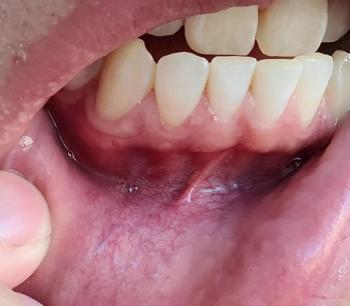
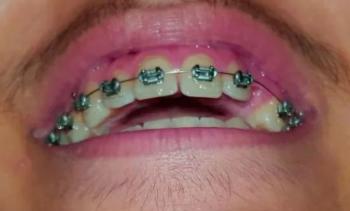
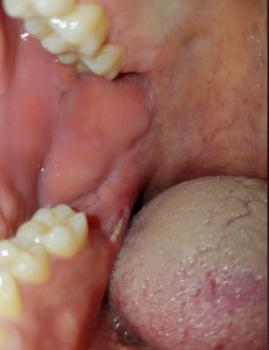
Patients with lower front gum inflammation may also experience tartar buildup, periodontal disease, gum abscesses, or tooth decay. Explore these related clinical case studies.



Other topics:
Other Dental Clinic