Strong Teeth, Fresh Breath, Brighter You.

Dental Abscess: Symptoms, Causes, Treatment & When It’s an Emergency
The patient walked into the dental office holding one side of his face.
“I haven't slept all night,” he said. “My tooth is killing me. Please tell me you can fix this.”
I hear some version of this story every week.
A dental abscess can cause intense pain, swelling, pressure, and fear. But one of the most important things I tell patients is this:
The pain is a symptom. The infection is the problem we need to diagnose and treat.
A dental abscess is a collection of pus caused by a bacterial infection. The infection may originate inside a tooth or in the tissues supporting it. The correct treatment depends on where the infection started and how far it has spread.
What Does a Dental Abscess Feel Like?
A dental abscess does not always look the same.
Some patients arrive with obvious facial swelling. Others have severe tooth pain but very little visible swelling. Some notice a small bump on the gum that repeatedly drains and then disappears.
That's why diagnosis matters.
Common symptoms can include:
-
Severe or persistent toothache
-
Throbbing pain
-
Pain when biting or chewing
-
Sensitivity to hot or cold
-
Swelling of the gum or face
-
A pimple-like bump on the gum
-
Bad taste or drainage
-
Persistent bad breath
-
Fever or feeling unwell
-
Difficulty opening the mouth
Let's look at the main types of dental abscesses I consider during an examination.
1. Periapical Abscess: Infection Inside the Tooth
Imagine a patient pointing to one specific tooth.
“That's the one. It hurts every time I bite down.”
A periapical abscess usually begins with infection or inflammation inside the tooth's pulp. Deep decay, cracks, or extensive dental work can allow bacteria to reach the pulp.
If the pulp becomes infected and dies, bacteria can travel through the root canal system and exit through the root tip into the surrounding tissues.
The result can be an infection around the root.
Typical symptoms include:
-
Throbbing tooth pain
-
Pain when biting
-
Tenderness when the tooth is tapped
-
Swelling near the tooth
-
Sensitivity that may linger
-
Possible facial swelling
-
Pus or drainage
Dental X-rays can sometimes show changes around the root, although early infections may not produce an obvious radiographic lesion.
How Is It Treated?
If the tooth is restorable, treatment may involve root canal therapy to remove the infected pulp and disinfect the root canal system.
In some situations, drainage may also be necessary.
If the tooth cannot be predictably restored, extraction may be recommended.
The goal is to eliminate the source of infection while preserving the natural tooth whenever that is realistically possible.
2. Periodontal Abscess: Infection in the Gum Pocket
Now imagine a different patient.
She tells me, “The tooth wasn't hurting yesterday. This morning my gum suddenly became swollen.”
A periodontal abscess originates in the tissues supporting the tooth, often in association with a periodontal pocket.
It may occur when drainage from a periodontal pocket becomes blocked or when bacteria become trapped around an already compromised periodontal area.
The tooth's pulp may still be vital, which helps distinguish some periodontal abscesses from infections originating inside the tooth.
Possible signs include:
-
Localized gum swelling
-
Tenderness
-
Pain when biting
-
Pus
-
Tooth mobility
-
Deep periodontal pocketing
-
Existing signs of gum disease
Treatment focuses on establishing drainage and treating the underlying periodontal problem.
Depending on the situation, this may include professional periodontal cleaning, drainage, periodontal therapy, and treatment of any contributing local factors.
3. Gingival Abscess: A Localized Gum Infection
Sometimes the problem is surprisingly simple.
A patient may say:
“I was eating popcorn last night, and now I have this painful bump between my teeth.”
A gingival abscess can develop when bacteria become associated with a foreign object or localized injury involving the gum tissue.
Examples can include food particles or other foreign material becoming embedded in the gingiva.
The swelling is usually limited to the gum and does not originate from the tooth's pulp or deeper periodontal tissues.
Treatment involves removing the irritant and addressing the localized infection.
Can a Tooth Infection Spread?
Yes.
This is the part of an abscess that I never want a patient to underestimate.
Most dental infections do not progress to life-threatening complications. But an untreated infection can sometimes spread beyond the tooth and jaw into surrounding soft tissues.
In severe cases, infection can involve spaces of the face and neck and threaten the airway or overall health.
The risk depends on factors such as the location of the infection, its severity, the patient's immune status, and how quickly treatment is obtained.
Dental Infection Emergency Warning Signs
If you have a dental abscess, watch carefully for signs that the infection may be spreading.
Get urgent medical evaluation if you develop:
-
Difficulty breathing
-
Difficulty swallowing
-
Rapidly increasing facial or neck swelling
-
Severe difficulty opening your mouth
-
Swelling involving the floor of the mouth
-
Significant weakness or confusion
-
High fever or severe systemic illness
Difficulty breathing or swallowing with facial or neck swelling can be a medical emergency. Go to an emergency department or call emergency services.
Do not wait for a dental appointment if your airway may be compromised.
What Is Ludwig's Angina?
One particularly dangerous complication is Ludwig's angina, a rapidly spreading infection involving tissues beneath the tongue and lower jaw.
Swelling can push the tongue upward and backward and potentially compromise the airway.
Warning signs may include:
-
Floor-of-mouth swelling
-
Tongue elevation
-
Difficulty swallowing
-
Drooling
-
Difficulty speaking
-
Neck swelling
-
Difficulty breathing
This is an emergency requiring immediate medical treatment.
Can a Tooth Infection Cause Sepsis?
It is possible for a serious dental infection to contribute to systemic infection, including sepsis, particularly when infection spreads beyond the local tissues.
Symptoms such as fever, rapid heart rate, confusion, severe weakness, or rapidly worsening illness require urgent medical assessment.
A dental abscess should never be treated as "just a toothache" when the patient is becoming systemically ill.
Do Antibiotics Cure a Dental Abscess?
This is one of the most common questions I hear.
Antibiotics are not a substitute for treating the source of a dental infection.
Depending on the diagnosis and severity, definitive dental treatment may include:
-
Root canal treatment
-
Drainage
-
Periodontal treatment
-
Extraction when the tooth cannot be saved
Antibiotics may be appropriate when there is systemic involvement or certain spreading infections, but they are not routinely necessary for every localized dental abscess.
The appropriate medication and treatment plan should be determined by a dental or medical professional.
Never use leftover antibiotics or someone else's prescription.
Why Doesn't the Pain Always Mean the Infection Is Gone?
Here's a situation that worries me as a dentist:
A patient has severe tooth pain for several days. Then suddenly the pain disappears.
They think:
“Great. It healed.”
Not necessarily.
If the pulp inside the tooth dies, the intense nerve-related pain can decrease even though bacteria and infection remain.
Likewise, an abscess may drain through the gum and temporarily reduce pressure.
Less pain does not always mean the infection has disappeared.
A dental examination is still necessary.
What Will a Dentist Do for a Dental Abscess?
When you arrive in severe pain, the first priority is to understand exactly where the infection started.
A careful examination may include:
Medical History
Your dentist needs to know about medications, allergies, medical conditions, previous dental treatment, and symptoms such as fever or swelling.
Clinical Examination
The dentist examines the teeth, gums, face, and surrounding tissues.
Tooth Percussion and Bite Testing
A suspected tooth may be gently tapped or evaluated during biting.
Pulp Testing
Cold testing, electric pulp testing, or other methods can help determine whether the tooth's pulp is responding normally.
Periodontal Probing
The dentist may measure around the tooth to determine whether a deep periodontal pocket is involved.
Dental Imaging
X-rays can reveal decay, bone changes, root abnormalities, and other findings.
In complicated cases, additional imaging may be considered.
The objective isn't simply to find "the painful tooth."
The objective is to find the source of the infection.
What Makes a Good Emergency Dentist?
When patients are in severe pain, they don't need judgment.
They need someone who listens.
A skilled dentist should:
Diagnose before treating.
The source of infection needs to be identified rather than assuming every swollen tooth needs the same procedure.
Control pain appropriately.
Local anesthesia and thoughtful technique are essential, although severely inflamed tissues can sometimes be challenging to numb.
Explain the treatment.
Patients deserve to know whether the goal is drainage, root canal treatment, periodontal therapy, extraction, or another approach.
Recognize emergencies.
A dentist should identify signs that require medical or emergency-hospital care.
Discuss the long-term solution.
Emergency treatment may relieve today's crisis, but the underlying dental problem still needs definitive management.
Treat the patient with empathy.
A person sitting in the dental chair with an abscess may have been awake all night. They may be terrified.
That's not the moment for a lecture.
It's the moment to help.
Can a Dental Abscess Be Prevented?
Many dental abscesses can be prevented by treating dental disease before it reaches the point of infection.
Good prevention includes:
-
Brushing twice daily with fluoride toothpaste
-
Cleaning between your teeth every day
-
Limiting frequent exposure to sugary foods and drinks
-
Treating cavities before they become deep
-
Protecting teeth from trauma
-
Seeing your dentist regularly
-
Addressing cracked or damaged teeth promptly
-
Managing gum disease
A small cavity is much easier to treat than an infected tooth.
When Should You Call a Dentist?
Don't wait until the pain becomes unbearable.
Contact a dentist if you have:
-
Persistent tooth pain
-
Pain when biting
-
Gum swelling
-
A recurring bump on your gum
-
Pus or drainage
-
A bad taste associated with a tooth
-
Facial swelling
-
A broken or cracked tooth with pain
-
Fever associated with dental symptoms
And remember:
Facial or neck swelling with difficulty breathing or swallowing is an emergency.
The Dentist's Bottom Line
When a patient comes into my office with a swollen face and severe tooth pain, I don't think, “How do I make this pain disappear?”
I think:
Where did this infection start, how far has it spread, and what is the safest way to eliminate its source?
That distinction matters.
A dental abscess can originate inside the tooth, around the periodontal tissues, or in localized gum tissue. The treatment must match the diagnosis.
Sometimes the answer is root canal treatment. Sometimes it is periodontal therapy or drainage. Sometimes a damaged tooth cannot be saved and extraction is the safest option.
And occasionally, the infection has progressed beyond routine dental treatment and requires emergency medical care.
Don't ignore a swollen face, a draining tooth, or severe dental pain. A dental abscess needs a diagnosis—not just temporary pain relief.
Related Clinical Cases
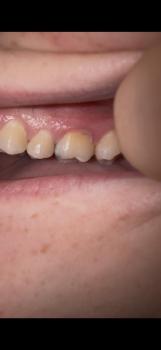
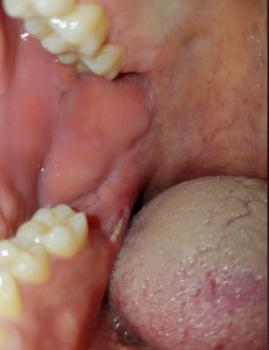
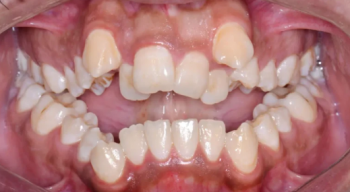
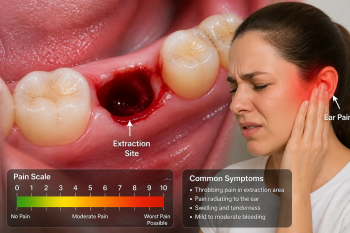
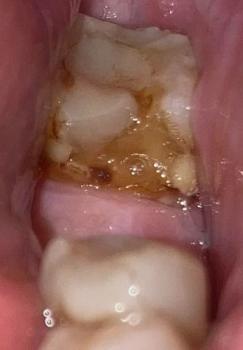
Patients with lower front gum inflammation may also experience tartar buildup, periodontal disease, gum abscesses, or tooth decay. Explore these related clinical case studies.


Other topics:
Other Dental Clinic