Your Smile, Perfected with Precision.

Clear Orthodontic Braces With Active Tooth Alignment – Dental Case Analysis
Image:
Severity:
Teeth Problems:
Dental Case Analysis – Clear Orthodontic Braces With Active Tooth Alignment
Case Overview
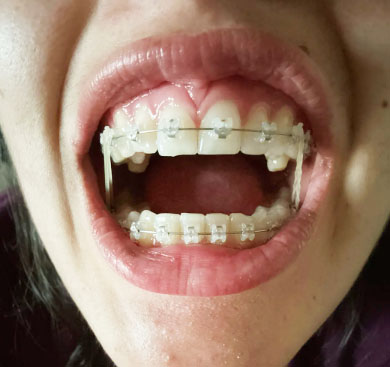
This image shows a patient undergoing active orthodontic treatment using clear or ceramic braces on both the upper and lower teeth. Teeth are in an alignment and leveling phase, with visible archwires and elastic ligatures. The surrounding soft tissue appears generally healthy, with mild tension expected during tooth movement.
Scale All Teeth
-
Upper and lower teeth fitted with clear orthodontic brackets
-
Archwires engaged on both arches
-
Teeth show spacing and alignment correction in progress
-
No obvious fractures or active decay visible
-
Primary focus is orthodontic movement and tissue adaptation
Full Analysis and Diagnosis
Clinical Findings
-
Clear brackets bonded to anterior and posterior teeth
-
Teeth undergoing active repositioning
-
Mild gum tension visible around brackets
-
No visible ulcers, abscesses, or severe inflammation
-
Lips and cheeks appear intact
Interpretation
-
Findings are consistent with normal orthodontic treatment progression
-
Tooth movement is active and controlled
-
Minor soft-tissue response is expected during this stage
Probable Diagnosis
-
Malocclusion under orthodontic correction
-
Active alignment and leveling phase
(Clinical confirmation recommended.)
Deep Examination
Tooth Movement Assessment
-
Teeth responding to orthodontic forces
-
Brackets appear evenly placed
-
Archwires functioning as intended
Soft Tissue Assessment
-
Gingiva appears generally healthy
-
No signs of ulceration or infection
-
Risk of irritation exists if hygiene is inadequate
Time Frame to Heal
With Proper Care
-
Soft tissue adaptation: 7–14 days
-
Reduction of soreness after adjustments: 3–5 days
-
Continued alignment improvement over months, depending on case complexity
Without Proper Care
-
Gum inflammation
-
Increased plaque buildup
-
Discomfort during orthodontic treatment
-
Possible gingivitis
Process to Execute (14-Day Window)
Days 1–3
-
Reinforce brushing around brackets
-
Use interdental brushes or floss threaders
-
Rinse after meals
Days 4–7
-
Monitor gum sensitivity
-
Maintain consistent oral hygiene
-
Apply orthodontic wax if irritation occurs
Days 8–14
-
Reassess comfort and gum condition
-
Continue orthodontic schedule
-
Report persistent pain or swelling to orthodontist
Issues That Will Scale Up If Untreated
-
Chronic gum irritation
-
Plaque accumulation around brackets
-
Gingivitis development
-
Increased risk of white spot lesions
-
Delayed orthodontic progress
Clear Orthodontic Braces: Active Tooth Alignment, Symptoms, Care and When to See an Orthodontist
Clear orthodontic braces, often called ceramic braces, are fixed orthodontic appliances designed to gradually move teeth into improved positions. They use tooth-colored or transparent brackets connected by orthodontic wires, making them less noticeable than conventional metal braces.
The dental case referenced on this page shows clear brackets and archwires on both the upper and lower teeth, with tooth alignment appearing to be actively progressing. However, a photograph alone cannot establish a definitive diagnosis or determine the health of the supporting bone and gums. An orthodontist must perform a clinical examination and may use dental X-rays, photographs, or digital scans when appropriate.
What Are Clear Orthodontic Braces?
Clear or ceramic braces work in much the same way as conventional fixed braces. Brackets are bonded to the teeth and connected with an archwire. Controlled orthodontic forces gradually move teeth over time.
Ceramic braces are primarily different because their brackets are designed to blend more closely with the natural color of the teeth.
They are not the same as clear aligners:
-
Ceramic braces: fixed to the teeth and connected by wires.
-
Clear aligners: removable transparent trays.
-
Both can correct selected orthodontic problems, but the appropriate treatment depends on the patient's teeth, bite, oral health, and treatment objectives.
What Does an Active Alignment Phase Mean?
During active orthodontic treatment, the orthodontist applies controlled forces to gradually change tooth positions.
The teeth may appear to be:
-
Becoming less crowded
-
Closing or changing spaces
-
Rotating into better positions
-
Leveling along the dental arch
-
Moving toward a planned bite relationship
Tooth movement is a biological process rather than simply the brackets "pulling" teeth into place. The orthodontic appliance applies controlled forces while the surrounding supporting tissues adapt.
The exact stage of treatment cannot be determined reliably from a photograph alone.
Case Observation
In the referenced case, clear brackets and archwires are visible on both dental arches. The teeth appear to be undergoing orthodontic alignment.
The photograph may be consistent with an active orthodontic treatment phase, but it should not be interpreted as proof of a particular diagnosis.
A proper orthodontic assessment may include evaluation of:
-
Tooth alignment
-
Crowding and spacing
-
Bite relationship
-
Gum condition
-
Tooth decay
-
Existing restorations
-
Root and supporting bone condition
-
Jaw relationship when clinically indicated
This distinction is important because an image can show tooth position but cannot provide a complete assessment of oral health.
Is Mild Soreness Normal With Braces?
Yes. Some pressure, tenderness, or mild soreness can occur when braces are first placed or adjusted.
This discomfort is usually temporary. Soft foods may be easier to eat during the first few days after placement or adjustment. Orthodontic wax can also help protect the cheeks and lips if a bracket or wire causes irritation.
However, severe, persistent, or worsening pain should not simply be assumed to be normal orthodontic discomfort.
Contact your orthodontist if pain continues, becomes severe, or is associated with significant swelling or another unusual symptom.
Why Oral Hygiene Is Especially Important
Braces create additional areas where plaque and food particles can collect.
If these areas are not cleaned effectively, the risk of:
-
Gingivitis
-
Tooth decay
-
Bad breath
-
Gum swelling
-
Plaque accumulation
-
White-spot lesions
can increase.
Good oral hygiene is therefore an important part of successful orthodontic treatment.
Recommended Daily Care
During treatment:
-
Brush thoroughly with fluoride toothpaste.
-
Pay particular attention to the areas around brackets and along the gumline.
-
Clean between the teeth every day.
-
Use an interdental brush when appropriate.
-
Follow your orthodontist's specific cleaning instructions.
-
Continue routine dental examinations and professional cleaning when recommended.
The American Association of Orthodontists recommends additional attention to cleaning around orthodontic appliances because braces create areas that can be difficult to reach with ordinary brushing alone.
What Foods Should You Avoid?
Patients with fixed braces should generally avoid foods that can damage brackets or wires.
Examples include:
-
Very hard foods
-
Sticky foods
-
Chewy foods
-
Hard candy
-
Ice
-
Foods that require biting directly into very hard surfaces
Firm foods can often be cut into smaller pieces before eating.
Following your orthodontist's dietary instructions can reduce the risk of broken brackets and wires.
What If a Bracket or Wire Breaks?
Do not try to tighten, cut, or reposition orthodontic components yourself.
If a bracket becomes loose or a wire moves out of position, contact your orthodontist. A damaged appliance may interfere with the intended orthodontic forces and can potentially prolong treatment.
Orthodontic wax can provide temporary protection if a wire or bracket is irritating the cheek or lip.
Can Clear Braces Cause Gum Swelling?
Braces themselves do not mean that gum swelling is inevitable.
However, orthodontic appliances can make plaque removal more difficult. Plaque accumulation around brackets and along the gumline can contribute to gum inflammation.
Signs that deserve dental evaluation include:
-
Persistent gum swelling
-
Repeated bleeding
-
Significant redness
-
Pus
-
Increasing pain
-
Facial swelling
-
Bad taste associated with swelling or infection
These symptoms should not automatically be attributed to normal orthodontic tooth movement.
How Long Does Orthodontic Treatment Take?
There is no single treatment time that applies to every patient.
Treatment duration depends on factors such as:
-
Severity of the malocclusion
-
Amount and type of tooth movement required
-
Patient age and individual biology
-
Gum and bone health
-
Treatment compliance
-
Broken appliances
-
Missed appointments
-
Whether additional orthodontic appliances are necessary
Some orthodontic treatments may take around one to two years, but individual treatment can be shorter or considerably longer.
Your orthodontist can provide a more meaningful estimate after examining your teeth and developing a treatment plan.
Are Clear Braces Suitable for Adults?
Adults can receive orthodontic treatment.
Age alone does not automatically rule out orthodontic treatment. However, the orthodontist needs to assess the condition of the teeth, gums, supporting bone, bite, and any existing dental restorations before treatment begins.
Adults with untreated gum disease, significant bone loss, active tooth decay, or other dental problems may need those conditions addressed before or during orthodontic treatment.
Clear Braces vs. Clear Aligners
Both options can improve tooth alignment, but they are different appliances.
| Feature | Clear/Ceramic Braces | Clear Aligners |
|---|---|---|
| Fixed or removable | Fixed | Removable |
| Brackets | Yes | No |
| Wires | Yes | No |
| Appearance | Relatively discreet | Very discreet |
| Eating | Appliance remains in place | Usually removed for eating |
| Cleaning | Requires cleaning around brackets | Teeth can be brushed normally after removing aligners |
| Suitability | Depends on orthodontic problem | Depends on orthodontic problem and compliance |
There is no universally "best" option. Treatment should be selected according to the patient's orthodontic needs rather than appearance alone.
Do Teeth Stay Straight After Braces?
Orthodontic treatment does not mean teeth will remain permanently fixed in exactly the same position without retention.
Retainers are generally an important part of treatment after braces are removed.
Teeth can shift over time, so the orthodontist will provide instructions regarding the type of retainer and how often it should be worn.
When Should You Contact Your Orthodontist?
Contact your orthodontist if you experience:
-
Severe or persistent pain
-
Significant gum swelling
-
Persistent bleeding
-
A loose bracket
-
A broken wire
-
A wire repeatedly injuring your cheek
-
Difficulty biting because of unexpected pain
-
An appliance that no longer fits correctly
Facial swelling accompanied by fever or difficulty swallowing requires prompt medical or dental assessment. Difficulty breathing is an emergency.
Key Takeaway
Clear orthodontic braces can provide an effective and relatively discreet way to straighten teeth and correct many orthodontic problems.
The case shown in the referenced image appears to demonstrate active orthodontic alignment with clear/ceramic brackets and archwires, but the image alone cannot establish a definitive diagnosis or determine whether the gums, roots, or supporting bone are healthy.
Successful orthodontic treatment depends on professional supervision, good oral hygiene, appropriate dietary care, attendance at scheduled appointments, and following the orthodontist's instructions.
If you are considering clear braces, the safest next step is a comprehensive examination by a qualified dentist or orthodontist. Your treatment plan should be based on your individual tooth alignment, bite, gum health, supporting bone, dental history, and treatment goals.
Medical Disclaimer
This article is for general educational purposes and is not a diagnosis or substitute for an examination by a qualified dentist or orthodontist. Photographs cannot reliably determine the condition of tooth roots, periodontal tissues, supporting bone, or the exact orthodontic diagnosis. Seek professional dental care for persistent pain, swelling, bleeding, infection, or appliance problems.
Frequently Asked Questions About Clear Orthodontic Braces
1. What are clear orthodontic braces?
Clear orthodontic braces use tooth-colored or transparent brackets attached to the teeth, together with orthodontic wires, to gradually move teeth into better alignment. They are designed to be less noticeable than conventional metal braces while helping correct certain alignment and bite problems.
2. Are clear braces the same as clear aligners?
No. Clear braces are fixed to the teeth and connected by orthodontic wires. Clear aligners are removable, transparent trays that fit over the teeth. Both can straighten teeth, but the most suitable option depends on the patient's bite, tooth positions, and treatment goals.
3. What dental problems can clear braces correct?
Clear braces may help treat crowded teeth, gaps, rotated teeth, and certain bite problems, including overbite and crossbite. More complex cases may require additional orthodontic techniques. An orthodontist must examine the teeth and jaws before recommending a treatment plan.
4. How long does clear-braces treatment take?
Treatment commonly takes around 12–24 months, but some cases take less time or considerably longer. The duration depends on the complexity of the tooth movements, the patient's oral health, attendance at adjustment appointments, and compliance with instructions.
5. Are clear braces painful?
Patients may experience pressure, tenderness, or mild discomfort after braces are fitted or adjusted. This usually improves over several days. Persistent or severe pain should be assessed by the treating dentist or orthodontist.
6. Do clear braces stain or turn yellow?
Clear brackets may resist staining, depending on their material, but elastic ligatures can discolor from foods, drinks, tobacco, and plaque accumulation. Regular cleaning and replacement of elastic ligatures during scheduled visits can help maintain a cleaner appearance.
7. Can adults wear clear orthodontic braces?
Yes. Adults can receive orthodontic treatment when their teeth, gums, and supporting bone are healthy enough. Age alone does not determine suitability. A dental examination is necessary to assess gum health, bone support, existing restorations, and bite problems.
8. Can I eat normally while wearing clear braces?
You can usually eat a wide variety of foods, but hard, sticky, and chewy foods can damage brackets or wires. Cut firm foods into smaller pieces, avoid biting directly into very hard foods, and follow your orthodontist's dietary instructions.
9. How should I clean my teeth with clear braces?
Brush carefully around every bracket and along the gumline at least twice daily using fluoride toothpaste. Clean between teeth with floss threaders or suitable interdental brushes. Regular professional dental check-ups help detect plaque buildup, cavities, and gum inflammation early.
10. Why are my gums swollen or irritated around my braces?
Braces can make plaque removal more difficult, allowing bacteria to accumulate around brackets and along the gumline. This can cause redness, swelling, bleeding, or tenderness. Persistent swelling, pus, worsening pain, or facial swelling requires prompt dental assessment rather than assuming it is normal orthodontic irritation.
11. What should I do if a clear bracket or orthodontic wire breaks?
Contact your orthodontist for advice and an appointment. Do not attempt to tighten, cut, or reposition the appliance yourself. If a wire is rubbing against your cheek, orthodontic wax may help protect the area temporarily. Seek urgent care if you have difficulty breathing or swallowing or suspect you have inhaled a loose component.
12. Are clear braces more expensive than metal braces?
Clear braces may cost more than conventional metal braces, but actual fees vary by clinic, appliance type, case complexity, and treatment duration. Ask for a written quotation that explains the initial consultation, diagnostic records, adjustments, emergency repairs, retainers, and any additional procedures.
13. Do I need to wear retainers after clear braces?
Yes, retainers are generally recommended after active orthodontic treatment. Teeth can gradually move back toward their original positions without retention. Your orthodontist will advise you on the type of retainer and how frequently to wear it.
14. Can clear braces fix a severe overbite or severely crowded teeth?
Some significant alignment and bite problems can be treated with fixed braces, but the appropriate approach depends on the cause and severity of the problem. Certain cases may require additional appliances, tooth extractions, or jaw surgery. Only an individualized orthodontic assessment can establish the appropriate options.
15. How do I know if clear braces are right for me?
Arrange an orthodontic consultation. Your dentist or orthodontist may assess your bite, gum health, tooth positions, and dental history and obtain photographs, X-rays, or digital scans when indicated. Ask about expected treatment duration, alternatives, potential risks, total cost, and retention requirements.
16. When should I contact my dentist during orthodontic treatment?
Contact your treating professional if you experience persistent pain, a broken bracket, a loose wire, repeated gum bleeding, significant swelling, or an appliance that no longer fits properly. Facial swelling with fever or difficulty swallowing requires urgent assessment. Difficulty breathing is an emergency.
Important Note About This Dental Case
This page presents an educational overview of clear orthodontic braces and active tooth alignment. Photographs alone cannot confirm the exact diagnosis, the health of the supporting bone, or the suitability of a particular treatment.
Patients should receive an individualized examination from a qualified dental professional before starting or changing orthodontic treatment. Treatment duration, costs, and outcomes vary between individuals.
Book an Orthodontic Consultation
Considering clear braces or another way to straighten your teeth? Consult a qualified orthodontist to discuss your alignment concerns, available treatment options, expected costs, and long-term retention plan.
Use our dental clinic directory to find a dental professional near you:
https://cebudentalimplants.com/map-dental-clinic
Clinical Comments
Clear braces offer aesthetic benefits but still require excellent oral hygiene. Mild discomfort and tissue adaptation are normal, especially after adjustments. Consistent care ensures healthy gums and efficient treatment progress.
Related Clinical Cases
Patients with lower front gum inflammation may also experience tartar buildup, periodontal disease, gum abscesses, or tooth decay. Explore these related clinical case studies.


Other topics:
Other Dental Clinic