Because Every Tooth Deserves Care.

CareCredit Dental Implant Financing Guide
Language :
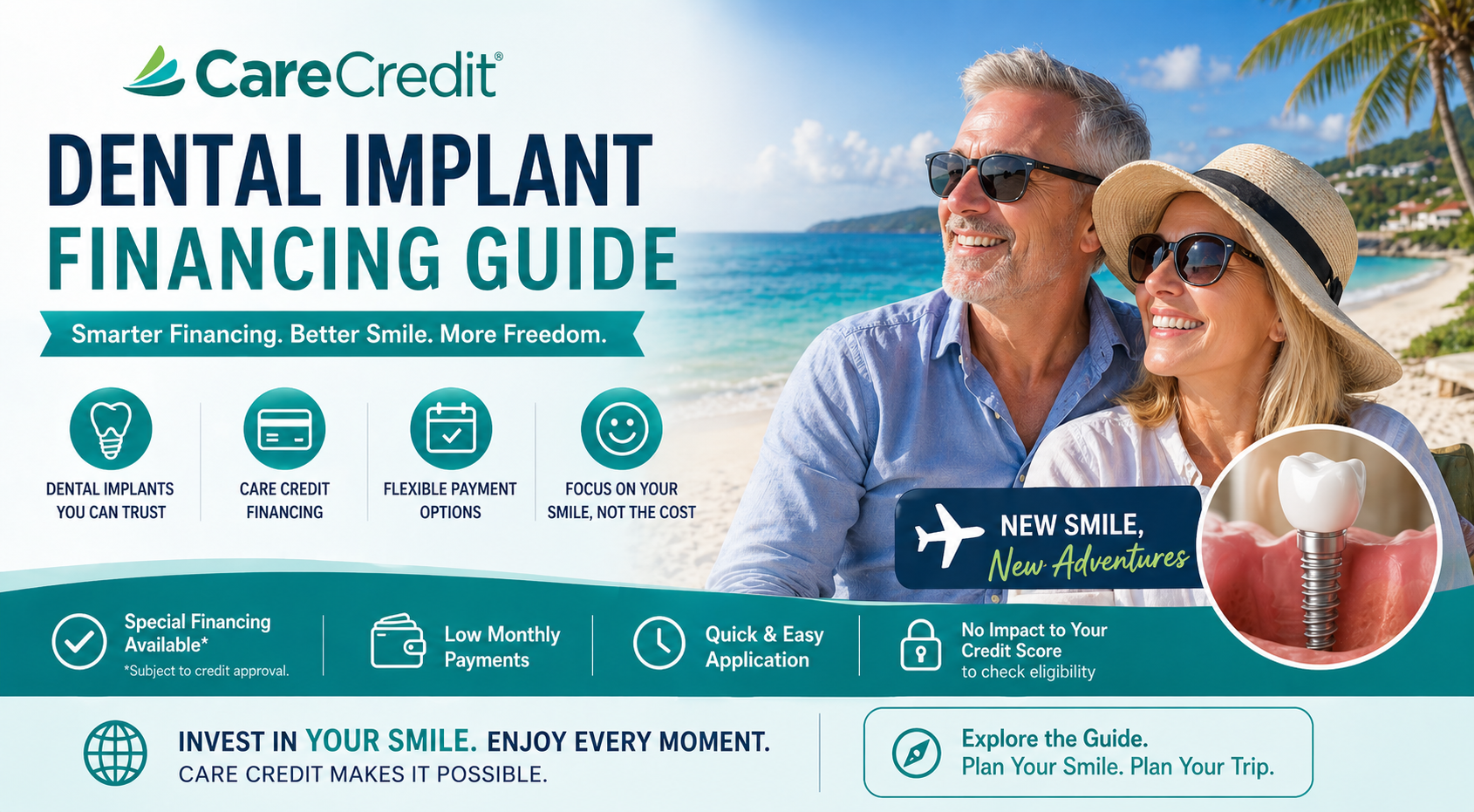
A California Dental Expert’s Complete Patient Guide to Paying for Implants
Dental implants are one of the most life-changing treatments in modern dentistry—but for many patients in California and across the United States, the cost is the biggest barrier.
That’s where CareCredit comes in.
As a California-based dental expert who works closely with patients navigating implant costs every day, I can tell you this: CareCredit has helped thousands of patients move forward with treatment they otherwise would have delayed for years.
This guide will walk you through exactly how CareCredit works, when it’s the right choice, and how to avoid costly mistakes.
What Is CareCredit?
CareCredit is a healthcare financing credit card designed specifically for medical, dental, and cosmetic procedures.
Unlike traditional credit cards, it offers promotional financing options, including:
- 0% interest (for a limited period)
- Extended payment plans with reduced APR
- Immediate access to funds upon approval
It’s accepted by over 250,000 providers across the U.S., including most dental implant clinics.
Why Patients Use CareCredit for Dental Implants
Dental implants are often not fully covered by insurance. For many patients, paying upfront isn’t realistic.
CareCredit helps bridge that gap.
Typical Implant Costs in California:
- Single implant: $3,500–$6,500
- Full-mouth implants: $25,000–$50,000
Why CareCredit Works:
- No large upfront payment required
- Fast approval (often same day)
- Flexible financing options
California Expert Insight:
Many patients in Los Angeles, San Diego, and San Francisco choose CareCredit because it allows them to start treatment immediately instead of waiting years to save.
How CareCredit Financing Works
Step 1: Apply
You can apply online or directly at your dental clinic.
Step 2: Get Approved
Approval depends on your credit profile.
Step 3: Choose a Payment Plan
You’ll select from promotional financing options offered by your provider.
Step 4: Start Treatment
Once approved, your dentist can begin procedures right away.
CareCredit Financing Options Explained
1. Short-Term 0% Interest Plans
Terms:
- 6, 12, 18, or 24 months
- No interest if paid in full within the period
Example:
- Treatment cost: $6,000
- 12-month plan → $500/month
Warning:
If you don’t pay the full balance on time, deferred interest is added retroactively.
2. Extended Financing Plans
Terms:
- 24–60 months
- Reduced APR (not 0%)
Example:
- $20,000 full-mouth implants
- 60 months → ~$400–$500/month
California Expert Insight:
Best for large cases where short-term payoff isn’t realistic.
Credit Requirements
CareCredit approval typically depends on:
- Credit score (600+ preferred)
- Income stability
- Debt-to-income ratio
If You Have Lower Credit:
You may still qualify, but:
- Lower credit limit
- Higher APR plans
Combining CareCredit with Insurance
Even though insurance rarely covers implants fully, it still plays a role.
Major Providers:
- Delta Dental
- Cigna
- MetLife
Strategy:
- Use insurance first
- Finance remaining balance with CareCredit
Example:
- Total cost: $8,000
- Insurance pays: $2,000
- CareCredit finances: $6,000
Short Story: California Patient Success
Meet Jennifer, a 45-year-old marketing executive from Los Angeles.
Jennifer had been dealing with a missing molar for years. Her dentist recommended an implant, but the $5,500 cost made her hesitate.
Her Plan:
- Insurance (via Delta Dental): covered $1,500
- Remaining balance: financed with CareCredit
She chose a 12-month 0% interest plan.
Monthly Payment:
~$333
Outcome:
- Completed treatment immediately
- Paid off balance within 12 months
- Avoided all interest
Her Words:
“I wish I had done this years ago.”
Expert Perspective:
Jennifer used CareCredit exactly as intended—short-term, disciplined financing.
Pros and Cons of CareCredit
Advantages
- Fast approval
- Widely accepted
- 0% interest options
- No upfront burden
Disadvantages
- Deferred interest risk
- High APR after promo period
- Credit-based approval
When CareCredit Is the Best Choice
CareCredit is ideal if:
- You can pay off within 6–24 months
- You want immediate treatment
- You have moderate to good credit
When to Consider Alternatives
You may want to explore alternatives if:
- You need long-term financing (5+ years)
- Your credit score is low
- Your treatment cost exceeds your credit limit
Alternatives Include:
- LendingClub
- SoFi
- Proceed Finance
Common Mistakes to Avoid
- Missing the promotional deadline
- Only paying the minimum balance
- Not confirming your dentist accepts CareCredit
- Ignoring insurance benefits
- Overestimating your monthly budget
FAQ: CareCredit for Dental Implants
1. Is CareCredit really interest-free?
Yes—but only if you pay within the promotional period.
2. What happens if I miss the deadline?
Deferred interest is added to your balance.
3. Can I use CareCredit for full-mouth implants?
Yes, but approval limits may vary.
4. Does CareCredit affect my credit score?
Yes, it involves a credit check and impacts utilization.
5. Can I use it with insurance?
Yes—this is the most common strategy.
6. Is CareCredit better than a personal loan?
It depends:
- Short-term → CareCredit
- Long-term → personal loan
Related Topics
1. Personal Loans vs CareCredit for Dental Implants
Compare interest rates, flexibility, and long-term costs.
2. Dental Implant Cost in California vs Abroad
Explore how pricing differences impact financing choices.
3. Best Dental Insurance for Implants in the USA
Find plans that maximize your coverage.
Final Thoughts from a California Dental Expert
CareCredit is one of the most powerful tools available to make dental implants accessible—but only when used strategically.
The key is discipline.
If you:
- Understand the terms
- Commit to a payoff plan
- Combine it with insurance
Then CareCredit can turn a $6,000–$30,000 treatment into something manageable—and even stress-free.
But if you ignore the fine print, it can become expensive very quickly.
The real goal isn’t just financing your implants.
It’s financing them wisely.
Can tooth extraction cause infection? Mild inflammation is normal, but increasing swelling, fever, or severe pain may indicate infection. Learn more about post-extraction infection warning signs in this detailed guide.
Book a consultation with our Cebu dental specialists for proper evaluation and care.
Ready to get expert guidance?
If you’re experiencing severe pain or delayed healing, book a consultation with our Cebu dental specialists to get proper evaluation and care.
Consultation or contact page .
Book a Consultation
For severe discomfort or delayed healing, book a consultation with our Cebu dental specialists today.
Looking for a dentist? Browse our Cebu dental directory to find trusted clinics near you.
Medical Review and Clinical Basis
This article is based on clinical dental guidelines and real patient recovery patterns observed after tooth extraction procedures. The information reflects common post-extraction healing stages, including normal clot formation, gum tissue repair, and signs of possible complications such as dry socket or infection.
While mild discomfort is expected after a dental extraction, worsening pain after Day 3, bad odor, exposed bone, or spreading pain may require professional evaluation. These symptoms are consistent with known post-extraction complications described in standard dental practice.
About Cebu Dental Implants
Cebu Dental Implants provides comprehensive tooth extraction, surgical procedures, and dental implant services in the Philippines. Our team evaluates post-extraction healing, manages complications such as dry socket, and advises patients on proper aftercare to prevent infection and delayed healing.
If you experience severe pain or unusual symptoms after extraction, early professional assessment is recommended to prevent further complications.
Important Medical Disclaimer
This content is for educational purposes only and does not replace professional dental diagnosis. Every patient heals differently. If symptoms worsen or do not improve within a few days, consult a licensed dentist for proper evaluation and treatment.
Author
This article was prepared by the Cebu Dental Implants content team in consultation with licensed dental professionals experienced in tooth extraction and implant procedures.
Related Clinical Cases
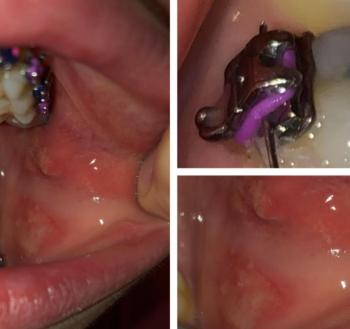
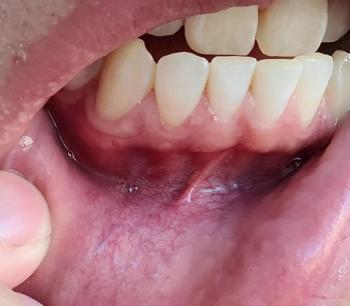
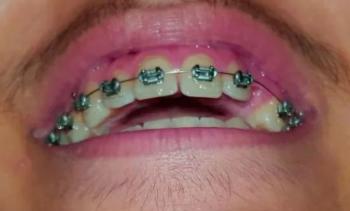
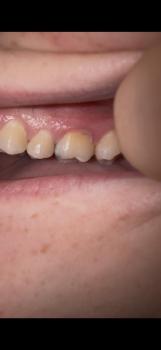
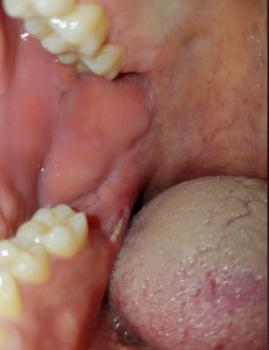
Patients with lower front gum inflammation may also experience tartar buildup, periodontal disease, gum abscesses, or tooth decay. Explore these related clinical case studies.


Other topics:
Other Dental Clinic