Where Bright Smiles Begin.

All-on-4 Dental Implants in Iceland (2026): Clinical and Financial Analysis
image hero:
Country:
All-on-4® is a full-arch implant treatment concept designed for patients who have lost all or most of the teeth in an upper or lower jaw, or whose remaining teeth have a poor prognosis.
From an Icelandic dental perspective, the most important point is that All-on-4 is not simply a four-implant package. It is a complete surgical and prosthetic rehabilitation that requires careful diagnosis, implant positioning, temporary teeth, definitive prosthetic treatment, and long-term maintenance.
The All-on-4 concept uses four strategically positioned implants to support a full-arch restoration. Nobel Biocare describes the concept as involving four implants, with a temporary bridge potentially delivered on the day of surgery when the patient's clinical circumstances allow it; the definitive restoration is delivered after healing according to the individual treatment plan.
In Iceland, the financial decision is particularly important because extensive private dental treatment can be expensive. At the same time, Iceland Health has specific reimbursement rules for qualifying pensioners and edentulous-jaw implant treatment.
1. The Icelandic Dentist's Clinical Perspective
If I were explaining All-on-4 to a patient in Iceland, I would begin with a simple statement:
"We are not replacing four teeth. We are rebuilding an entire dental arch."
That distinction matters.
All-on-4 involves:
-
surgical implant placement;
-
prosthetic planning;
-
implant-supported temporary teeth;
-
healing and osseointegration;
-
definitive full-arch prosthesis;
-
long-term maintenance.
The four implants are positioned strategically to support the entire arch. In the Nobel Biocare concept, the posterior implants can be tilted to help avoid anatomical structures and reduce the need for certain grafting procedures in appropriately selected patients.
However, not every patient is an All-on-4 candidate.
2. Who May Be a Candidate?
A potential candidate may have:
-
a completely edentulous upper or lower jaw;
-
severely damaged remaining teeth;
-
advanced periodontal disease;
-
multiple failing teeth;
-
difficulty wearing a conventional denture;
-
adequate anatomy for implant placement;
-
sufficient bone for the selected surgical protocol.
The assessment must determine whether the remaining teeth can be predictably saved.
As a dentist, I would never recommend extracting healthy or maintainable teeth simply because a patient wants an All-on-4 reconstruction.
The first question should always be:
Can we preserve the patient's natural dentition?
3. Comprehensive Diagnosis Comes First
A full-arch reconstruction requires more than a quick consultation.
The diagnostic process may include:
Clinical examination
The dentist evaluates:
-
periodontal disease;
-
tooth mobility;
-
fractures;
-
infection;
-
cavities;
-
remaining bone;
-
soft tissues;
-
occlusion;
-
facial aesthetics.
Imaging
Depending on the case, imaging can include:
-
panoramic radiography;
-
intraoral X-rays;
-
CBCT.
A CBCT can provide three-dimensional information about:
-
bone dimensions;
-
sinus anatomy;
-
nerve location;
-
implant positioning;
-
anatomical limitations.
A CBCT should be clinically justified rather than treated as an automatic requirement for every patient.
4. Why Bone Quality Matters
Patients sometimes hear:
"All-on-4 means you don't need bone grafting."
That statement is too absolute.
One major attraction of the All-on-4 concept is that strategic implant positioning can sometimes reduce the need for extensive bone augmentation. Nobel Biocare describes the treatment concept as a graftless full-arch solution in appropriately selected cases.
But individual anatomy determines whether that approach is appropriate.
A patient with severe:
-
vertical bone loss;
-
horizontal bone loss;
-
sinus limitations;
-
infection;
-
anatomical restrictions;
may require a different treatment strategy.
There are also situations in which All-on-4 is not the best option.
5. All-on-4 Is Not Suitable for Everyone
An important real-world example comes from a dental provider serving Icelandic patients: one published case describes a patient with severe bone loss for whom All-on-4 was considered but ultimately was not recommended, with an implant-retained removable solution selected instead.
This illustrates a fundamental clinical principle:
The best implant treatment is the treatment that matches the patient's anatomy—not the treatment with the strongest marketing.
A responsible dentist should be willing to recommend an alternative when All-on-4 is inappropriate.
6. Immediate Temporary Teeth
One of the major attractions of All-on-4 is the possibility of receiving a fixed temporary prosthesis shortly after surgery.
Nobel Biocare describes the concept as allowing extractions, implant surgery, and fitting of a temporary bridge on the same day in appropriately selected cases.
However, patients should understand the difference between:
temporary teeth
and
final teeth.
The temporary prosthesis is designed for the healing and transition period.
The definitive prosthesis is delivered later according to:
-
implant stability;
-
healing;
-
tissue condition;
-
bite;
-
prosthetic design;
-
clinical assessment.
Therefore, "teeth in one day" does not mean the entire treatment is completed permanently in one day.
7. Typical Treatment Sequence
A full All-on-4 treatment may follow this general pathway:
Stage 1 — Consultation
Clinical assessment and discussion of treatment alternatives.
Stage 2 — Diagnostic Imaging
Appropriate radiographs and, when indicated, CBCT.
Stage 3 — Treatment Planning
Digital planning and prosthetic design.
Stage 4 — Surgery
Possible extraction of non-restorable teeth followed by implant placement.
Stage 5 — Temporary Prosthesis
A temporary fixed full-arch restoration may be delivered when clinically appropriate.
Stage 6 — Healing
The implants undergo osseointegration.
Stage 7 — Definitive Prosthesis
The final full-arch restoration is fabricated and fitted.
Stage 8 — Maintenance
Regular professional maintenance becomes part of the long-term treatment.
8. How Long Does All-on-4 Take?
There is no single timeline for every patient.
The surgical appointment may be completed in one day, and a temporary prosthesis may sometimes be attached immediately.
However, the definitive restoration requires healing and further prosthetic work.
Nobel Biocare notes that permanent restoration is placed after several weeks or months depending on the individual treatment plan.
Therefore:
Surgery can be one day.
Complete rehabilitation is not necessarily one day.
That distinction should be made very clear to patients.
9. Cost of All-on-4 in Iceland
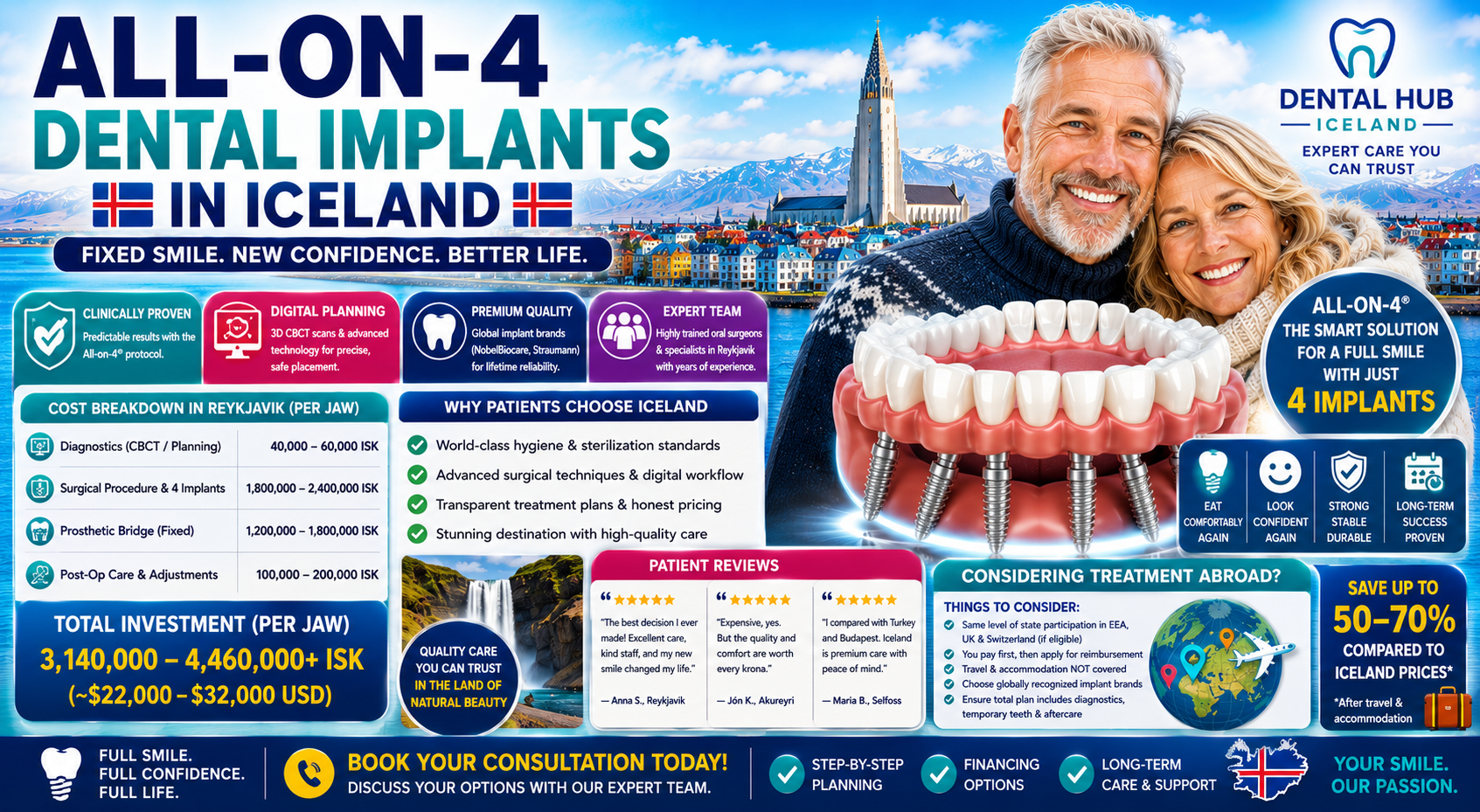
A major limitation in researching Icelandic All-on-4 prices is that clinics do not necessarily publish a standardized nationwide price for a complete All-on-4 arch.
Therefore, figures circulating online should be treated as estimates rather than an official Icelandic tariff.
A commonly cited market comparison places an Icelandic All-on-4 treatment at approximately €19,500–€21,000, depending on the number of teeth in the reconstruction. That source explicitly describes the Iceland figures as average prices that can change and advises patients to obtain a current clinic quotation.
That corresponds roughly to a multi-million-ISK treatment and demonstrates why full-arch rehabilitation can become financially significant.
A more useful financial approach
Instead of asking:
"How much is All-on-4?"
ask:
"What is the complete cost of my upper or lower arch from diagnosis through final prosthesis?"
10. Potential Cost Components
A full-arch quotation may contain:
| Component | Potentially included? |
|---|---|
| Consultation | Ask |
| X-rays | Ask |
| CBCT | Ask |
| Extractions | Ask |
| Four implants | Ask |
| Implant surgery | Ask |
| Multi-unit abutments | Ask |
| Temporary fixed teeth | Ask |
| Final full-arch bridge | Ask |
| Laboratory fees | Ask |
| Sedation | Ask |
| Bone grafting | Ask |
| Additional surgery | Ask |
| Follow-up adjustments | Ask |
| Maintenance | Ask |
This is why two clinics can quote apparently different prices for "All-on-4" while actually offering different treatment packages.
11. Premium Implant Brands
Patients often ask whether they should insist on a major implant manufacturer.
A well-established implant system can offer advantages such as:
-
documented components;
-
extensive clinical history;
-
component availability;
-
established prosthetic systems;
-
easier identification of replacement parts.
Nobel Biocare is particularly associated with the trademarked All-on-4® treatment concept. Nobel Biocare states that its implants used within this concept are supported by a lifetime warranty from the manufacturer, subject to its applicable terms.
However, a premium brand does not eliminate the need for good surgery, good prosthetic design, proper hygiene, and maintenance.
The implant brand is only one part of the treatment equation.
12. Patient Documentation Is Extremely Important
After extensive implant treatment, patients should receive documentation showing:
-
implant manufacturer;
-
implant model;
-
implant dimensions;
-
implant positions;
-
abutments;
-
prosthetic components;
-
laboratory information;
-
radiographs;
-
treatment dates.
This information can be valuable if the patient later moves, travels, or requires maintenance from another dentist.
It is particularly important for patients who receive treatment abroad and subsequently return to Iceland.
13. Iceland Health and All-on-4 Reimbursement
The financial situation becomes more complicated when Iceland Health participation is considered.
Iceland Health states that pensioners receive 75% participation in the cost of dentures, including full dentures, implant dentures, and partial dentures, under the applicable rules and replacement periods.
For implant treatment in an edentulous jaw, Iceland Health states that it pays 75% of a qualifying pensioner's cost for inserting implants to support dentures, subject to its approval and rules. If approved, participation applies to the first:
-
2 implants in the lower jaw, or
-
4 implants in the upper jaw.
This is highly relevant to All-on-4 because an upper-jaw All-on-4 reconstruction uses four implants.
But patients should not interpret the rule as:
"Iceland Health automatically pays 75% of any All-on-4 package."
That is not what the rule says.
The eligible treatment, fee basis, patient status, and approval must be established.
14. Prior Approval Is Essential
For implant treatment in an edentulous jaw, Iceland Health requires the dentist to submit the application and receive approval before treatment begins.
This is one of the most important financial rules for patients.
The recommended sequence is:
Diagnosis
↓
Treatment plan
↓
Iceland Health application
↓
Approval
↓
Implant treatment
Do not assume that an expensive treatment will automatically qualify for reimbursement after surgery.
15. Treatment Abroad
Some Icelandic patients consider All-on-4 treatment abroad because the price difference can be substantial.
Iceland Health states that qualifying dental treatment in the EEA, United Kingdom, and Switzerland can be assessed for payment participation under Icelandic rules.
However, the foreign clinic's price does not determine the reimbursement amount.
Iceland Health assesses payment participation according to Icelandic legislation, regulations, applicable agreements, and fee schedules—not simply according to the foreign clinic's own price list.
16. Travel Costs and Follow-Up
Patients should calculate the complete cost of international treatment.
The calculation should include:
Foreign treatment
Flights
Accommodation
Local transportation
Time away from work
Additional appointments
Post-treatment care
Potential complication management
Iceland Health specifically states that travel expenses for dental treatment abroad are not reimbursed. It also warns that incidents occurring during dental treatment abroad are not covered under Iceland's Patient Insurance Act.
This is a significant consideration when comparing Reykjavík with Budapest, Türkiye, or another international destination.
17. The Medical Tourism Trade-Off
The decision to travel should not be based exclusively on price.
Advantages of local Reykjavík treatment
-
easier follow-up;
-
local emergency access;
-
no international travel;
-
easier communication;
-
easier maintenance;
-
continuity with the treating team.
Potential advantages of treatment abroad
-
lower private treatment prices in some markets;
-
specialized high-volume implant centers;
-
access to specific treatment packages.
Potential disadvantages
-
travel;
-
multiple international appointments;
-
language barriers;
-
different legal frameworks;
-
follow-up complications;
-
difficulty obtaining replacement components.
The cheapest quotation is therefore not necessarily the cheapest long-term treatment.
18. Patient Review Analysis
Patient reviews can provide useful information about:
-
communication;
-
clinic organization;
-
perceived cleanliness;
-
staff professionalism;
-
comfort;
-
appointment scheduling;
-
perceived value.
But reviews should not be used as evidence that a particular surgical technique is clinically appropriate.
For example, a patient may report:
"My All-on-4 treatment was excellent."
That tells us about that patient's experience.
It does not tell us whether the same treatment is appropriate for another patient with:
-
severe bone loss;
-
uncontrolled periodontal disease;
-
diabetes;
-
smoking;
-
complex occlusion;
-
anatomical limitations.
Clinical decisions require individual examination.
19. Case Analysis: Advanced Periodontal Disease
Consider a 60-year-old patient with:
-
severe periodontal disease;
-
loose teeth;
-
extensive bone loss;
-
difficulty chewing;
-
repeated dental infections.
The patient asks for immediate All-on-4.
Clinical approach
First determine:
Which teeth are hopeless?
Which teeth can be saved?
Is the infection controlled?
What is the available bone?
Can implants achieve adequate primary stability?
What temporary prosthesis is appropriate?
Only after these questions are answered should an All-on-4 plan be finalized.
Published case material from a provider serving Icelandic patients describes an All-on-4 case involving severe periodontal disease and multiple non-restorable teeth, with four Nobel Biocare implants placed in each arch and temporary fixed bridges delivered within 48 hours.
That is a useful clinical example, but it should not be interpreted as evidence that every periodontal patient can receive the same protocol.
20. Case Analysis: Severe Bone Loss
Severe bone loss can change the treatment strategy.
A patient may be better served by:
-
implant-supported removable dentures;
-
conventional dentures;
-
bone augmentation;
-
alternative implant positions;
-
zygomatic implants in highly selected cases;
-
another full-arch strategy.
The published clinical example of a patient who was not considered suitable for All-on-4 because of severe bone loss demonstrates why treatment must be individualized.
There is no single implant solution for every edentulous patient.
21. The Final Prosthesis Matters
The four implants are only the foundation.
The patient will ultimately depend on the full-arch prosthesis for:
-
chewing;
-
speech;
-
aesthetics;
-
comfort;
-
hygiene.
The definitive restoration may involve materials such as:
-
acrylic;
-
composite;
-
zirconia;
-
metal-reinforced designs.
The choice should be based on:
-
occlusion;
-
available restorative space;
-
implant position;
-
hygiene;
-
aesthetics;
-
strength;
-
repairability;
-
patient expectations.
22. Long-Term Maintenance
An All-on-4 restoration is not maintenance-free.
Patients should plan for:
-
regular professional cleaning;
-
implant assessment;
-
periodontal monitoring;
-
prosthetic inspection;
-
bite evaluation;
-
radiographic monitoring when indicated;
-
home-care instruction.
The patient's oral hygiene and maintenance routine can have a major effect on the long-term condition of the implants and surrounding tissues.
A full-arch implant reconstruction should therefore be viewed as a long-term partnership between patient and dental team.
23. Questions to Ask an Icelandic Dentist
Before accepting an All-on-4 quotation, ask:
Clinical Questions
-
Are all of my remaining teeth truly non-restorable?
-
Why is All-on-4 preferable to alternative treatments?
-
How much bone do I have?
-
Do I need bone grafting?
-
Do I have active periodontal disease?
-
What imaging is required?
-
Can I receive immediate temporary teeth?
-
When will the definitive bridge be placed?
Financial Questions
-
What is the complete price per arch?
-
Are extractions included?
-
Are four implants included?
-
Are abutments included?
-
Is the temporary bridge included?
-
Is the final bridge included?
-
Are laboratory fees included?
-
Is sedation included?
-
Are adjustments included?
-
What maintenance costs should I expect?
Reimbursement Questions
-
Am I eligible for Iceland Health participation?
-
Does my treatment require prior approval?
-
How much will Iceland Health contribute?
-
What will my final out-of-pocket cost be?
24. U.S. Dental Expert Perspective
From a U.S. dental perspective, I would give Icelandic patients the same advice I would give any patient considering full-arch reconstruction:
Do not buy All-on-4 based on the advertisement.
Buy the clinical plan.
The important questions are:
Why these four implants?
Why this implant position?
Why this prosthesis?
Why this material?
Why this price?
What happens if something fails?
Those questions are much more important than whether a clinic advertises "teeth in one day."
25. Final 2026 Assessment
All-on-4 can be an effective full-arch treatment concept for appropriately selected patients.
Its major advantages can include:
-
four strategically positioned implants;
-
full-arch support;
-
potentially immediate temporary teeth;
-
reduced surgical complexity in selected cases;
-
restoration of function and aesthetics.
But it is still major dental surgery and prosthetic rehabilitation.
The treatment should be based on:
Diagnosis → anatomy → implant planning → surgery → temporary prosthesis → healing → definitive restoration → maintenance
rather than simply:
"Four implants = new teeth."
For eligible pensioners in Iceland, Iceland Health provides specific participation for implant treatment in edentulous jaws, including the first four upper-jaw implants when approved.
For patients considering treatment abroad, Iceland Health's rules should be reviewed before travel, particularly because some implant treatment requires prior approval and travel costs are not reimbursed.
Bottom Line
All-on-4 in Iceland can provide a powerful solution for selected patients, but the correct treatment is determined by anatomy, periodontal health, implant stability, prosthetic planning, and long-term maintenance—not by marketing or price alone.
For a major full-arch investment, obtain at least one detailed treatment plan and an itemized quotation, then confirm any Iceland Health participation before surgery.
Official References
Medical disclaimer: This article is educational and does not diagnose or recommend All-on-4 treatment for an individual patient. Full-arch implant treatment requires an individualized examination, appropriate imaging, and a treatment plan from a qualified dental professional.
Related Clinical Cases
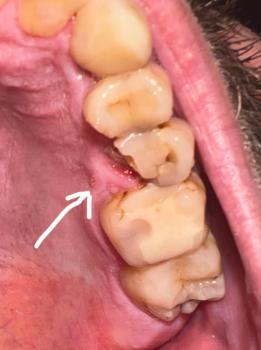
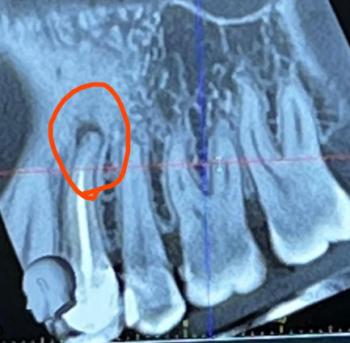
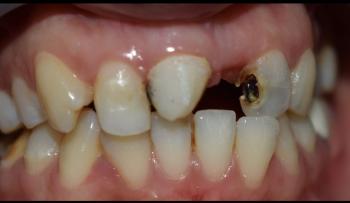
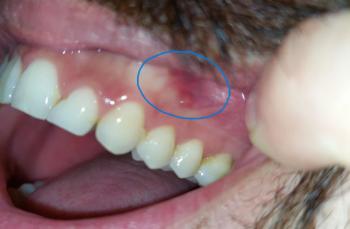
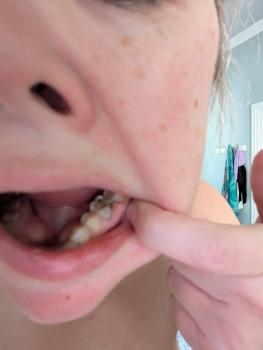
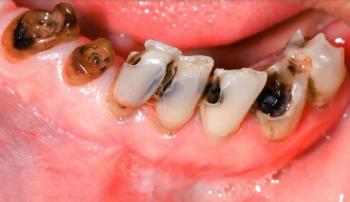
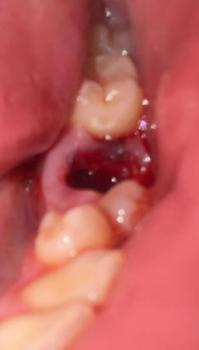
Patients with lower front gum inflammation may also experience tartar buildup, periodontal disease, gum abscesses, or tooth decay. Explore these related clinical case studies.

Other topics:
Other Dental Clinic