Smile Again with Comfort and Confidence.

Loose Tooth in Adults: Causes, Treatment & Can It Be Saved?
A loose permanent tooth in an adult is not normal and should be evaluated by a dentist. Adult tooth mobility can result from gum disease, bone loss, excessive biting forces, dental trauma, infection, or damage to the tooth root.
The good news is that a loose adult tooth does not automatically mean it needs to be extracted. In some cases, treating the underlying problem can stabilize the tooth and preserve it. The earlier the cause is identified, the more options your dental team may have.
Why Is My Adult Tooth Loose?
A permanent tooth is held securely in the jaw by the periodontal ligament, surrounding bone, and gum tissues. When one or more of these structures becomes damaged, the tooth may begin to move more than normal.
The most common causes include periodontal disease, excessive bite forces, trauma, and infection.
1. Gum Disease and Bone Loss
Periodontitis is one of the most important causes of progressive tooth mobility in adults.
Periodontitis is a chronic inflammatory disease that damages the tissues supporting the teeth. As periodontal attachment and alveolar bone are lost, less support remains around the tooth.
Possible signs include:
-
Bleeding gums
-
Deep periodontal pockets
-
Gum recession
-
Persistent bad breath
-
Pus around the gums
-
Teeth that feel loose or mobile
-
Teeth shifting or developing new spaces
-
Bone loss visible on dental X-rays
A loose tooth caused by periodontal disease requires treatment of the underlying periodontal infection and inflammation. Simply splinting the tooth without controlling the disease may not provide a lasting solution.
2. Excessive Biting Forces and Bruxism
A tooth can become mobile when it is subjected to excessive or abnormal forces.
This may occur with:
-
Teeth grinding
-
Teeth clenching
-
A high dental filling or crown
-
An uneven bite
-
Certain habits that repeatedly overload individual teeth
Dentists may refer to this as occlusal trauma.
Signs can include tooth tenderness when biting, increased mobility, wear facets, or changes in the periodontal ligament space on an X-ray.
Importantly, excessive biting forces and periodontal disease can occur together. A tooth with reduced bone support may tolerate normal biting forces poorly.
3. Dental Trauma
A sudden blow to the mouth can injure the periodontal ligament and supporting structures.
Common causes include:
-
Sports injuries
-
Falls
-
Car accidents
-
Physical impacts
-
Biting unexpectedly on a hard object
Trauma can cause different types of tooth displacement or periodontal ligament injury, including subluxation and luxation injuries.
A tooth that suddenly becomes loose after an injury should be examined promptly—even if it still looks relatively normal.
Depending on the injury, treatment may include observation, repositioning, temporary splinting, and monitoring of the tooth's pulp and periodontal tissues.
4. Tooth Infection or Dental Abscess
An infected tooth can sometimes become mobile because inflammation and bone destruction develop around the root.
A dental abscess may cause:
-
Tooth pain
-
Pain when biting
-
Swelling
-
Tenderness
-
Pus or drainage
-
A bad taste
-
Fever in more severe infections
The dentist may perform pulp testing and take dental X-rays to determine whether the tooth has a pulpal or periapical problem.
When the tooth is restorable and the source of infection can be treated, root canal therapy may allow the tooth to heal and remain functional.
5. Root Fracture
A fracture involving the root can compromise the stability of a tooth.
Vertical root fractures can be particularly difficult to diagnose because symptoms may be subtle or inconsistent.
Possible findings include:
-
Localized gum swelling
-
A narrow periodontal defect
-
Pain during chewing
-
Recurrent infection
-
Localized bone loss
-
Increasing tooth mobility
A suspected root fracture requires careful clinical and radiographic evaluation.
Some fractures cannot be predictably repaired, and extraction may ultimately be necessary. However, the diagnosis should be established before deciding that a tooth cannot be saved.
Can a Loose Adult Tooth Be Saved?
Sometimes.
The prognosis depends on why the tooth is loose and how much healthy supporting structure remains.
A dentist may consider:
-
Amount of periodontal bone support
-
Degree of tooth mobility
-
Periodontal pocketing
-
Clinical attachment loss
-
Root shape and length
-
Presence of infection
-
Root fractures or resorption
-
Occlusal forces
-
Tooth position
-
Overall restorability
-
Response to periodontal or endodontic treatment
There is no single measurement that can determine whether every loose tooth can be saved.
Treatment for a Loose Tooth
Treatment is directed at the underlying cause rather than mobility alone.
If Gum Disease Is the Cause
Treatment may involve:
-
Professional periodontal cleaning
-
Scaling and root planing
-
Improved daily plaque control
-
Periodontal reassessment
-
Periodontal surgery when indicated
-
Ongoing periodontal maintenance
The objective is to control inflammation and preserve the remaining periodontal support.
If Excessive Bite Forces Are the Cause
Treatment may involve:
-
Identifying the source of excessive force
-
Adjusting a problematic restoration when appropriate
-
Managing clenching or grinding
-
A professionally fabricated night guard in selected cases
-
Monitoring tooth mobility
Treatment should be based on a proper bite and periodontal evaluation rather than simply grinding down a tooth.
If Trauma Is the Cause
Depending on the injury, a dentist may recommend:
-
Observation
-
Repositioning a displaced tooth
-
Temporary splinting
-
Soft-diet instructions
-
Follow-up examinations
-
Pulp testing and monitoring
Traumatized teeth sometimes develop complications later, so follow-up is important.
If an Infection Is the Cause
When the tooth can be restored, treatment may involve:
Root canal therapy to remove infected or inflamed pulp tissue and allow the surrounding tissues to heal.
If the tooth has extensive structural damage or cannot be predictably restored, extraction may be considered.
Does Splinting a Loose Tooth Save It?
Splinting can stabilize a mobile tooth, but it does not automatically treat the underlying disease.
A dentist may temporarily connect a mobile tooth to neighboring teeth using a dental splint.
Splinting may be considered in certain traumatic injuries and selected periodontal situations.
The benefit is mechanical stabilization while the underlying tissues recover or while periodontal treatment takes effect.
However, if mobility is caused by uncontrolled periodontitis, continued bone loss can cause the tooth to become mobile again even after splinting.
Why Your Dentist May Not Extract a Loose Tooth Immediately
Patients are sometimes surprised when a dentist recommends treatment and monitoring instead of immediate extraction.
The reason is simple:
Natural teeth are worth preserving when they have a reasonable long-term prognosis.
If the cause of mobility is treatable and enough supporting structure remains, stabilizing the tooth may be preferable to removing it prematurely.
On the other hand, attempting to preserve a tooth with a hopeless prognosis can delay appropriate replacement treatment.
The decision should be based on a comprehensive examination.
What Happens During a Dental Examination?
Your dentist may perform several tests to determine why the tooth is mobile.
Mobility Testing
The dentist gently evaluates how much the tooth moves and in which direction.
Periodontal Probing
Measurements around the tooth help identify periodontal pockets, bleeding, and attachment loss.
Dental X-Rays
Radiographs can show:
-
Bone levels
-
Bone loss patterns
-
Root shape
-
Periapical changes
-
Periodontal ligament changes
-
Other structural abnormalities
Pulp Testing
Cold testing, electric pulp testing, and other methods can help determine whether the dental pulp is responding normally.
Bite Evaluation
Your dentist may examine how the tooth contacts opposing teeth and whether excessive forces are contributing to the problem.
Evaluation for Cracks or Fractures
The tooth may require additional testing if a root or crown fracture is suspected.
What Should You Do If Your Tooth Is Loose?
Don't keep wiggling it to see how loose it is.
Repeatedly testing a mobile tooth can further irritate the surrounding tissues.
Instead:
-
Schedule a dental examination.
-
Avoid deliberately moving the tooth.
-
Eat softer foods if chewing causes discomfort.
-
Maintain gentle oral hygiene.
-
Continue cleaning around the gumline unless your dentist tells you otherwise.
-
Follow professional instructions for periodontal or restorative treatment.
Avoid relying on numbing gels or home remedies to treat the cause of tooth mobility.
When Is a Loose Tooth a Dental Emergency?
Seek urgent dental care if a loose tooth is accompanied by:
-
Significant facial swelling
-
Severe or rapidly increasing pain
-
Fever
-
Difficulty swallowing
-
Difficulty breathing
-
Significant bleeding
-
Recent major facial trauma
-
A tooth that has been displaced from its normal position
Facial swelling combined with difficulty breathing or swallowing requires emergency medical attention.
The Emotional Side of Having a Loose Tooth
Finding that an adult tooth moves can be frightening.
Many patients immediately assume:
"I'm going to lose my tooth."
That conclusion is understandable—but it is not always accurate.
A loose tooth has many possible causes. Some are treatable, and some teeth can be stabilized after the underlying problem is addressed.
The most important step is determining why the tooth became mobile in the first place.
Patients also deserve a clear explanation of prognosis. A tooth with significant bone loss may have a guarded outlook, while a recently traumatized tooth may have a very different treatment pathway.
Understanding the diagnosis helps patients make informed decisions instead of relying on fear or online self-diagnosis.
Frequently Asked Questions
Is it normal for an adult tooth to be slightly loose?
Permanent teeth have a small amount of physiologic movement, but noticeable or increasing mobility should be evaluated by a dentist.
Can a loose tooth tighten back up?
Sometimes. If the cause is temporary inflammation, trauma, or excessive force and the supporting tissues recover, mobility may decrease. Teeth affected by significant periodontal bone loss may remain mobile even after successful treatment.
Can gum disease make your teeth loose?
Yes. Advanced periodontal disease can destroy the bone and attachment supporting the teeth, resulting in increased mobility.
Can a loose tooth be saved without extraction?
In some cases, yes. Treatment depends on the cause, remaining support, tooth structure, infection status, and overall prognosis.
Will a loose tooth eventually fall out?
Not necessarily. Some loose teeth can be stabilized and maintained for many years. Others have too much structural or periodontal damage to be predictably saved.
Should I brush a loose tooth?
Yes, but gently. Maintaining good plaque control is particularly important when gum disease is contributing to mobility. Avoid aggressive brushing or deliberately moving the tooth.
The Bottom Line
A loose adult tooth is a warning sign—not an automatic sentence for extraction.
Periodontal disease, excessive bite forces, trauma, infection, and root damage can all cause tooth mobility. The treatment that works depends on identifying the specific cause.
If you notice that a permanent tooth is moving, don't wait for it to become painful or fall out. A dental examination, periodontal evaluation, X-rays, and appropriate diagnostic testing can determine whether the tooth can be stabilized, treated, monitored, or replaced.
The sooner the cause is diagnosed, the better your chance of making an informed decision about saving the natural tooth.
Related Clinical Cases
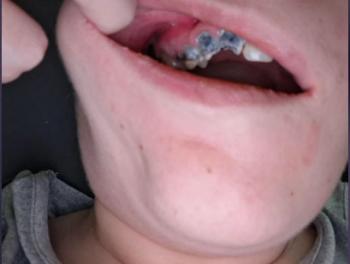
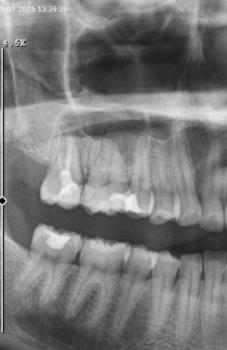
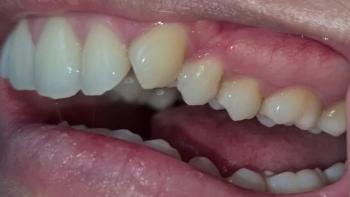
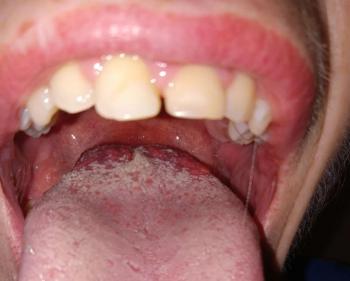
Patients with lower front gum inflammation may also experience tartar buildup, periodontal disease, gum abscesses, or tooth decay. Explore these related clinical case studies.



Other topics:
Other Dental Clinic