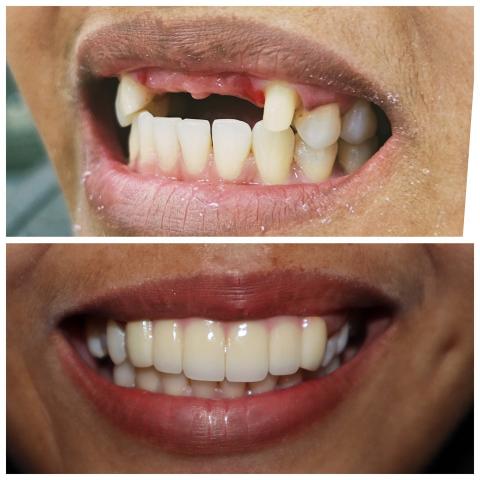
Missing Teeth? Find Your Smile Again.

Dental Implants vs Dentures: Materials, Cost, Insurance & FAQs
Replacing missing teeth can improve chewing, speech, appearance, and overall oral function. Two of the most common options are dental implants and dentures. While both can replace missing teeth, they differ significantly in materials, stability, treatment time, maintenance, cost, and insurance coverage.
Dental Implants vs Dentures: At a Glance
| Feature | Dental Implants | Dentures |
|---|---|---|
| Restoration | Fixed or implant-supported | Usually removable |
| Main materials | Titanium or zirconia implant, abutment, ceramic/resin crown | Acrylic resin, sometimes metal framework and artificial teeth |
| Stability | Very high when properly placed and integrated | Can move, particularly lower dentures |
| Surgery | Usually required | No implant surgery |
| Treatment time | Often several months | Often faster |
| Bone preservation | Helps preserve bone around the implant | Does not prevent normal bone resorption |
| Maintenance | Brush and floss/clean around implants | Remove and clean regularly |
| Initial cost | Generally higher | Generally lower |
| Insurance | Often limited | May provide partial benefits depending on the plan |
What Materials Are Used?
Dental Implant Materials
A traditional dental implant generally consists of three components:
1. Implant fixture
The fixture is the portion placed into the jawbone. It is commonly made from titanium or a titanium alloy because of its strength, biocompatibility, and long clinical history. Some systems use zirconia implants.
2. Abutment
The abutment connects the implant to the visible restoration. It may be manufactured from titanium, zirconia, or other compatible dental materials.
3. Crown
The final crown is usually made from materials such as zirconia, porcelain, porcelain-fused-to-metal, or other dental ceramics and resins. Material selection depends on location, functional requirements, aesthetics, and the dentist's treatment plan.
Denture Materials
Dentures are typically made using a combination of:
-
Acrylic resin for the pink denture base;
-
Acrylic or composite artificial teeth;
-
Metal alloys in some partial denture frameworks;
-
Flexible thermoplastic materials in certain flexible partial dentures.
The ideal material depends on whether the patient needs a full denture, partial denture, immediate denture, or another type of removable restoration.
Which Is More Affordable?
In general, traditional dentures have a lower initial treatment cost than dental implants. However, comparing only the starting price can be misleading.
Dental implants may require additional procedures such as tooth extraction, bone grafting, sinus augmentation, temporary teeth, or diagnostic imaging. Dentures may also require future adjustments, relining, replacement, or repairs.
The best comparison is therefore based on the total treatment plan and expected maintenance over time, not simply the advertised starting price.
Dental Insurance Coverage in the USA
Dental insurance coverage varies considerably between plans.
Are Dental Implants Covered?
Many U.S. dental insurance plans provide limited or no coverage for the implant portion of treatment, although some plans may cover certain components of the restoration or related procedures.
Coverage can depend on:
-
The specific insurance policy;
-
Whether the missing tooth resulted from an accident or another covered circumstance;
-
Annual benefit limits;
-
Waiting periods;
-
Missing-tooth clauses;
-
Whether the procedure is considered medically or dentally necessary;
-
The plan's exclusions and limitations.
Are Dentures Covered?
Dentures are more commonly included as a covered benefit under U.S. dental insurance plans, but coverage is still highly plan-dependent.
A policy may cover a percentage of the cost after a deductible, subject to an annual maximum, frequency limitation, or other restrictions.
Important: Patients should request a pre-treatment estimate or predetermination of benefits from their insurance company before beginning treatment. A dentist's office can often help submit the proposed treatment plan.
Dental Implants vs Dentures: Which Is Better?
There is no single solution that is best for every patient.
Dental implants may be attractive for patients who:
-
Want a more stable tooth replacement;
-
Prefer a fixed restoration;
-
Have adequate bone or are candidates for bone augmentation;
-
Are willing to undergo surgery;
-
Want an option that can help maintain bone around the implant.
Dentures may be attractive for patients who:
-
Prefer a removable restoration;
-
Want a lower initial treatment cost;
-
Want to avoid implant surgery;
-
Need teeth replaced relatively quickly;
-
Are not suitable candidates for implants;
-
Prefer a different approach to spreading treatment costs.
A dentist should evaluate the patient's oral health, remaining teeth, bone volume, medical history, expectations, budget, and long-term goals before recommending treatment.
Frequently Asked Questions
1. Are dental implants better than dentures?
Not necessarily. Implants generally provide greater stability, while dentures can be more affordable and less invasive. The appropriate option depends on the individual patient.
2. Which costs more: implants or dentures?
Dental implants generally have a higher initial cost. Dentures are typically less expensive upfront, although both options can involve future maintenance and replacement costs.
3. Do dentures use real teeth?
No. Dentures use artificial teeth, commonly manufactured from acrylic resin or other dental materials.
4. Are dental implants made of titanium?
Most conventional dental implants are made from titanium or titanium alloys. Zirconia implants are also available in some systems.
5. Can dentures look natural?
Yes. Modern dentures can be designed with natural-looking tooth shapes, colors, gum contours, and individualized positioning.
6. Can I eat normally with dentures?
Many people can eat a wide variety of foods with properly fitted dentures. However, adaptation takes time, and very hard, sticky, or difficult-to-chew foods may require additional care.
7. Can dental implants replace all my teeth?
Yes. Implant treatment can be used for individual missing teeth or to support full-arch restorations. Options may include implant-supported bridges and full-arch implant restorations.
8. Does dental insurance pay for dental implants in the USA?
Sometimes, but coverage is highly dependent on the individual insurance plan. Some policies exclude implants while covering portions of the crown, bridge, extraction, or other associated treatment.
9. Does insurance usually cover dentures?
Dentures are more commonly covered than implants under many dental plans, but benefits, percentages, deductibles, annual maximums, and replacement limitations vary.
10. Which lasts longer, implants or dentures?
A properly maintained implant restoration can provide long-term service, while dentures generally require periodic adjustment, relining, repair, or replacement. Longevity depends on oral health, materials, maintenance, and individual circumstances.
11. Can I switch from dentures to implants later?
Often, yes. Some patients initially choose dentures and later consider implant-supported treatment. However, changes in jawbone volume and other oral-health factors can affect future implant eligibility.
12. How do I choose between implants and dentures?
Start with a comprehensive dental examination and ask your dentist for the total cost, treatment timeline, materials, expected maintenance, insurance benefits, and alternatives. A good treatment decision should consider both clinical suitability and long-term value, not price alone.
Bottom Line
Dental implants and dentures are both established options for replacing missing teeth, but they serve different needs. Implants generally offer greater stability and a more fixed solution, while dentures can provide a faster and more economical removable restoration.
For patients in the United States, insurance coverage should be reviewed carefully before treatment. Ask for a written treatment plan and insurance estimate so you understand what is covered, what you will pay out of pocket, and what future maintenance may cost.
Related Clinical Cases
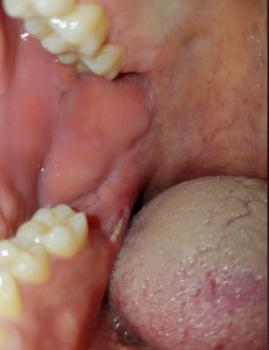
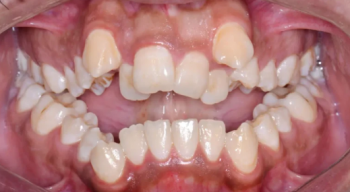
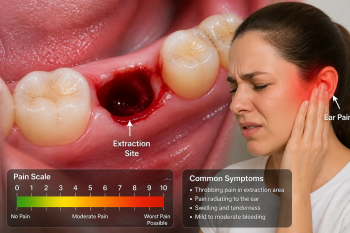
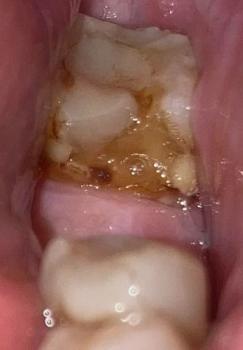
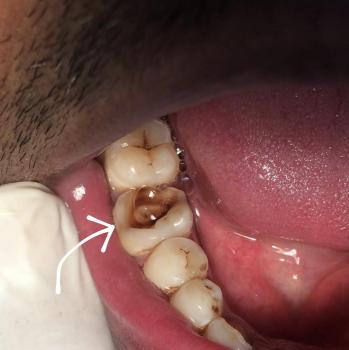
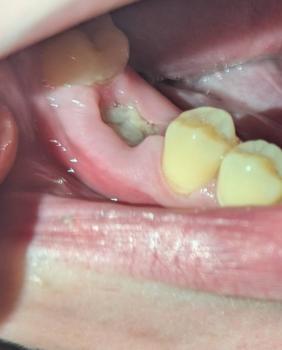
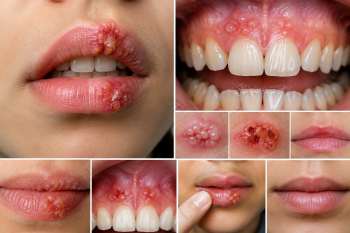
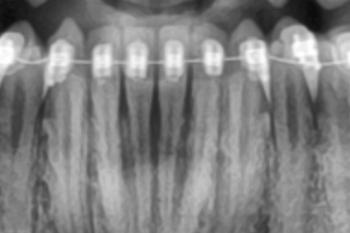
Patients with lower front gum inflammation may also experience tartar buildup, periodontal disease, gum abscesses, or tooth decay. Explore these related clinical case studies.
Other topics:
Other Dental Clinic