Building Confidence One Smile at a Time.

Dental Examination for Dental Implants in Cebu | X-Ray & CBCT
Dental Examination
Start With a Complete Dental Examination
Before recommending dental implants, dentures, or other tooth-replacement options, a thorough dental examination is important. Your dentist needs to understand the condition of your teeth, gums, jawbone, bite, and overall oral health before creating a treatment plan.
A proper examination helps identify existing dental problems and determines which treatment options may be suitable for your individual needs.
What Your Dental Examination May Include
-
X-rays
Dental X-rays help your dentist examine the teeth, roots, surrounding bone, and areas that cannot be seen during a regular oral examination. -
3D CBCT Imaging
When more detailed information is needed, 3D cone-beam computed tomography (CBCT) imaging can provide a three-dimensional view of the jawbone, teeth, nerves, and surrounding structures. -
Bone-Volume Assessment
For patients considering dental implants, the available bone volume is an important consideration. Your dentist can evaluate the height and width of the jawbone to determine whether there is sufficient support for an implant or whether additional treatment may be needed. -
Gum-Health Evaluation
Healthy gums are an important part of successful dental treatment. Your dentist may check for gum disease, inflammation, infection, gum recession, and other conditions that may need attention before implant treatment. -
Bite Assessment
Your bite and the way your upper and lower teeth come together can affect the design and function of dental restorations. A bite assessment helps your dentist plan treatment that works comfortably with your existing teeth. -
Digital Treatment Planning
Digital records and imaging can be combined to help create a more detailed treatment plan. This can help your dentist evaluate tooth position, bone anatomy, implant placement, and the final restoration before treatment begins.
Why the Examination Matters
Dental treatment should be planned around your individual oral condition rather than simply choosing a treatment based on price or appearance.
A complete examination can help your dentist determine whether you may be a candidate for dental implants, dentures, bridges, or another restorative option. It can also identify conditions that should be treated before moving forward.
Dental Examination → Treatment Planning → Tooth Replacement
Think of the process as three connected stages:
1. Examine
Evaluate your teeth, gums, bone, bite, and overall oral condition.
2. Plan
Use clinical findings and imaging to determine the appropriate treatment approach.
3. Restore
Proceed with the selected tooth-replacement solution and plan the final restoration.
What Happens After Your Examination?
Once your dentist has completed the examination and reviewed the necessary imaging, you can discuss the available treatment options, expected timeline, and estimated costs.
If you are comparing dental implants and dentures, the next step is to understand how the two treatments differ in terms of procedure, durability, maintenance, and overall cost.
Continue reading:
Dental Implants vs Dentures: Complete Cost and Treatment Guide
Planning Dental Implants?
Your examination is the foundation of your implant treatment plan. The information gathered from X-rays, CBCT imaging, bone assessment, gum evaluation, and bite analysis can help your dentist determine the most appropriate approach for your situation.
Schedule a dental examination to begin your treatment assessment.
Related Clinical Cases
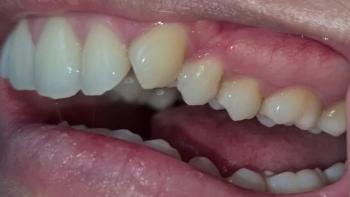
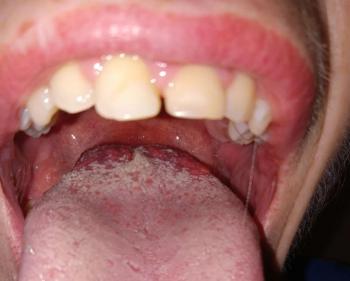
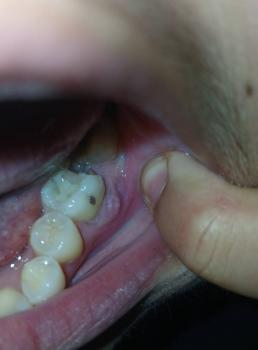
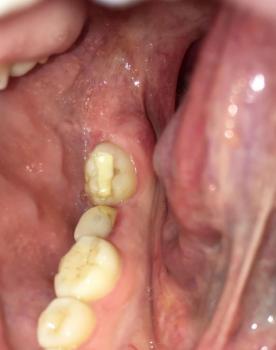
Patients with lower front gum inflammation may also experience tartar buildup, periodontal disease, gum abscesses, or tooth decay. Explore these related clinical case studies.