Healthy Teeth, Happy Life.

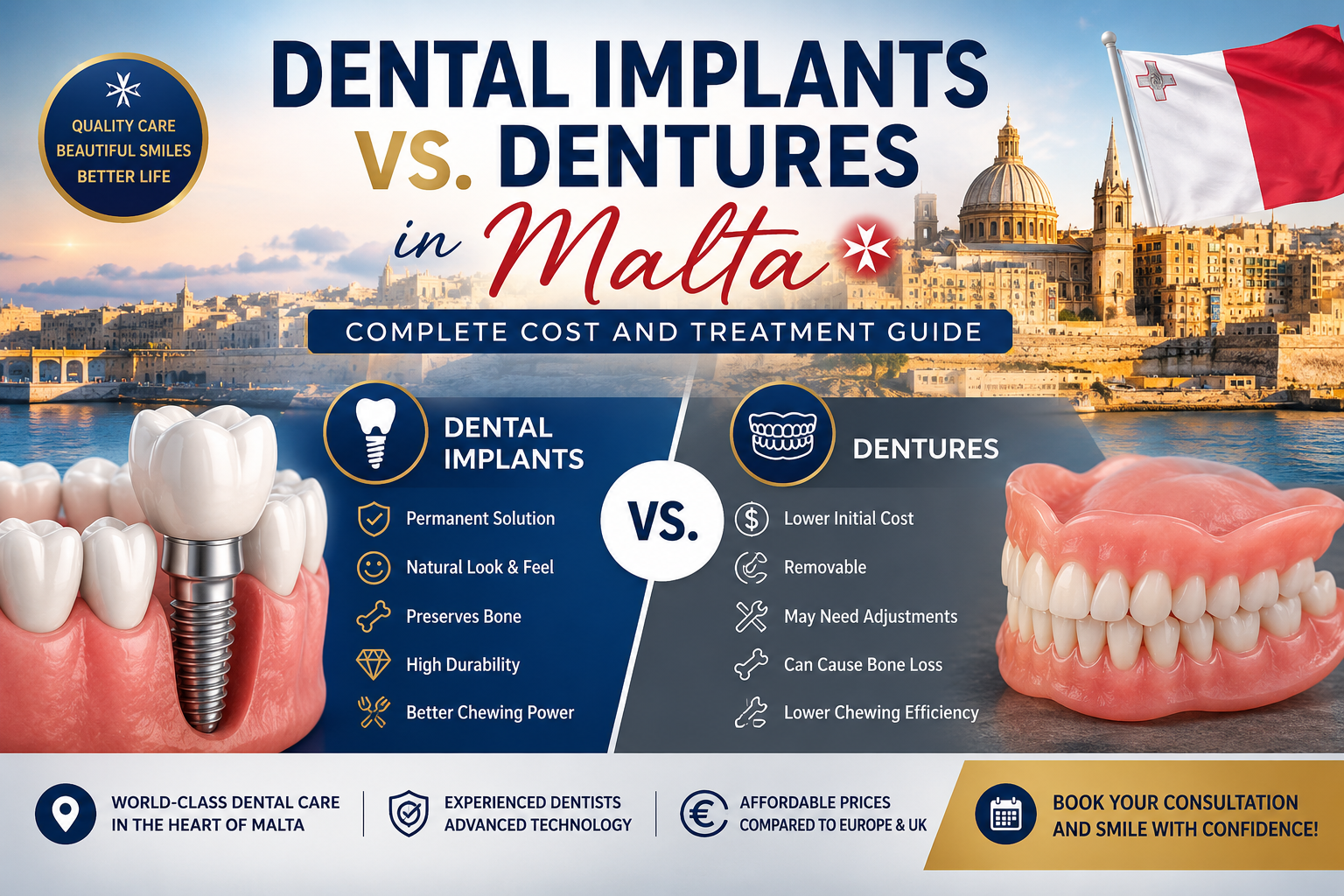
Dental Implants vs. Dentures in Malta: Complete Cost and Treatment Guide
image hero:
Country:
When choosing between dental implants and dentures in Malta, patients commonly compare upfront cost, comfort, stability, appearance, treatment time, and long-term durability.
Malta has a well-established private dental sector, particularly around Sliema, San Gwann, Ta' Xbiex, St. Julian's, and Valletta. The country also attracts expatriates and international patients seeking modern dental treatment and English-speaking dental professionals.
This guide compares dental implants and dentures in Malta, including approximate costs, treatment differences, patient considerations, and practical questions to ask before treatment.
1. Dental Implant and Denture Costs in Malta
Prices vary between clinics and depend on the complexity of treatment, materials, laboratory fees, implant system, and whether additional procedures are required.
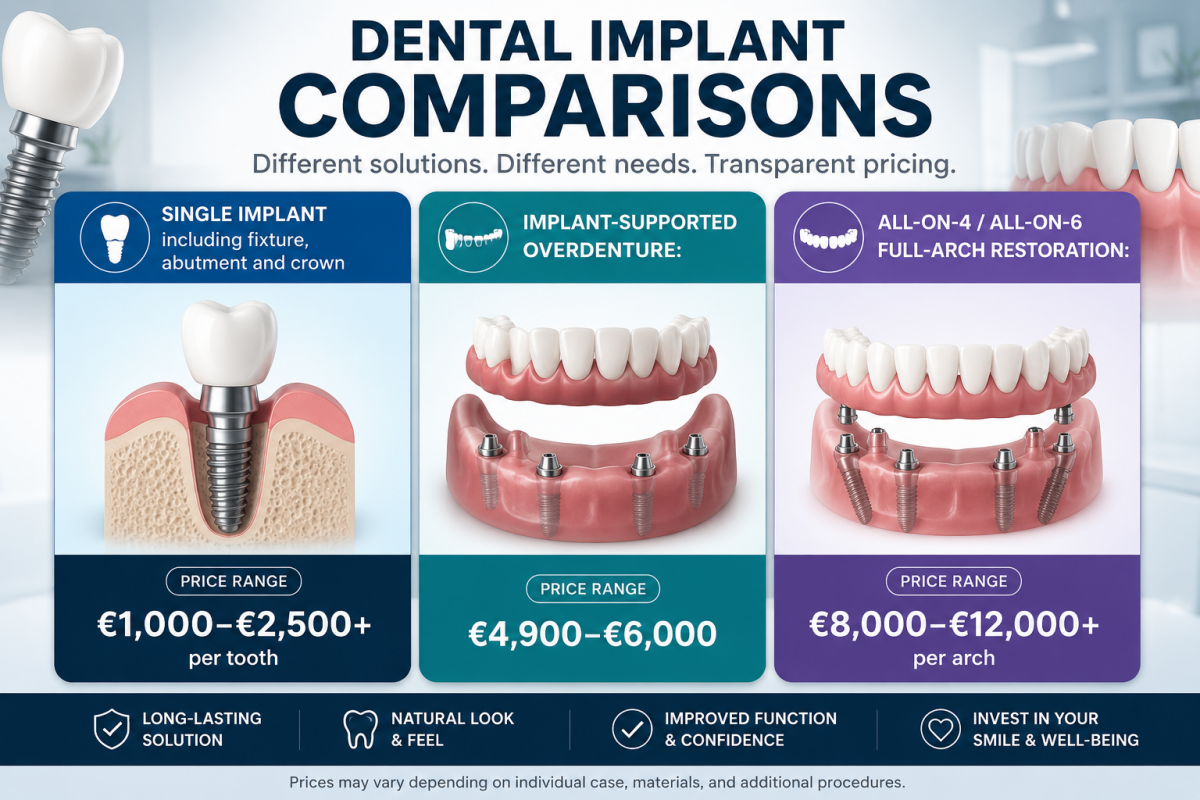
Dental Implant Costs
| Treatment | Approximate Cost |
|---|---|
| Single implant including fixture, abutment and crown | €1,000–€2,500+ per tooth |
| Implant-supported overdenture | Approximately €4,900–€6,000 |
| All-on-4 / All-on-6 full-arch restoration | Approximately €8,000–€12,000+ per arch |
Premium implant systems, including Straumann and Nobel Biocare, may increase the final price.
Some clinics may quote the implant fixture separately from the abutment and crown, so patients should always confirm exactly what is included.
Additional procedures may include:
These services may be charged separately.
Traditional Denture Costs
| Denture Type | Approximate Cost |
|---|---|
| Full acrylic denture | €375–€450 per arch |
| Partial acrylic denture | €200–€220+ |
| Flexible / Valplast denture | €450–€525 |
| Metal-frame + acrylic denture | €450–€700 |
| Denture reline | Approximately €90–€100 |
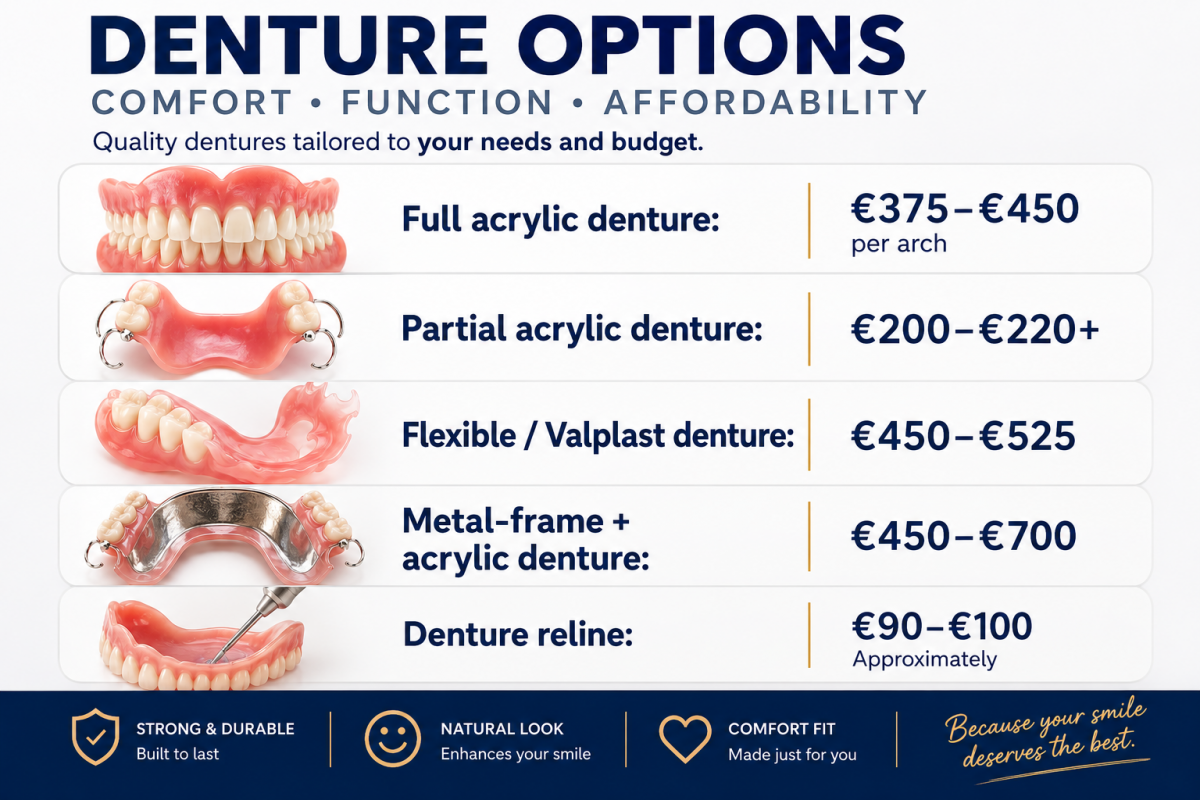
Conventional dentures have a significantly lower initial cost than implant treatment and do not require implant surgery.
However, dentures may need periodic adjustment, relining, repair, or eventual replacement as the shape of the gums and jaw changes.
2. Dental Implants vs. Dentures
| Feature | Dental Implants | Traditional Dentures |
|---|---|---|
| Structure | Implant anchored into the jawbone supporting a crown, bridge, or denture | Removable acrylic or metal-based restoration resting on the gums |
| Surgery | Usually required | No implant surgery |
| Treatment time | Generally longer | Generally faster |
| Stability | High stability when properly planned and maintained | Can move or loosen |
| Chewing function | Generally closer to natural teeth | May be reduced compared with fixed teeth |
| Bone changes | Helps preserve bone around the implant site | Does not prevent bone resorption |
| Removable | Usually fixed, depending on restoration | Yes |
| Initial cost | Higher | Lower |
| Maintenance | Professional monitoring and daily oral hygiene | Daily cleaning and periodic adjustments |
| Long-term durability | Can remain functional for many years with appropriate care | Often requires adjustment or replacement over time |
3. Dental Implants in Malta
Dental implants replace the root of a missing tooth with an implant that is placed into the jawbone.
After healing and integration with the surrounding bone, the implant can support a crown, bridge, or implant-supported denture.
Advantages of Dental Implants
Greater stability:
Implants are anchored to the jawbone, reducing the movement commonly associated with conventional dentures.
Natural-looking appearance:
Modern crowns and bridges can be designed to closely resemble natural teeth.
Improved chewing ability:
Implant-supported restorations can provide stronger and more stable chewing function than conventional removable dentures.
Bone preservation:
An implant provides functional stimulation to the surrounding bone and can help reduce the bone loss associated with tooth loss in that area.
Long-term treatment option:
Implants can remain functional for many years, although their longevity depends on factors such as oral hygiene, gum health, bone condition, bite forces, smoking, and regular professional maintenance.
Potential Disadvantages
Dental implants require surgery and usually involve a longer treatment process.
Patients may need several months for healing before the final restoration is completed.
Some patients also require additional procedures such as bone grafting or sinus augmentation before implant placement.
4. Traditional Dentures in Malta
Dentures remain an effective and affordable method of replacing multiple missing teeth or an entire dental arch.
They are removable and can usually be fabricated without implant surgery.
Advantages
Potential Disadvantages
Conventional dentures can move during eating or speaking, particularly when the fit has deteriorated.
They may also cause pressure points or gum irritation.
After teeth are lost, the jawbone gradually changes. This can cause an older denture to become loose and may require relining, adjustment, repair, or replacement.
5. Implant-Supported Overdentures: A Middle-Ground Option
Patients who want more stability than conventional dentures but do not want the cost of a fully fixed implant restoration may consider an implant-supported overdenture.
An overdenture uses strategically placed implants to provide additional support and retention.
Depending on the clinical situation, this may provide:
For some patients, implant-supported overdentures provide a practical compromise between conventional dentures and fixed full-arch implants.
6. All-on-4 and All-on-6 Treatment
Patients with extensive tooth loss may be candidates for full-arch implant treatments such as All-on-4 or All-on-6.
Rather than placing an individual implant for every missing tooth, several strategically positioned implants support a complete arch of replacement teeth.
These treatments can provide a fixed alternative to conventional dentures, but they require significantly greater financial investment and careful clinical planning.
Assessment may include:
-
Dental examination
-
X-rays
-
3D CBCT imaging
-
Bone-volume assessment
-
Gum-health evaluation
-
Bite assessment
-
Digital treatment planning
Patients should confirm whether temporary teeth, final prostheses, extractions, scans, and follow-up appointments are included in the quoted price.
7. Dental Technology in Malta
Modern private dental practices may use technologies such as:
-
3D CBCT scanning
-
Digital intraoral scanning
-
CAD/CAM technology
-
Digital dental impressions
-
Computer-assisted implant planning
-
Digital smile planning
These technologies can assist dentists with diagnosis and treatment planning.
However, patients should not choose a clinic solely because it advertises advanced technology. The dentist's qualifications, implant experience, treatment planning, infection-control standards, laboratory support, and aftercare are also important.
8. Patient Experience and Reviews
Reviews from patients, expatriates, and international visitors can provide useful information about their experiences with dental clinics in Malta.
Common areas patients discuss include:
Communication
English is widely used in Malta, which can make communication easier for international patients.
Patients should nevertheless request a written treatment plan explaining the proposed procedures, materials, costs, and expected timeline.
Technology
Patients may highlight modern facilities, digital imaging, CBCT scans, CAD/CAM systems, and other technologies.
However, reviews should be considered alongside professional credentials and clinical information.
Cost vs. Long-Term Value
Patients choosing dentures often prioritize affordability, faster treatment, and avoiding surgery.
Patients choosing implants generally accept the higher upfront cost in exchange for greater stability and a restoration designed to function more like natural teeth.
9. Questions to Ask a Malta Dentist
Before beginning treatment, ask the dental clinic:
10. Which Option Is Right for You?
There is no universally better choice.
Dental implants may be appropriate for patients who:
-
Want a stable, fixed tooth replacement
-
Want improved chewing function
-
Prefer not to remove their teeth for cleaning
-
Have sufficient bone or are suitable for bone augmentation
-
Are willing to undergo surgery
-
Can afford the higher initial investment
-
Are prepared for long-term maintenance
Traditional dentures may be appropriate for patients who:
Implant-supported overdentures may be appropriate for patients who:
-
Want more stability than conventional dentures
-
Prefer a removable restoration
-
Want an alternative to a fully fixed full-arch restoration
-
Are looking for a compromise between cost and stability
Final Advice for Patients in Malta
The cheapest treatment is not necessarily the most economical over the long term, and the most expensive treatment is not necessarily the best choice for every patient.
Before making a decision, obtain an individualized examination and itemized treatment plan from a qualified dental professional.
For international patients, also consider travel expenses, accommodation, the number of required appointments, recovery time, and arrangements for follow-up care after returning home.
Dental implants and dentures serve different clinical needs. The most appropriate option depends on your oral health, bone condition, number of missing teeth, expectations, treatment timeline, and budget.
Related Clinical Cases
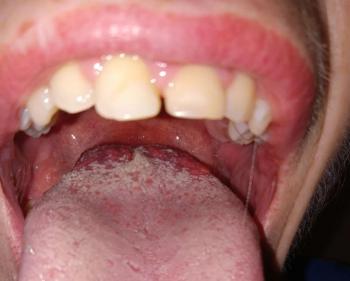
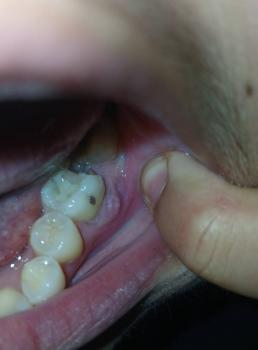
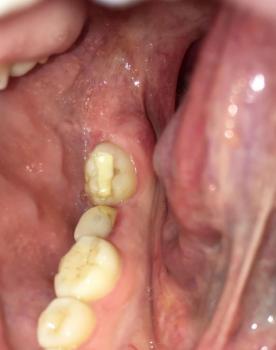
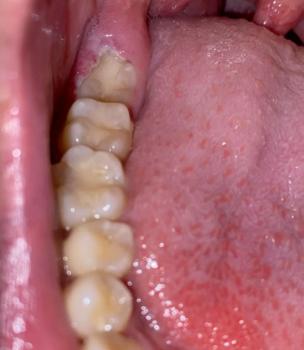
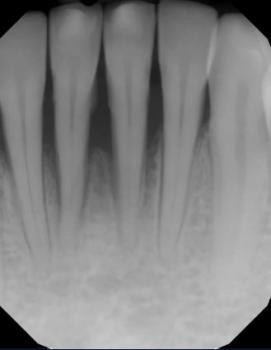
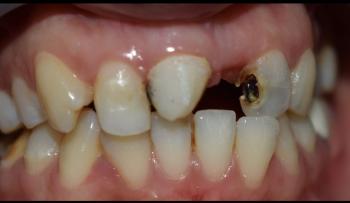
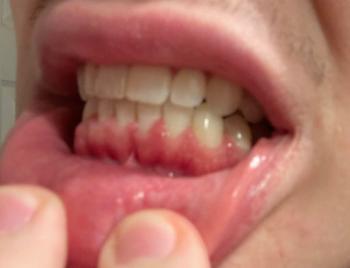
Patients with lower front gum inflammation may also experience tartar buildup, periodontal disease, gum abscesses, or tooth decay. Explore these related clinical case studies.

Other topics:
Other Dental Clinic