Because Every Tooth Deserves Care.

Inner Cheek Ulcer From Braces – Dental Case Analysis
Image:
Severity:
Teeth Problems:
Dental Case Analysis – Inner Cheek Ulcer Caused by Orthodontic Braces
Case Overview
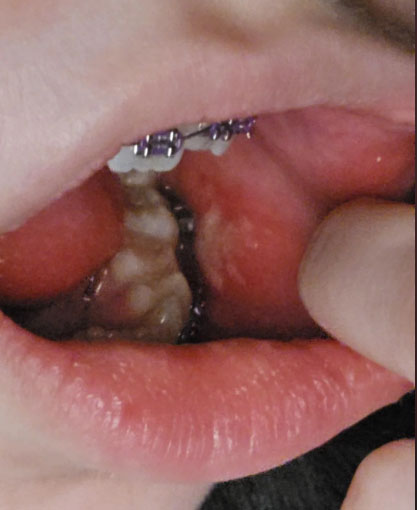
This intra-oral image shows a patient wearing orthodontic braces with a localized ulcer and redness on the inner cheek, directly adjacent to brackets and archwire. The lesion appears consistent with traumatic irritation from orthodontic hardware, commonly seen during active treatment or after adjustments.
Scale All Teeth
-
Upper posterior teeth with orthodontic brackets visible
-
Archwire and metal components in close contact with cheek tissue
-
No visible tooth fractures or obvious decay in this image
-
Primary concern involves soft-tissue injury, not tooth structure
Full Analysis and Diagnosis
Clinical Findings
-
Red, inflamed inner cheek mucosa
-
Localized ulcerated area at contact point
-
Mild swelling of surrounding soft tissue
-
Brackets and wire positioned close to lesion
-
No visible pus or active bleeding
Interpretation
-
Findings are suggestive of brace-induced traumatic ulceration
-
Repetitive friction from brackets or wire during chewing and speaking
-
Moist oral environment may delay healing if irritation continues
Probable Diagnosis
-
Orthodontic appliance–related cheek ulcer
-
Traumatic oral mucosal injury
(Clinical confirmation recommended.)
Expert Dental Guidance: Inner Cheek Ulcers From Braces — Causes, Relief, Healing, and Treatment
1. Why Do Braces Cause Ulcers Inside the Cheek?
An inner cheek ulcer is a painful break in the delicate lining of the mouth. In patients wearing fixed orthodontic braces, these sores may develop when metal brackets, archwires, or other orthodontic components repeatedly rub against the cheek during chewing, speaking, or swallowing.
According to the clinical findings described in this dental case, the localized ulcer and surrounding redness are consistent with a possible traumatic ulcer caused by contact with orthodontic hardware. However, a photograph alone cannot confirm the diagnosis or exclude other causes.
Common contributing factors include:
-
Bracket friction: Protruding or prominent brackets repeatedly contact the inner cheek.
-
Loose or protruding archwire: A wire end may scratch or puncture the soft tissue.
-
Recent orthodontic adjustments: Changes in wire position or tension may temporarily increase irritation.
-
Chewing and speaking: Repeated cheek movement can aggravate an existing sore.
-
Pre-existing mouth ulcers: Canker sores or other oral conditions may occur independently of braces.
A qualified dentist or orthodontist should examine persistent lesions to determine whether the problem is mechanical irritation, an ordinary mouth ulcer, or another oral condition.
2. Clinical Assessment of the Inner Cheek Ulcer
The case image suggests a localized soft-tissue injury near orthodontic hardware. Findings that may be associated with a traumatic ulcer include:
-
A small, round or irregular sore on the inner cheek.
-
A white, yellowish, or pale center with a red surrounding border.
-
Local tenderness or pain when eating, speaking, or moving the cheek.
-
Visible contact between the affected tissue and a bracket or wire.
The pale center of a typical mouth ulcer may consist of a fibrin coating over the damaged tissue; it does not automatically indicate pus or a bacterial infection.
Important clinical distinction: A traumatic ulcer is not the same as a dental abscess. An abscess may cause pus, increasing swelling, severe tooth pain, or fever and requires professional assessment. The absence of obvious pus in a photograph does not rule out infection.
3. How to Relieve Pain From Braces-Related Ulcers
Step 1: Cover the irritating bracket
Use orthodontic wax according to the product instructions. Dry the bracket gently with clean gauze or tissue before applying the wax, if directed by the product instructions.
The wax creates a temporary barrier between the metal component and the cheek. It can reduce friction while the damaged tissue heals, but it does not correct a loose bracket or a wire that requires adjustment.
Step 2: Rinse with warm salt water
Dissolve half a teaspoon of salt in a glass of warm water. Gently rinse your mouth and spit out the solution. Repeat as needed if comfortable.
Salt-water rinsing may help keep the area clean and soothe discomfort. Do not swallow the rinse or use excessively hot water.
Step 3: Choose soft, non-irritating foods
For a few days, consider foods such as:
-
Soft rice or porridge.
-
Scrambled eggs.
-
Soft-cooked vegetables.
-
Yogurt or other smooth foods that do not irritate the sore.
Avoid spicy, acidic, very salty, hard, and crunchy foods if they worsen the pain. Cool foods and drinks may provide additional comfort.
Step 4: Maintain gentle oral hygiene
Brush carefully using a soft-bristled toothbrush. Clean around brackets and along the gumline without scrubbing directly over the ulcer.
Keeping the teeth and braces clean helps reduce plaque accumulation and supports oral health during healing.
Step 5: Ask a dental professional about pain relief
If pain interferes with eating or sleeping, ask a dentist or pharmacist about an appropriate oral pain-relief product. Use medicines only according to their instructions and suitability for your age and health circumstances.
Avoid placing aspirin directly on the ulcer because it can damage the oral tissues. Do not start antibiotics without a dental or medical assessment; antibiotics are not routinely needed for an uncomplicated traumatic ulcer.
4. When Does an Inner Cheek Ulcer Heal?
Many uncomplicated mouth ulcers heal within one to two weeks once the source of irritation is removed. Discomfort may begin to improve over the first few days, but the exact timeline depends on the size of the ulcer, continued friction, and the patient's overall oral health.
A general guide is:
-
First few days: Pain and tenderness may start to improve if further rubbing is prevented.
-
Days 5–7: The ulcer may become smaller and less sensitive.
-
Days 7–14: Many uncomplicated ulcers heal substantially or completely.
-
Beyond two weeks: If the lesion is not clearly improving, arrange a dental assessment rather than continuing home treatment indefinitely.
An ulcer that persists for three weeks, bleeds without a clear cause, becomes increasingly painful, or develops unusual features must be examined promptly. Do not wait three weeks if symptoms are worsening.
5. Professional Dental Treatment Options
Treatment depends on the source of the injury and the appearance of the lesion.
Orthodontic wax: Suitable as a temporary protective measure for irritation from brackets.
Orthodontic adjustment: An orthodontist may reposition or safely trim a protruding wire, secure a loose component, or correct another source of mechanical irritation.
Mouth-ulcer treatment: A dentist or pharmacist may recommend a suitable topical pain-relief product or mouth rinse. In selected cases, a clinician may prescribe a corticosteroid treatment if appropriate for the diagnosis.
Further examination: Recurrent, unusually large, persistent, or unexplained ulcers may require assessment for other causes, including recurrent aphthous ulcers, infection, medication-related lesions, or other oral diseases.
Patients should not cut wires, bend brackets, or remove orthodontic components themselves. If a wire is causing injury, contact the treating orthodontist for instructions.
6. Warning Signs That Require Dental or Medical Attention
Seek urgent dental assessment if the ulcer is worsening, the cheek becomes increasingly swollen, there is pus, or pain is severe.
Seek emergency medical care if you develop difficulty breathing or swallowing, rapidly spreading swelling of the face or neck, or swelling that affects the floor of the mouth.
Fever, feeling significantly unwell, or progressive facial swelling may indicate a more serious infection and should be assessed promptly.
7. Expert Dental Conclusion
An inner cheek ulcer in a patient wearing braces is often caused by repeated friction from brackets or archwires. Protective orthodontic wax, gentle oral hygiene, salt-water rinsing, and avoiding irritating foods can help relieve symptoms while the tissue heals.
However, symptom relief alone is not enough if the appliance continues to injure the cheek. The source of friction should be identified and corrected by the treating orthodontist when necessary.
The safest approach is to combine temporary home care with professional assessment when symptoms persist, worsen, or appear unusual.
Frequently Asked Questions: Inner Cheek Ulcers From Braces
1. Are mouth ulcers from braces normal?
Yes. Irritation and small ulcers can occur during orthodontic treatment, particularly when braces are new or have recently been adjusted. However, severe or persistent sores should not be dismissed as a normal part of treatment.
2. How can I heal an ulcer inside my cheek caused by braces?
Protect the irritating bracket with orthodontic wax, rinse gently with warm salt water, eat soft foods, and maintain careful oral hygiene. If a wire or bracket continues to injure the cheek, contact your orthodontist.
3. How long do braces-related mouth ulcers last?
Many uncomplicated ulcers heal within seven to fourteen days once the irritation is controlled. Healing may take longer if the cheek continues to rub against the braces or another condition is responsible.
4. Can orthodontic wax heal the ulcer?
Orthodontic wax does not directly heal the damaged tissue. It reduces friction between the braces and the cheek, helping prevent repeated injury while natural healing occurs.
5. Should I remove my braces because of a mouth ulcer?
Usually, no. A small traumatic ulcer does not automatically mean that braces must be removed. Your orthodontist can determine whether a minor adjustment or protective measure is sufficient.
6. Is a white or yellow center on a mouth ulcer a sign of infection?
Not necessarily. Many ordinary mouth ulcers develop a pale or yellowish fibrin coating. Pus, progressive swelling, worsening pain, fever, or feeling unwell requires professional assessment.
7. Can I use salt water for an ulcer caused by braces?
Yes. A gentle rinse made with half a teaspoon of salt in a glass of warm water may soothe the area. Spit it out after rinsing, and stop if it causes significant irritation.
8. What foods should I avoid when I have a cheek ulcer?
Avoid foods that aggravate the sore, particularly spicy dishes, acidic fruits or juices, very hot foods, and hard or crunchy snacks. Choose soft foods until chewing becomes more comfortable.
9. Can braces-related ulcers become infected?
A simple traumatic ulcer is not automatically infected. However, worsening pain, increasing redness or swelling, pus, fever, or other progressive symptoms warrant prompt professional assessment. Continued mechanical injury can also delay healing.
10. Can I take antibiotics for a mouth ulcer from braces?
Antibiotics are not routinely necessary for a simple traumatic ulcer. A dentist or physician should determine whether an infection is present and whether medication is indicated.
11. When should I see a dentist for an ulcer inside my cheek?
Arrange an examination if the sore is worsening, repeatedly returns, interferes significantly with eating, or does not improve after the irritating contact is addressed. Any mouth ulcer lasting three weeks requires professional evaluation, and concerning symptoms should be assessed sooner.
12. Can a sharp wire cause a deep cheek wound?
Yes. A protruding wire can repeatedly scratch or puncture the cheek. Cover it with orthodontic wax if possible and contact your orthodontist promptly. Do not cut or bend the wire yourself.
13. Does a braces-related ulcer mean my orthodontic treatment is going wrong?
Not necessarily. Soft-tissue irritation can occur even during properly managed treatment. Repeated or severe injury may indicate that an appliance needs adjustment or that additional protective measures are needed.
14. Can I continue brushing my teeth when I have a cheek ulcer?
Yes. Continue brushing gently with a soft toothbrush and clean carefully around the brackets. Avoid aggressive brushing or directly scraping the ulcer.
15. Can a mouth ulcer from braces be oral cancer?
Most short-lived ulcers associated with clear mechanical irritation are not cancer. Nevertheless, an ulcer that persists for three weeks, has an unusual appearance, or bleeds without explanation must be examined to exclude more serious conditions.
Need Help With a Braces-Related Mouth Ulcer?
If you have a painful sore inside your cheek, a loose bracket, or a wire that keeps rubbing against your mouth, consult your treating orthodontist or a qualified dentist.
You can also use the Cebu Dental Implants dental clinic directory to find a dental provider for further assessment:
https://cebudentalimplants.com/dental-search
Medical disclaimer: This educational article provides general oral-health information and does not establish a diagnosis for an individual patient. Diagnosis and treatment require an appropriate clinical examination.
References and Further Reading
-
Cebu Dental Implants — Inner Cheek Ulcer From Braces: Dental Case Analysis
Deep Examination
Soft Tissue Assessment
-
Superficial mucosal breakdown
-
Inflammation limited to contact area
-
No signs of deep abscess or spreading infection
-
Pain likely increases with cheek movement
Appliance Assessment
-
Possible sharp bracket edge or protruding wire
-
Protective covering or appliance adjustment required
Time Frame to Heal
With Proper Management
-
Pain reduction: 2–4 days
-
Ulcer size reduction: 5–7 days
-
Complete healing: 7–14 days
Without Treatment
-
Ulcer enlargement
-
Persistent pain and swelling
-
Secondary infection risk
-
Difficulty eating and speaking
-
Reduced tolerance to orthodontic treatment
Process to Execute (14-Day Window)
Days 1–3
-
Orthodontic examination
-
Identify offending bracket or wire
-
Apply orthodontic wax to sharp areas
-
Maintain gentle oral hygiene
Days 4–7
-
Adjust or trim wire/bracket if needed
-
Monitor ulcer size and discomfort
-
Reduce mechanical irritation
Days 8–14
-
Confirm tissue healing
-
Reinforce preventive measures
-
Continue orthodontic treatment comfortably
Issues That Will Scale Up If Untreated
-
Chronic cheek ulcer
-
Increased oral pain
-
Secondary bacterial infection
-
Swelling or scarring
-
Poor compliance with braces
-
Delay in orthodontic progress
Clinical Comments
Cheek ulcers caused by braces are common but should be addressed early. Simple protective measures and appliance adjustments usually lead to rapid healing. Persistent or worsening sores require professional evaluation.
Find a Dental Clinic Near You
Search for a qualified dental clinic using our directory:
https://cebudentalimplants.com/map-dental-clinic
Video :
Related Clinical Cases
Patients with lower front gum inflammation may also experience tartar buildup, periodontal disease, gum abscesses, or tooth decay. Explore these related clinical case studies.



Other topics:
Other Dental Clinic