Smile Again with Comfort and Confidence.

How Can Low-Income New Yorkers Afford Dental Treatment?
New York is one of the most expensive places in the United States to live. For households with limited income, housing, food, transportation, utilities, and other basic expenses can consume most of the monthly budget.
This creates a difficult situation when someone also needs expensive dental treatment.
A dental implant may cost several thousand dollars, but a low-income household may have little or no money available after paying for basic necessities. From a social-science perspective, this is an example of the difference between healthcare availability and healthcare affordability.
The treatment may be available in the city, but that does not mean everyone can realistically pay for it.
How Do People Balance Dental Costs With High Rent?
For a household struggling with New York's cost of living, dental treatment often has to compete with immediate necessities.
Housing generally comes first. Food, electricity, transportation, childcare, and other essential expenses also have to be paid.
As a result, people with limited income may respond to major dental expenses in several ways:
-
Delay treatment until they can save money.
-
Choose a less expensive dental treatment when clinically appropriate.
-
Look for Medicaid-covered services.
-
Search for community clinics with sliding-scale fees.
-
Seek treatment through dental schools.
-
Apply for charitable or nonprofit dental assistance.
-
Use payment plans when other options are unavailable.
This can create a difficult cycle. Delaying dental treatment may reduce immediate financial pressure, but a dental problem can sometimes become more complicated and expensive over time.
What Charities Help Low-Income People With Dental Care?
Charitable dental programs exist, but they should not be viewed as a guaranteed source of free dental implants.
One example is Dental Lifeline Network's Donated Dental Services (DDS) program. In New York, the program is intended for people who cannot afford dental care and meet specific eligibility requirements, such as being over 65, permanently disabled, or requiring medically necessary dental care.
There is an important limitation: treatment is provided through volunteer dentists, and services such as implants and other complex procedures may not be available in every case.
Therefore, someone seeking charitable assistance should ask:
-
Do I meet the program's eligibility requirements?
-
Is the program currently accepting applications in my county?
-
What dental procedures can actually be provided?
-
Will implants or other major restorative procedures be considered?
-
How long might I have to wait?
Charitable dental care can be valuable, but demand can exceed available volunteer capacity.
Does Medicaid Pay for Dental Implants in New York?
Yes, in certain circumstances.
New York State Medicaid lists implants among covered dental services when they are medically necessary. However, this does not mean that every Medicaid patient who wants an implant will automatically receive one.
For implant treatment, the dentist must generally submit documentation for prior approval. New York's current clinical criteria require documentation explaining why the implant is medically necessary and why other covered functional alternatives would not adequately address the patient's needs.
This distinction is important.
Medicaid coverage exists, but coverage is based on eligibility and clinical criteria—not simply on the fact that a tooth is missing.
Patients should ask their Medicaid-enrolled dentist whether their particular situation qualifies and whether prior authorization is required.
Where Can Low-Income New Yorkers Get Affordable Dental Treatment?
People who cannot afford a private dental office can investigate several types of providers.
Dental School Clinics
Dental schools may offer treatment at reduced fees because care is provided through teaching clinics under professional supervision.
For someone without the financial resources to pay standard private-practice prices, a dental school can be an important option to investigate.
However, patients should expect that treatment may take longer and that not every procedure or patient will be accepted.
Federally Qualified Health Centers
Community health centers can provide another important safety net.
Many health centers use sliding-fee arrangements, meaning the amount a patient pays can be related to household income and family size. NYC health information also identifies community health centers as a source of lower-cost care for people who are uninsured or underinsured.
These centers may be particularly useful for examinations, preventive care, fillings, extractions, and other basic dental needs. If advanced treatment is required, the center may also help connect the patient with another provider.
NYC Care
For eligible New York City residents who cannot afford or do not qualify for health insurance, NYC Care is another safety-net option. The program uses sliding-scale fees starting at $0 and does not charge membership, monthly, or premium fees.
Patients should check whether they meet the current eligibility requirements and what dental services are available through their participating care location.
The Larger Social Issue
The question of dental affordability is bigger than the price of an implant.
For a high-income household, a $4,000 or $5,000 dental bill may be a significant expense but still manageable.
For a low-income household paying a large portion of its income toward rent and basic necessities, the same bill can represent an entirely different economic burden.
This is why income, housing costs, insurance coverage, and access to safety-net providers all influence dental health outcomes.
A person may technically have access to dental implants in New York, while still being unable to afford them.
What Should a Low-Income Patient Do First?
Before taking on thousands of dollars in private dental debt, a practical approach is to investigate the available safety nets:
1. Get a dental examination.
First determine what treatment is actually necessary.
2. Ask about Medicaid coverage.
If enrolled in Medicaid, ask whether the recommended procedure is covered and whether prior authorization is required.
3. Check community health centers.
Ask about sliding-scale dental fees and eligibility based on household income.
4. Investigate dental schools.
Reduced-cost teaching clinics may provide another route to treatment.
5. Check charitable programs.
Programs such as Dental Lifeline Network may help qualifying individuals, although eligibility and available procedures are limited.
6. Compare alternatives.
If an implant is not affordable or medically necessary, ask the dentist whether a bridge, partial denture, or another treatment could provide a reasonable alternative.
The Bottom Line
For low-income New Yorkers, paying the full private-market price for dental implants can be extremely difficult when most household income is already committed to housing and other necessities.
The solution is not necessarily to avoid dental care. Instead, patients can investigate Medicaid, community health centers, dental schools, charitable programs, and other safety-net resources before paying the full private cost.
Dental treatment may be medically available—but true access depends on whether a person can realistically afford it.
Related Clinical Cases
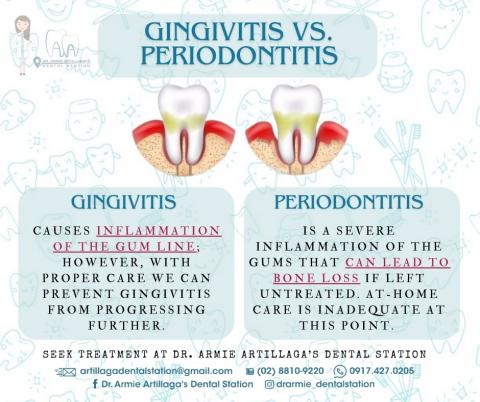
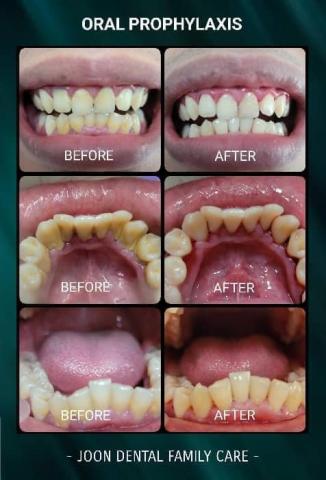
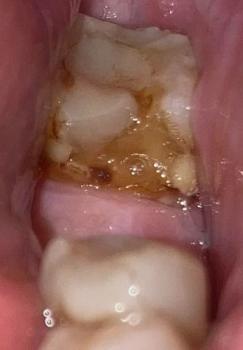
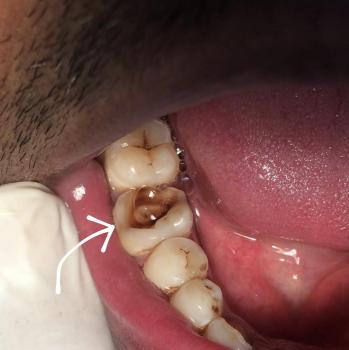
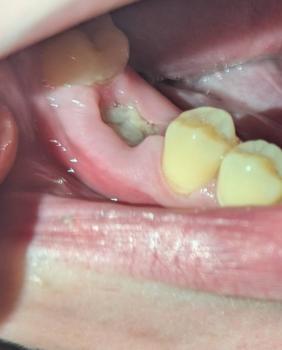
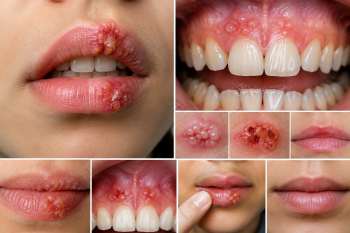
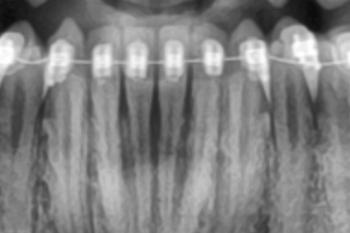
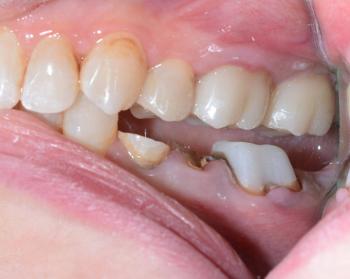
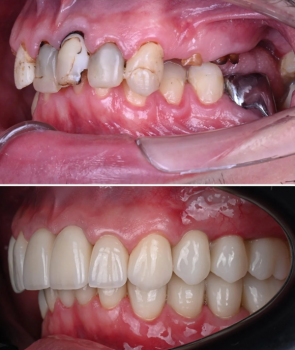
Patients with lower front gum inflammation may also experience tartar buildup, periodontal disease, gum abscesses, or tooth decay. Explore these related clinical case studies.
Other topics:
Other Dental Clinic