Missing Teeth? Find Your Smile Again.

Gum Inflammation and Plaque Buildup Treatment | Cebu Dental Implants
Image:
Severity:
Teeth Problems:
Clinical Guide: Plaque-Induced Gingivitis, Gum Inflammation, and Recovery
Understanding the Clinical Findings
Plaque-induced gingivitis is an inflammatory response of the gum tissues to dental plaque, a sticky bacterial biofilm that accumulates around the teeth and along the gumline. When plaque is not removed effectively, the gums may become red, swollen, tender, and prone to bleeding during brushing or flossing.
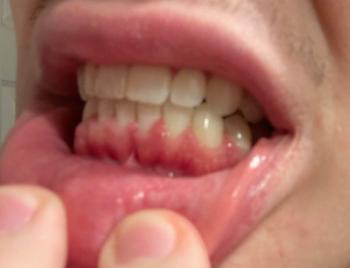
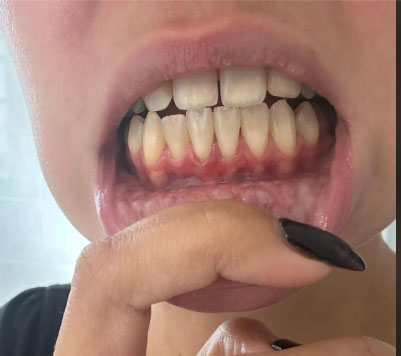
In a case showing generalized gum-margin redness and swelling with visible plaque accumulation, plaque-induced gingivitis is a reasonable provisional diagnosis. However, a clinical examination is necessary to determine the severity of the inflammation and whether periodontal attachment or supporting bone has been affected.
Important clinical distinction: Gingivitis affects the gums without the attachment and bone loss characteristic of periodontitis. Healthy-looking tooth enamel does not necessarily mean the supporting periodontal tissues are healthy.
Why Do Gums Become Inflamed Even When Teeth Look Clean?
Dental plaque can be difficult to see, particularly between the teeth and beneath the gum margins. Bacterial biofilm triggers an inflammatory response that increases blood flow and makes the gum tissues more vulnerable to bleeding.
If plaque remains undisturbed, it can mineralize into calculus, commonly called tartar. Once calculus develops, ordinary brushing cannot reliably remove it, and professional dental cleaning is necessary.
Other factors may contribute to gum inflammation or bleeding, including smoking, diabetes, certain medications, hormonal changes, and inadequate cleaning around crowded teeth or dental restorations.
Evidence-Based Treatment and Recovery Timeline
Stage 1: Dental Assessment and Plaque Removal — First Visit
A dentist should assess gum color, swelling, bleeding, plaque and calculus deposits, and periodontal pocket depths. Periodontal measurements help determine whether the condition is limited to gingivitis or whether further investigation for periodontitis is needed.
Professional scaling removes plaque and calculus that cannot be removed with a toothbrush. Polishing may be performed when appropriate. Additional periodontal treatment is considered if deeper pockets or attachment loss are identified.
Stage 2: Daily Plaque Control — Days 1–7
Patients should follow a consistent home-care routine:
-
Brush twice daily for two minutes with a soft-bristled toothbrush and fluoride toothpaste.
-
Clean between the teeth every day with dental floss or appropriately sized interdental brushes.
-
Use gentle, systematic brushing along the gumline rather than scrubbing aggressively.
-
Follow the dentist's instructions for any prescribed antimicrobial mouthrinse.
-
Avoid smoking and tobacco products, which can worsen periodontal health.
Brushing and interdental cleaning work together to disrupt plaque before it hardens into calculus.
Stage 3: Monitoring Gum Response — Days 7–14
When plaque-induced gingivitis is the main problem and plaque control is effective, gum redness, swelling, and bleeding often begin to improve over several days and may improve substantially within one to two weeks.
Recovery varies according to the initial severity of inflammation, the amount of calculus present, daily cleaning effectiveness, and individual health factors. A two-week timeline is a useful guide, not a guarantee of complete recovery.
Persistent bleeding, swelling, or tenderness warrants a dental reassessment rather than simply extending home treatment.
Stage 4: Long-Term Prevention — Beyond Two Weeks
Gum health requires ongoing maintenance because plaque forms continuously. Continue twice-daily brushing and daily interdental cleaning, and attend dental examinations and professional cleaning at intervals recommended for your individual risk.
Patients with a history of periodontitis, diabetes, smoking, or persistent periodontal pockets may need closer monitoring.
What Happens if Gingivitis Is Left Untreated?
Persistent plaque-induced gingivitis can increase the risk of developing periodontitis in susceptible individuals. Periodontitis involves damage to the tissues and bone supporting the teeth and may eventually cause gum recession, deep periodontal pockets, tooth mobility, and tooth loss.
However, progression is not inevitable, and there is no reliable rule that gingivitis becomes periodontitis after a fixed number of days. The risk depends on individual susceptibility, plaque control, and other contributing factors.
Practical Home-Care Checklist
Use this checklist to support daily gum care:
-
Brush twice daily for two minutes with fluoride toothpaste.
-
Clean between teeth once daily.
-
Avoid aggressive brushing and hard-bristled toothbrushes.
-
Use mouthrinse only as an appropriate adjunct to mechanical cleaning.
-
Schedule a dental assessment if bleeding or swelling persists.
-
Seek prompt dental care for severe pain, pus, facial swelling, or loose teeth.
Frequently Asked Questions About Gingivitis and Gum Inflammation
1. Can gingivitis be completely reversed?
Yes. Plaque-induced gingivitis can usually be reversed with effective plaque removal and appropriate professional care, provided that periodontitis or another underlying condition has not developed. Continued daily cleaning is essential to prevent recurrence.
2. Why do my gums bleed when I brush even though my teeth look white?
White tooth surfaces do not rule out gum disease. Plaque may collect around the gumline or between teeth without being obvious. Inflamed gum tissue is more likely to bleed when touched. Persistent bleeding should be assessed by a dentist.
3. How long does it take for swollen gums to heal after professional cleaning?
Many patients notice improvement within several days, with substantial improvement often occurring over approximately 7–14 days. Healing depends on the severity of inflammation, the presence of other periodontal problems, and the effectiveness of home care.
4. Should I stop brushing if my gums bleed?
Generally, no. Continue gentle brushing with a soft-bristled toothbrush and clean between your teeth carefully. Avoiding the affected areas can allow plaque to accumulate further. If bleeding is heavy, persistent, or accompanied by significant pain or swelling, seek dental evaluation.
5. Is mouthwash enough to treat gingivitis?
No. Mouthrinse can help control plaque and gingivitis when used appropriately, but it does not replace brushing, interdental cleaning, or professional removal of calculus. Chlorhexidine mouthrinse may cause staining and should be used according to dental advice.
6. Can gingivitis cause bad breath?
Yes. Plaque accumulation, inflamed gums, and debris around the teeth can contribute to persistent bad breath or an unpleasant taste. If the problem continues despite good oral hygiene, a dentist should investigate periodontal disease, tooth decay, and other possible causes.
7. Can gingivitis cause permanent bone loss?
Gingivitis itself does not cause the periodontal attachment and bone loss that define periodontitis. However, untreated inflammation may coexist with or progress to periodontitis in susceptible individuals. A periodontal examination, and dental radiographs when indicated, can help evaluate supporting bone.
8. Do I need antibiotics for bleeding or swollen gums?
Routine plaque-induced gingivitis is generally treated with plaque removal, professional cleaning when needed, and improved oral hygiene—not systemic antibiotics. Antibiotics may be appropriate for certain specific infections or clinical situations, but a dentist must determine whether they are indicated.
9. Can smoking make gum disease worse?
Yes. Smoking increases the risk of periodontal disease and can impair healing. It may also reduce visible bleeding, making inflammation appear less obvious than it really is. Avoiding tobacco supports better periodontal health.
10. When should I seek urgent dental care?
Arrange prompt dental assessment for persistent bleeding, painful or markedly swollen gums, pus, or a loose tooth. Seek emergency medical care if swelling spreads into the face or neck, or if you develop difficulty breathing or swallowing, because these may indicate a serious spreading infection.
Clinical Takeaway
Plaque-induced gingivitis is common and often reversible, but persistent gum inflammation should not be ignored. The most reliable approach combines professional assessment when indicated, removal of plaque and calculus, consistent daily oral hygiene, and individualized follow-up.
Medical disclaimer: This educational case analysis does not establish a diagnosis for an individual patient. A licensed dentist must evaluate the clinical findings and determine the appropriate treatment plan.
FULL TEETH CASE ANALYSIS (IMAGE-BASED)
Visible Findings
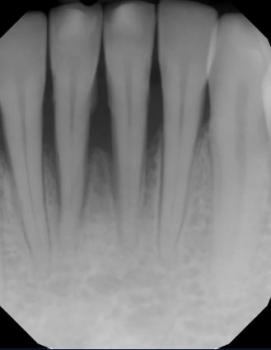
Generalized gingival inflammation, most prominent on lower anterior teeth.
Redness and swelling along the gum margin consistent with plaque-induced gingivitis.
Visible plaque and calculus accumulation on lower incisors.
Early gum recession in lower front teeth.
Mild crowding of lower anterior teeth.
No obvious fractures or advanced decay visible from the image.
Probable Diagnosis (Image-Based, Not Final)
Plaque-induced gingivitis.
Early localized periodontal involvement risk.
Calculus-related chronic inflammation.
Time Frame to Heal
Professional scaling response: 7–10 days.
Visible reduction of redness and bleeding: 10–14 days.
Gum tissue stabilization: 14–21 days.
Full periodontal reassessment: 3–6 weeks.
Process to Execute
Day 1–3:
Professional dental scaling and polishing.
Removal of supragingival and subgingival calculus.
Day 4–14:
Strict oral hygiene routine.
Soft-bristle brushing twice daily.
Daily interdental cleaning.
After 14 Days:
Clinical reassessment of gum condition.
Further periodontal treatment if inflammation persists.
If Untreated, Issues That May Scale Up
Progression from gingivitis to periodontitis.
Alveolar bone loss.
Gum recession and tooth sensitivity.
Tooth mobility and possible tooth loss.
Chronic halitosis.
Comments
Lower anterior teeth are high plaque-retention areas.
Calculus suggests long-term plaque accumulation.
Condition is still reversible with early intervention.
Preventive care stage, not yet a surgical or implant case.
Advice
Do not delay professional dental cleaning.
Avoid aggressive brushing.
Maintain consistent oral hygiene.
Schedule routine dental checkups every six months.
Visit Nearest Dental Clinic
Search using our directory listing:
https://cebudentalimplants.com/map-dental-clinic
CEBUANO TRANSLATION
FULL TEETH CASE ANALYSIS (BASE SA LITRATO)
Makita nga mga Kahimtangan
Adunay halapad nga paghubag ug pamula sa lagos, labi na sa ubos nga unahang mga ngipon.
Pamula ug paghubag sa palibot sa lagos nga nagpasabot og gingivitis tungod sa plaque.
Makita ang plaque ug calculus nga natipon sa ubos nga incisors.
Nagsugod nga pag-urong sa lagos sa ubos nga unahang mga ngipon.
Gamay nga pagkadikit-dikit sa ubos nga mga ngipon.
Walay klarong bali o grabe nga bulok nga makita sa litrato.
Posibleng Diagnosis (Base sa Litrato)
Gingivitis tungod sa plaque.
Sayo nga peligro sa localized periodontal disease.
Chronic nga inflammation tungod sa calculus.
Panahon sa Pag-ayo
Reaksiyon human sa dental scaling: 7–10 ka adlaw.
Pagkunhod sa pamula ug pagdugo: 10–14 ka adlaw.
Pagbalik sa normal nga kahimtangan sa lagos: 14–21 ka adlaw.
Kompletong periodontal nga ebalwasyon: 3–6 ka semana.
Proseso nga Buhaton
Adlaw 1–3:
Propesyonal nga dental scaling ug polishing.
Pagtangtang sa plaque ug calculus ibabaw ug ilawom sa lagos.
Adlaw 4–14:
Hugot nga oral hygiene routine.
Pagsepilyo gamit ang humok nga bristle kaduha sa usa ka adlaw.
Adlaw-adlaw nga paglimpyo sa tunga sa mga ngipon.
Human sa 14 ka Adlaw:
Balik nga ebalwasyon sa kahimtangan sa lagos.
Dugang nga periodontal nga pag-atiman kung magpadayon ang inflammation.
Kung Dili Matambalan, Posibleng Motubo ang Problema
Gingivitis mahimong periodontitis.
Pagkawala sa bukog nga nagsuporta sa ngipon.
Pag-urong sa lagos ug pagkasensitibo sa ngipon.
Pagluag ug posible nga pagkawala sa ngipon.
Padayon nga baho sa baba.
Tambag
Ayaw paglangan ang dental cleaning.
Likayi ang kusog nga pagsepilyo.
Padayonon ang hustong oral hygiene.
Magpa-check up sa dentista matag unom ka bulan.
Duol nga Dental Clinic
Pangitaa ang labing duol nga klinika gamit ang among directory:
https://cebudentalimplants.com/map-dental-clinic
TAGALOG TRANSLATION
BUONG PAGSUSURI NG NGIPIN (BATAY SA LARAWAN)
Nakikitang Kalagayan
May malawak na pamumula at pamamaga ng gilagid, lalo na sa ibabang harapang ngipin.
Pamamaga sa gilid ng gilagid na karaniwang palatandaan ng gingivitis dahil sa plaque.
May nakikitang plaque at calculus sa ibabang incisors.
May paunang pag-urong ng gilagid sa harapang ibabang ngipin.
Bahagyang siksikan ang ibabang mga ngipon.
Walang malinaw na bali o malalang sira na makikita sa larawan.
Posibleng Diagnosis (Batay sa Larawan)
Gingivitis dulot ng plaque.
Maagang panganib ng localized periodontal disease.
Pamamaga dulot ng matagal na calculus buildup.
Panahon ng Paggaling
Reaksiyon matapos ang dental scaling: 7–10 araw.
Pagbawas ng pamumula at pagdurugo: 10–14 araw.
Pagbalik sa normal ng gilagid: 14–21 araw.
Kumpletong periodontal na pagsusuri: 3–6 na linggo.
Proseso ng Paggamot
Araw 1–3:
Propesyonal na dental scaling at polishing.
Pag-alis ng plaque at calculus sa ibabaw at ilalim ng gilagid.
Araw 4–14:
Mahigpit na oral hygiene routine.
Pagsisipilyo gamit ang malambot na bristle dalawang beses sa isang araw.
Araw-araw na paglilinis sa pagitan ng mga ngipin.
Pagkatapos ng 14 na Araw:
Muling pagsusuri ng kondisyon ng gilagid.
Karagdagang periodontal treatment kung may pamamaga pa rin.
Kung Hindi Magagamot, Posibleng Lumala
Maaaring mauwi ang gingivitis sa periodontitis.
Pagkawala ng butong sumusuporta sa ngipin.
Pag-urong ng gilagid at pagiging sensitibo ng ngipin.
Pagkilos at posibleng pagkawala ng ngipin.
Patuloy na mabahong hininga.
Payo
Huwag ipagpaliban ang dental cleaning.
Iwasan ang sobrang lakas na pagsisipilyo.
Panatilihin ang maayos na oral hygiene.
Magpatingin sa dentista tuwing anim na buwan.
Pinakamalapit na Dental Clinic
Hanapin ang pinakamalapit na klinika gamit ang aming directory:
https://cebudentalimplants.com/map-dental-clinic
Related Clinical Cases
Patients with lower front gum inflammation may also experience tartar buildup, periodontal disease, gum abscesses, or tooth decay. Explore these related clinical case studies.