Smile Again with Comfort and Confidence.

Dental Implants vs Dentures in the Philippines
If you are missing one or more teeth, dental implants and dentures are two common treatment options available in the Philippines.
The right option depends on several factors, including your budget, oral health, jawbone condition, desired stability, treatment time, and whether you prefer a removable or fixed restoration.
Dental Implants vs Dentures: Quick Comparison
| Feature | Dentures | Dental Implants |
|---|---|---|
| Starting cost | Generally lower | Generally higher |
| Removable | Yes | Usually fixed |
| Surgery required | Usually no | Yes |
| Stability | Can move depending on fit | High stability |
| Jawbone preservation | Does not replace tooth roots | Helps preserve bone around the implant |
| Maintenance | Remove and clean separately | Brush, floss, and professional cleaning |
| Treatment time | Usually shorter | Usually several months |
| Initial investment | Lower | Higher |
| Replacement/maintenance | May require relining or replacement | Components may require maintenance over time |
Denture Cost in the Philippines
Dentures are generally one of the more affordable options for replacing missing teeth.
Estimated prices can vary depending on the type of denture and materials used.
| Type of Denture | Estimated Cost |
|---|---|
| Acrylic partial or complete denture | ₱5,000–₱15,000 per arch |
| Flexible denture | ₱8,000–₱20,000 per arch |
| Cast metal framework denture | ₱15,000–₱30,000 per arch |
Actual prices vary between dental clinics and depend on the number of teeth being replaced, materials, laboratory fees, and other treatment requirements.
Dental Implant Cost in the Philippines
Dental implants generally have a higher initial cost because treatment involves surgery, implant components, and a dental crown or prosthesis.
Approximate price ranges include:
-
Single dental implant: ₱50,000–₱160,000+ per tooth
-
Full-arch All-on-4 or All-on-6: ₱350,000–₱800,000+ per arch
A quoted implant price may not include every part of the treatment. Ask whether the price includes the implant fixture, abutment, crown, imaging, surgery, and follow-up appointments.
Comfort and Stability
Dentures
Traditional dentures rest on the gums and can be removed by the patient.
A well-fitting denture can provide good function, but some people experience:
-
Movement while eating
-
Sore areas
-
Difficulty chewing certain foods
-
Clicking while speaking
-
Changes in fit over time
Upper dentures can also cover part of the roof of the mouth, which some people find uncomfortable.
Dental Implants
Dental implants are placed into the jawbone and can support an individual crown, bridge, or full-arch prosthesis.
Because implants are anchored to the jaw, they generally provide greater stability than conventional removable dentures.
However, implant treatment requires oral surgery and a healing period.
Dental Implants and Jawbone Health
After a tooth is lost, the surrounding jawbone can gradually change because the natural tooth root is no longer present.
Traditional dentures replace the visible portion of missing teeth but do not replace the tooth root.
Dental implants are different because the implant is placed into the jawbone and functions as an artificial tooth root.
Implants can help maintain the bone around the implant site, although they do not prevent bone loss everywhere in the jaw.
Maintenance
Dentures
Dentures need regular cleaning and should generally be removed according to your dentist's instructions.
Patients may need:
-
Denture cleaning
-
Regular dental examinations
-
Relining when the fit changes
-
Repairs if the denture breaks
-
Replacement when the denture becomes worn
The lifespan of a denture varies depending on the material, fit, use, and oral changes.
Dental Implants
Implant-supported teeth require regular oral hygiene.
Patients should continue:
-
Brushing twice daily
-
Cleaning between teeth or around the implant
-
Regular professional dental examinations
-
Professional cleaning when recommended
Although the implant itself can remain functional for many years, the crown or prosthetic components may eventually require repair or replacement.
Treatment Time
Dentures can generally be completed faster than dental implants.
A denture treatment may involve impressions, laboratory fabrication, fitting, and adjustments.
Dental implants require several stages:
Consultation → Imaging → Implant placement → Healing → Abutment/restoration → Final crown
The healing period varies from patient to patient. Additional procedures such as bone grafting can make treatment longer.
Implant-Retained Dentures: A Middle Option
There is another option between conventional dentures and a full set of fixed dental implants.
An implant-retained overdenture uses dental implants to provide additional support for a removable denture.
Depending on the treatment plan, two or more implants can be used to help stabilize the denture.
This can provide more stability than a traditional removable denture while generally requiring fewer implants than a full fixed-arch restoration.
Which Option Should You Consider?
There is no single solution that is appropriate for everyone.
Dentures may be considered when:
-
You want a lower initial treatment cost
-
You prefer a removable restoration
-
You want to avoid implant surgery
-
You need a relatively quick tooth-replacement option
Dental implants may be considered when:
-
You want a fixed tooth replacement
-
You have sufficient bone or can undergo appropriate bone treatment
-
You want greater stability during chewing
-
You are comfortable with a longer treatment process and higher initial cost
Your dentist should evaluate your teeth, gums, jawbone, bite, general dental condition, and treatment goals before recommending an option.
Dental Implants vs Dentures: Cost Over Time
The initial price is only one part of the comparison.
Dentures have a lower upfront cost but may require adjustments, relining, repairs, or replacement as the mouth changes.
Dental implants require a substantially larger initial investment, but implant-supported restorations can provide long-term function when properly planned and maintained.
Therefore, comparing the total treatment and maintenance requirements can be more useful than comparing the initial price alone.
Questions to Ask Your Dentist
Before choosing dentures or dental implants, ask:
-
How many teeth need to be replaced?
-
What is the condition of my gums?
-
Do I have sufficient jawbone for implants?
-
Would I need bone grafting?
-
What is the complete treatment cost?
-
How long will treatment take?
-
What maintenance will be required?
-
How often will the restoration need adjustment or replacement?
-
Are there implant-retained denture options available?
-
What treatment is appropriate for my individual dental condition?
Conclusion
Dentures and dental implants serve different needs.
Dentures generally provide a more affordable and removable way to replace missing teeth, while dental implants provide a fixed, implant-supported solution with greater stability.
For patients who want an alternative between the two, implant-retained overdentures may also be worth discussing with a dentist.
The best choice depends on your oral health, jawbone condition, budget, treatment goals, and willingness to undergo surgery and a longer treatment process.
A dental examination and appropriate imaging are necessary before making a final treatment decision.
Related Clinical Cases
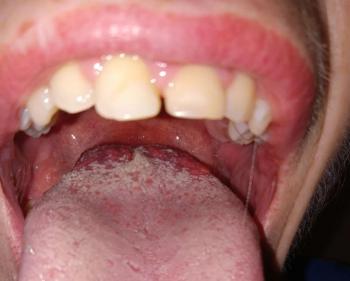
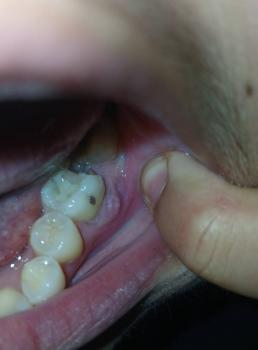
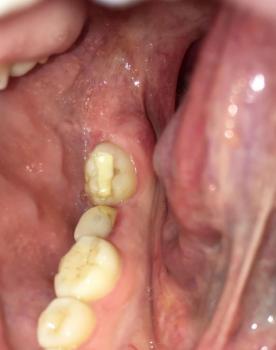
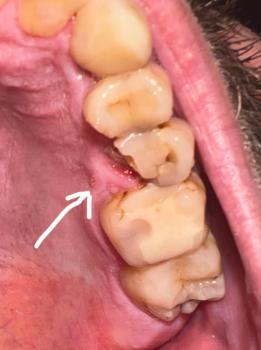
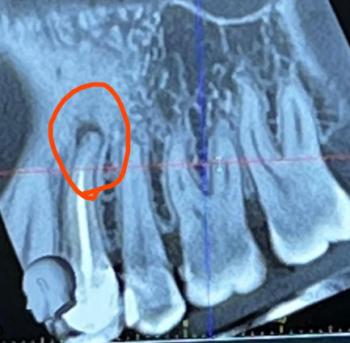
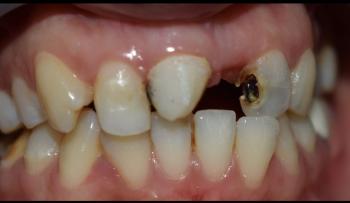
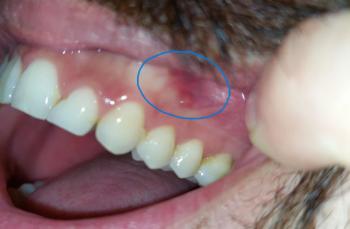
Patients with lower front gum inflammation may also experience tartar buildup, periodontal disease, gum abscesses, or tooth decay. Explore these related clinical case studies.

Other topics:
Other Dental Clinic