Missing Teeth? Find Your Smile Again.

Dental Implant and Bone Graft Costs in Iceland: Overview, Client Reviews & Expert Insights
image hero:
Country:
Dental implants are one of the most advanced options for replacing missing teeth. When there is insufficient bone volume to support an implant safely, the treatment plan may also require bone augmentation or bone grafting.
In Iceland, implant dentistry is a significant financial commitment, particularly for working-age adults who do not qualify for a specific Iceland Health dental benefit. However, the Icelandic reimbursement system is more nuanced than simply saying that all adults receive no assistance. Certain pensioners, people with qualifying disabilities, and patients with specific medical, congenital, or accident-related circumstances can receive dental participation under defined rules.
The most important principle for patients is therefore:
Do not compare implant prices by looking at the implant screw alone. Compare the complete treatment plan—from diagnosis and imaging through surgery, restoration, and follow-up.
1. What Does a Dental Implant Cost in Iceland?
There is no single nationwide private price for a dental implant.
Published Icelandic clinic prices demonstrate substantial variation depending on the implant system, abutment, crown, laboratory work, and whether additional surgery is required.
For example, Tannlæknastofan Turninn currently lists a plant crown/crown on an implant at ISK 230,000. The clinic explains that implant treatment can take several months because the implant must integrate with the jawbone before the final crown is placed.
Another Icelandic provider, Helvetic Clinics, publishes implant-related prices ranging from approximately ISK 99,222 for a Neodent implant with abutment and healing component to approximately ISK 185,502 for a Straumann/AnyRidge premium implant, while the final crown and other components are priced separately.
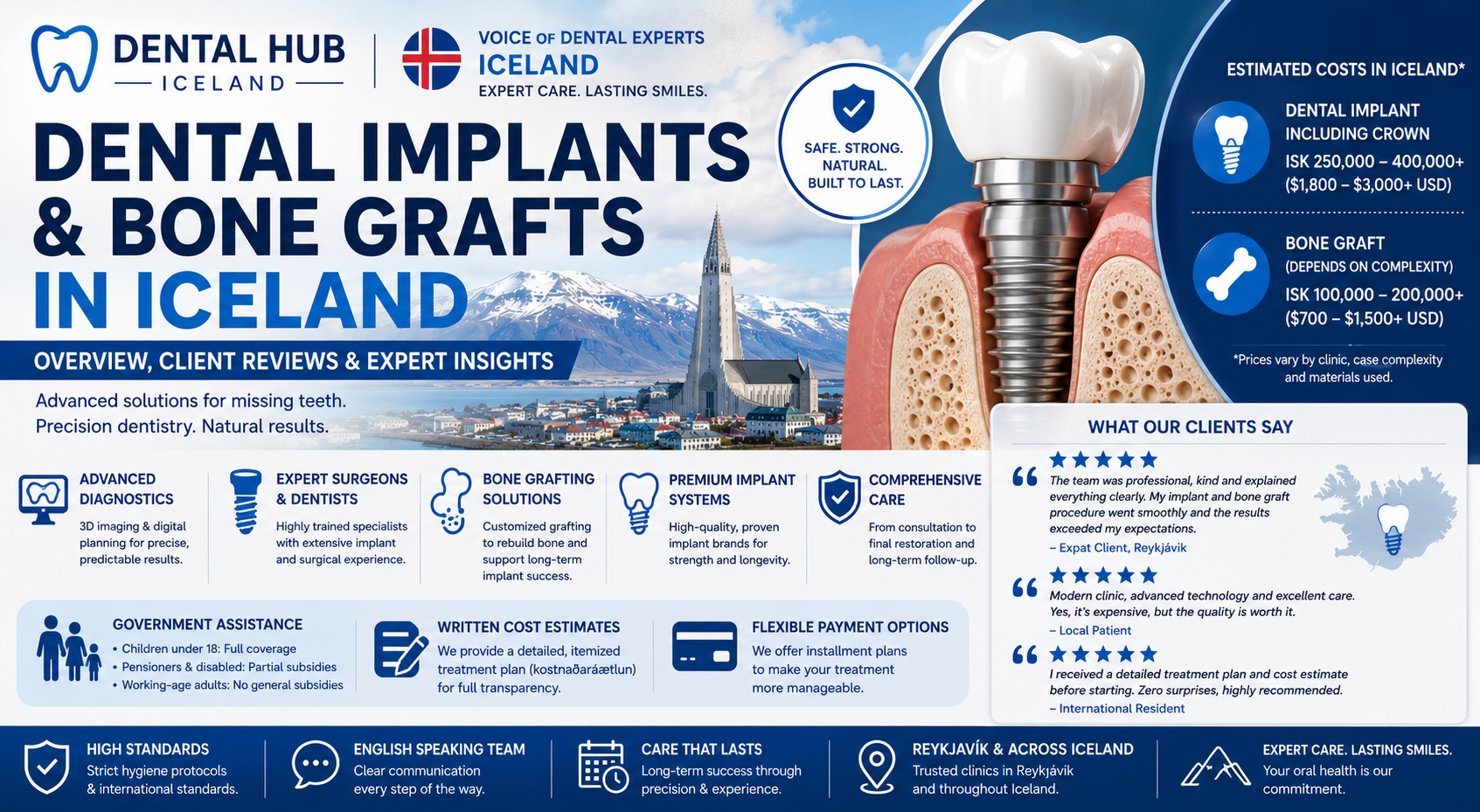
An Iceland-focused expatriate guide gives an indicative estimate of approximately ISK 250,000–400,000+ for a dental implant including crown, but emphasizes that prices are only indicative and should be confirmed with individual clinics.
Practical Budgeting Range
For a straightforward single-tooth implant, patients may encounter total treatment costs in the several-hundred-thousand-ISK range once the implant, abutment, crown, consultations, imaging, and other components are included.
A complex case involving bone grafting, sinus augmentation, extraction, or additional periodontal treatment can cost substantially more.
Therefore, I would not recommend publishing one fixed “average implant price” for Iceland without identifying exactly what the price includes.
2. What Does the Implant Price Actually Include?
This is one of the most important questions patients should ask.
A complete implant restoration may involve:
-
Consultation
-
Clinical examination
-
X-rays
-
3D/CBCT imaging
-
Tooth extraction, if necessary
-
Bone grafting, if necessary
-
Sinus augmentation, if necessary
-
Implant placement
-
Healing or cover screw
-
Abutment
-
Temporary restoration
-
Final crown
-
Laboratory fees
-
Follow-up appointments
A clinic advertising an implant for a relatively low price may be quoting only one component of the complete treatment.
3. Bone Grafting: Why Is It Sometimes Necessary?
A dental implant needs sufficient bone volume and quality to achieve predictable stability.
Bone loss can occur after:
-
Tooth extraction
-
Long-term tooth loss
-
Periodontal disease
-
Trauma
-
Infection
-
Anatomical limitations
-
Long periods without a tooth
If there is insufficient bone, the dentist may recommend augmentation before or during implant placement.
Common Bone-Augmentation Procedures
Depending on the situation, treatment may involve:
-
Guided bone regeneration
-
Localized bone grafting
-
Ridge augmentation
-
Sinus-floor elevation
-
Other bone-reconstruction techniques
The procedure selected depends on the location and amount of bone deficiency.
4. What Does Bone Grafting Cost in Iceland?
Bone-graft pricing is particularly difficult to summarize as one national figure because “bone graft” can describe several very different procedures.
The amount of graft material, surgical technique, location, membrane requirements, anesthesia, imaging, and whether the graft is performed simultaneously with implant placement can all affect the price.
Published Icelandic pricing gives useful examples of this variation.
Helvetic Clinics currently lists sinus lifting at approximately ISK 135,172 in its own pricing, while a separate listed bone-reconstruction procedure is approximately ISK 129,420. These are clinic-specific prices and should not be interpreted as an Iceland-wide average for every type of bone graft.
Important Patient Question
Instead of asking:
“How much is a bone graft?”
Ask:
“What type of bone augmentation do I need, how much bone is missing, and what is the total cost including graft material, membrane, surgery, imaging, and follow-up?”
That produces a much more useful answer.
5. Why 3D Imaging Can Be Important
Implant planning increasingly uses three-dimensional imaging when clinically indicated.
A CBCT scan can help the dental team evaluate:
-
Available bone height
-
Bone width
-
Anatomical structures
-
Sinus position
-
Nerve location
-
Implant position
-
Relationship between the proposed implant and surrounding anatomy
Helvetic Clinics currently lists a CT scan at approximately ISK 23,727 in its published pricing.
The actual need for CBCT should be determined clinically rather than simply added to every treatment plan.
6. Implant + Bone Graft: Why the Total Cost Can Rise Quickly
Consider a patient who has lost a molar several years ago.
The treatment could potentially involve:
Consultation → CBCT → extraction if necessary → bone augmentation → healing → implant placement → implant integration → abutment → crown.
Another patient with adequate bone may require:
Consultation → imaging → implant placement → healing → abutment → crown.
Both patients need “one dental implant,” but their treatment journeys are completely different.
This is why an implant price without a clinical context can be misleading.
7. How Long Does Implant Treatment Take?
Implant dentistry is generally a staged process.
Turninn explains that implant treatment can take several months because, after implant placement, time is required for the implant to integrate with the surrounding bone before the final crown is fitted.
When bone grafting is required, treatment may take longer.
Depending on the case, the dentist may recommend:
Phase 1: Diagnosis and treatment planning
Phase 2: Extraction or bone augmentation
Phase 3: Healing
Phase 4: Implant placement
Phase 5: Implant integration
Phase 6: Abutment and crown
Not every patient needs every stage, but patients should understand the expected sequence before committing financially.
8. Iceland Health: Who May Receive Assistance?
The Icelandic public dental system requires careful explanation.
Iceland Health currently states that dental participation is available to specific groups, including children, pensioners, and qualifying cases involving disabilities, congenital conditions, accidents, and diseases.
Pensioners
For pensioners, Iceland Health states that it pays 75% of the cost of certain general dental treatment according to the applicable rules.
However, implants and fixed prostheses in a dentate jaw are treated differently.
Iceland Health currently states that pensioners may receive a grant of up to ISK 146,677 during each 12-month period for dental implants or other fixed dental prostheses in a dentate jaw in the specified area.
Therefore, a patient should not assume that a dental implant automatically receives 75% reimbursement simply because the patient is a pensioner.
Implant-Supported Dentures in an Edentulous Jaw
For pensioners with no natural teeth in a jaw, Iceland Health has a different provision.
If the treatment is approved, Iceland Health states that it can pay 75% of the pensioner's cost of inserting implants to support dentures, with participation for the first two implants in the lower jaw and first four implants in the upper jaw.
This distinction between a single implant replacing a tooth and implants supporting a denture in an edentulous jaw is extremely important.
9. Working-Age Adults
For ordinary restorative dental treatment, working-age adults generally face much greater out-of-pocket costs unless they qualify under a specific Iceland Health provision.
However, the correct wording is not simply “Iceland provides no dental assistance to adults.”
Certain adults can qualify for participation because of:
-
Qualifying disabilities
-
Serious congenital conditions
-
Certain chronic illnesses
-
Qualifying accidents
-
Specific serious dental conditions
Iceland Health maintains the current rules and reimbursement schedules, including a dental treatment fee schedule valid from January 1, 2026.
Patients should therefore check their individual eligibility before assuming that the entire treatment will be self-funded.
10. Dental Implants After an Accident
Dental trauma can be treated differently from ordinary tooth loss.
Iceland Health provides specific reimbursement provisions for qualifying dental injuries and accidents.
This can be particularly relevant when an implant is being considered to replace a tooth lost because of a documented accident.
The patient should ask the dentist whether the case meets the relevant Iceland Health criteria and whether documentation or prior approval is required.
11. Client and Expat Perspectives
When discussing client reviews, it is important not to invent patient testimonials.
Instead, Dental Hub should distinguish between:
Verified individual reviews
and
general themes reported in publicly available patient discussions.
The recurring themes patients may consider when evaluating complex dental treatment include:
Clinical Quality
Patients may value modern clinics, digital imaging, experienced dental professionals, and careful treatment planning.
Communication
For international residents and visitors, English-language communication can be an important part of the treatment experience.
Financial Shock
Implant treatment can produce substantial out-of-pocket costs, particularly when the patient needs bone augmentation, multiple implants, or full-mouth reconstruction.
Treatment Planning
Patients often benefit from receiving a detailed written estimate before surgery.
These are useful evaluation criteria, but they should not be presented as verified testimonials from unnamed patients.
12. What Should Be Included in a Written Implant Estimate?
I strongly recommend requesting a written kostnaðaráætlun before beginning treatment.
The estimate should identify:
-
Consultation
-
X-rays
-
CBCT/3D imaging
-
Extraction
-
Bone graft
-
Graft material
-
Membrane
-
Sinus lift, if required
-
Implant system and brand
-
Implant placement
-
Healing components
-
Abutment
-
Temporary restoration
-
Final crown
-
Laboratory fees
-
Follow-up visits
-
Possible complications
-
Iceland Health reimbursement
-
Expected patient contribution
This is particularly important when comparing two clinics.
13. Implant Brand and Component Quality
Not all implants are identical.
Different manufacturers offer different implant systems, surface treatments, component designs, and laboratory workflows.
Published Icelandic pricing illustrates this variation. Helvetic Clinics, for example, lists Neodent and premium Straumann/AnyRidge implant options at different price points.
As a patient, do not select an implant solely because it has the lowest price.
Ask:
-
What implant system is being used?
-
Is it a well-established manufacturer?
-
Will replacement components be available in the future?
-
Which laboratory will manufacture the crown?
-
What warranty applies?
-
What happens if the implant develops a complication?
Long-term component availability can matter because an implant restoration may need maintenance years after the original surgery.
14. Implant vs. Dental Bridge
A missing tooth does not automatically require an implant.
Depending on the clinical situation, alternatives can include:
Dental Bridge
A fixed bridge uses neighboring teeth as supports.
Removable Partial Denture
A removable appliance may provide a more economical solution in selected cases.
Dental Implant
An implant replaces the tooth root and can support an individual crown or larger restoration.
Each option has advantages and disadvantages.
The best choice depends on:
-
Bone volume
-
Condition of neighboring teeth
-
Gum health
-
Bite
-
Number of missing teeth
-
Aesthetic requirements
-
Budget
-
Long-term goals
15. Dental Treatment Abroad
Some Icelandic patients consider treatment in another country because of the high cost of complex dental work.
Iceland Health has specific provisions for dental treatment abroad. Certain procedures require prior application and approval, including dental implants in edentulous jaws and CT imaging of the jawbone.
For qualifying treatment abroad, Iceland Health can apply participation according to its rules.
However, travel expenses are not reimbursed, and Iceland Health warns that incidents occurring during dental treatment abroad are not covered under the Patient Insurance Act in the same way.
Therefore, patients considering dental tourism should calculate the entire cost:
Treatment + flights + accommodation + additional appointments + follow-up + emergency care.
A lower foreign treatment price does not automatically mean a lower total cost.
16. Expert Advice for Patients Considering an Implant
From an implant-dentistry perspective, I recommend the following approach.
Step 1 — Diagnose the Problem
Determine why the tooth is missing and evaluate the surrounding teeth and bone.
Step 2 — Assess Bone Volume
Determine whether sufficient bone exists for predictable implant placement.
Step 3 — Evaluate Alternatives
Ask whether an implant, bridge, or removable restoration is most appropriate.
Step 4 — Request 3D Imaging When Clinically Indicated
CBCT can provide valuable information for complex implant planning.
Step 5 — Determine Whether Bone Augmentation Is Required
If bone is insufficient, understand exactly which augmentation procedure is recommended.
Step 6 — Request a Complete Cost Estimate
Do not accept an implant-only price as the final treatment price.
Step 7 — Check Iceland Health Eligibility
Determine whether you qualify for a government contribution.
Step 8 — Discuss Long-Term Maintenance
Ask how the implant and crown will be maintained and what happens if complications occur.
17. Key Questions to Ask an Icelandic Implant Dentist
Before committing to treatment, ask:
1. Do I have enough bone for an implant?
2. Do I need a bone graft?
3. Do I need a sinus lift?
4. Will the graft be performed before or during implant placement?
5. Which implant system will you use?
6. What is the cost of the implant itself?
7. What is the cost of the abutment?
8. What is the cost of the final crown?
9. Are laboratory fees included?
10. Do I need a CBCT scan?
11. How many appointments will I need?
12. How long will the complete treatment take?
13. Do I qualify for Iceland Health participation?
14. What is my total estimated out-of-pocket cost?
15. What happens if the implant fails?
18. Expert Insight: The Real Cost Is the Complete Treatment
The most important lesson in implant dentistry is that “implant price” and “implant treatment price” are not necessarily the same thing.
A published price may refer only to:
-
Implant fixture
-
Implant surgery
-
Abutment
-
Crown
-
Or another individual component
The patient needs to know the complete cost.
For example:
Implant + abutment + crown
is different from:
CBCT + extraction + bone graft + membrane + implant + abutment + temporary restoration + final crown + follow-up.
The second treatment pathway can be considerably more expensive.
19. Dental Hub Cost Perspective
Based on currently published Icelandic clinic prices, a patient should expect implant dentistry to be a major financial investment, particularly when premium implant components or additional surgical procedures are involved.
A current Icelandic clinic lists an implant crown/crown on an implant at ISK 230,000, while other published implant prices show that implant fixtures and components can range from roughly ISK 100,000 to ISK 185,000+ before all restorative components are added.
Bone augmentation and sinus procedures can add another significant amount depending on the technique required. One published Icelandic price list currently shows sinus lifting at approximately ISK 135,172.
These figures demonstrate why a single national “implant average” can be misleading.
20. Final Dental Hub Summary
Dental implant and bone-graft treatment in Iceland can be expensive, but the final price is highly case-dependent.
The most important factors include:
-
Number of implants
-
Implant manufacturer
-
Abutment
-
Crown material
-
Laboratory fees
-
Bone availability
-
Bone grafting
-
Sinus augmentation
-
Tooth extraction
-
3D imaging
-
Specialist involvement
-
Follow-up requirements
Government assistance is also more nuanced than a simple “covered/not covered” system. Iceland Health currently provides specific support for pensioners, qualifying disabled individuals, and certain medical, congenital, and accident-related circumstances. Pensioners may receive grants for fixed prostheses and implants in dentate jaws, while implant-supported dentures in an edentulous jaw have separate reimbursement rules.
Dental Hub Recommendation
If you are considering dental implants in Iceland:
Do not ask only, “How much is an implant?”
Ask:
“What will my complete treatment cost from diagnosis to the final crown?”
Then request the answer in writing.
A good implant treatment plan should explain the diagnosis, bone condition, implant system, surgical procedure, restoration, expected timeline, maintenance, and total financial responsibility.
Client-review note: Dental Hub should not publish invented patient quotations or star ratings as genuine reviews. Where individual reviews cannot be independently verified, it is safer to describe general patient themes and clearly identify them as such.
Pricing and reimbursement note: Private dental fees change between clinics and over time. Iceland Health's current rules and fee schedules should be checked before treatment. The current official dental treatment fee schedule is listed as valid from January 1, 2026.
Related Clinical Cases
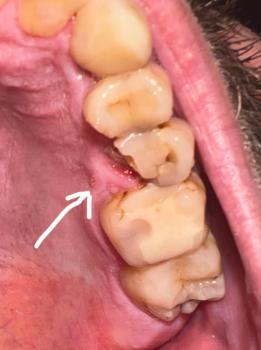
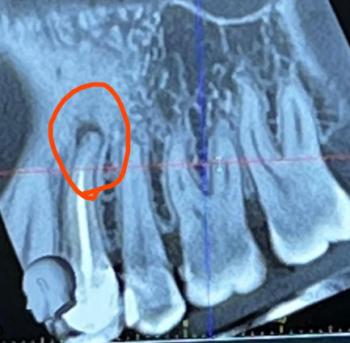
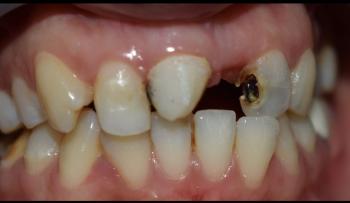
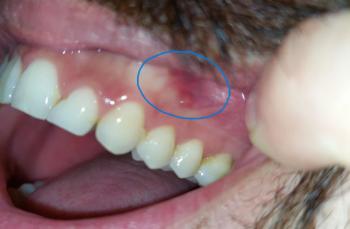
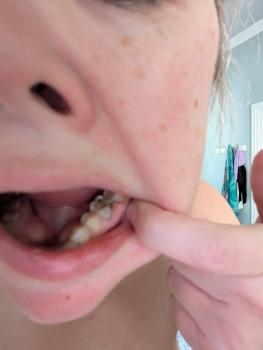
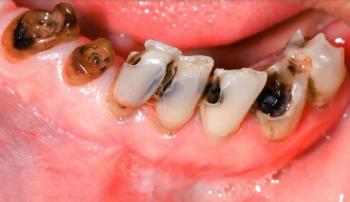
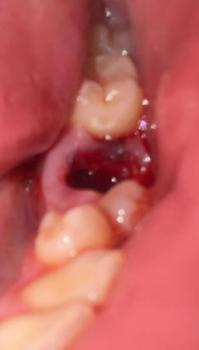
Patients with lower front gum inflammation may also experience tartar buildup, periodontal disease, gum abscesses, or tooth decay. Explore these related clinical case studies.

Other topics:
Other Dental Clinic
 |
 |
 |
 |