Building Confidence One Smile at a Time.

Lower Arch Orthodontic Coil Spring – Dental Case Analysis
Image:
Severity:
Teeth Problems:
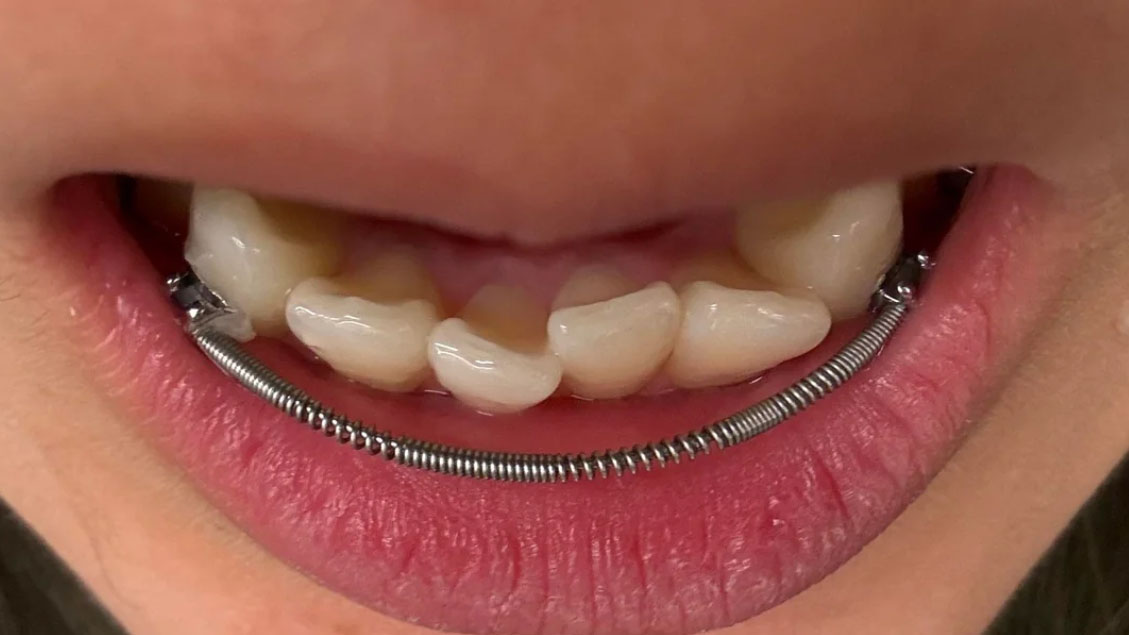
Dental Case Analysis – Lower Arch Orthodontic Coil Spring for Space Management
Case Overview
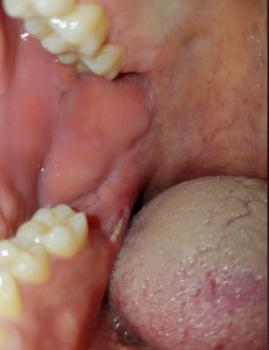
This image shows active orthodontic treatment on the lower teeth using a metal coil spring attached to the archwire. Coil springs are commonly used to open or maintain space between teeth as part of alignment, crowding relief, or preparation for future tooth movement. The lips and surrounding soft tissue appear intact.
Scale All Teeth
-
Lower anterior teeth visible with orthodontic appliance
-
Coil spring engaged along the lower archwire
-
Teeth show crowding with active repositioning
-
No visible fractures or obvious decay in this image
-
Primary focus is orthodontic mechanics and tooth movement
Full Analysis and Diagnosis
Clinical Findings
-
Metal coil spring seated on the lower archwire
-
Teeth undergoing controlled movement
-
Mild lip tension due to appliance presence
-
No visible ulceration, bleeding, or pus
-
Gingival margins appear generally healthy
Interpretation
-
Findings are consistent with orthodontic space opening or space maintenance
-
Coil spring applies continuous force to separate or stabilize tooth positions
-
Soft tissue response appears within expected limits
Probable Diagnosis
-
Crowding or spacing issue under orthodontic correction
-
Active coil spring orthodontic phase
(Clinical confirmation recommended.)
Deep Examination
Appliance Assessment
-
Coil spring appears intact and evenly compressed
-
Archwire properly engaged
-
No visible breakage or displacement
Soft Tissue Assessment
-
Lips and gingiva intact
-
No signs of traumatic irritation
-
Risk of irritation exists if hygiene is inadequate
Time Frame to Heal
With Proper Care
-
Initial soreness after activation: 3–5 days
-
Tissue adaptation: 7–14 days
-
Space changes occur over weeks, depending on treatment plan
Without Proper Care
-
Increased discomfort
-
Plaque accumulation around spring
-
Gingival irritation
-
Potential delay in orthodontic progress
Process to Execute (14-Day Window)
Days 1–3
-
Educate patient on coil spring purpose
-
Reinforce brushing around spring and brackets
-
Monitor soreness
Days 4–7
-
Maintain consistent oral hygiene
-
Observe for lip or gum irritation
-
Apply orthodontic wax if rubbing occurs
Days 8–14
-
Reassess comfort and appliance position
-
Continue orthodontic adjustments as scheduled
-
Address any persistent irritation
Issues That Will Scale Up If Untreated
-
Gingival inflammation
-
Plaque buildup around spring
-
Increased discomfort
-
Reduced appliance effectiveness
-
Slower orthodontic correction
Clinical Comments
Coil springs are effective orthodontic tools but require careful hygiene and monitoring. When properly maintained, they safely create or preserve space with minimal soft-tissue impact.
Find a Dental Clinic Near You
Search for a dental clinic using our directory:
https://cebudentalimplants.com/map-dental-clinic
Related Clinical Cases
Patients with lower front gum inflammation may also experience tartar buildup, periodontal disease, gum abscesses, or tooth decay. Explore these related clinical case studies.


Other topics:
Other Dental Clinic