Dentures That Feel Natural, Look Beautiful.

Single Tooth Implant Cost: Materials, 3D Scanning, Digital Planning & Insurance
Replacing one missing tooth with a dental implant can provide a stable, natural-looking solution without preparing the neighboring teeth. But the cost of a single-tooth implant depends on more than the implant itself. The total treatment may include the implant fixture, abutment, crown, 3D imaging, digital planning, surgical placement, and follow-up care.
This guide explains what is usually included, which materials are used, how modern 3D technology helps with implant placement, and what patients in the USA should know about dental insurance.
How Much Does a Single Tooth Implant Cost?
In the USA, a single dental implant restoration commonly costs approximately $3,000–$6,000 or more per tooth, depending on the location, complexity of the case, materials selected, and whether additional procedures are required.
A typical treatment may involve several separate components:
| Treatment component | What it does |
|---|---|
| Implant fixture | Replaces the tooth root and is placed into the jawbone |
| Abutment | Connects the implant fixture to the crown |
| Dental crown | Replaces the visible portion of the missing tooth |
| 3D CBCT scan | Provides a three-dimensional view of bone, nerves, and surrounding anatomy |
| Digital implant planning | Helps determine the ideal implant position, angle, and depth |
| Surgical placement | Places the implant fixture into the jawbone |
| Temporary restoration | May be used while the implant heals |
| Final restoration | The permanent crown is fitted after healing and integration |
Important: Some dental offices advertise an implant price that covers only the implant fixture. Always ask whether the quoted price includes the implant, abutment, crown, imaging, surgery, temporary tooth, and follow-up visits.
What Materials Are Used in a Single Tooth Implant?
1. Titanium Implant Fixture
Titanium is one of the most widely used materials for dental implant fixtures. It is strong, lightweight, corrosion-resistant, and well established in implant dentistry.
The implant is placed inside the jawbone and gradually integrates with the surrounding bone through a process called osseointegration.
Some systems use commercially pure titanium, while others use titanium alloys designed to provide high mechanical strength.
2. Zirconia Implant Options
Zirconia implants are a ceramic alternative to titanium. They may be considered in selected situations, particularly when a metal-free restoration is desired.
However, zirconia implants are not appropriate for every patient or every clinical situation. Your dentist should determine whether the design, bone conditions, bite forces, and restoration make zirconia a sensible choice.
3. Implant Abutment
The abutment is the connector between the implant fixture and the crown.
Abutments may be manufactured from:
-
Titanium;
-
Zirconia;
-
Other dental-grade materials depending on the implant system.
For highly visible front teeth, a zirconia abutment may sometimes be selected because it can provide favorable esthetics beneath a ceramic crown.
4. Dental Crown
The crown is the part that looks and functions like your natural tooth.
Common crown materials include:
All-ceramic / porcelain:
Often selected for highly visible teeth because of their natural appearance.
Lithium disilicate:
A strong glass-ceramic material commonly used when excellent esthetics are important.
Zirconia:
Known for strength and durability and available in different formulations designed for posterior or anterior restorations.
Porcelain-fused-to-metal:
A traditional option combining a metal substructure with a porcelain outer layer.
Your dentist will select the crown material based on tooth position, bite, esthetic requirements, available space, and the implant system.
Why 3D Scanning Matters
Modern implant treatment is increasingly digital.
A CBCT scan, or cone-beam computed tomography scan, creates a three-dimensional image of the jaw. Unlike a conventional two-dimensional dental X-ray, CBCT imaging can provide information about bone height, bone width, anatomical structures, and the location of important structures such as the mandibular nerve.
For many implant cases, this information helps the dentist plan treatment more accurately.
A dentist may use the scan to evaluate:
-
Available bone volume;
-
Bone width and height;
-
Tooth roots near the treatment area;
-
The position of nerves;
-
The maxillary sinus in appropriate areas;
-
The relationship between the proposed implant and neighboring teeth;
-
The available restorative space.
Not every implant patient requires the same imaging. Your dentist should recommend imaging based on your individual clinical needs.
3D Intraoral Scanning
In addition to CBCT, many modern dental practices use an intraoral scanner.
Instead of taking traditional physical impressions, the scanner captures the shape of the teeth and surrounding tissues digitally.
The resulting digital model can be used to:
-
Design the crown;
-
Evaluate the bite;
-
Plan the emergence profile of the restoration;
-
Coordinate implant and crown design;
-
Communicate digital information with the dental laboratory;
-
Produce highly accurate digital records for the case.
The combination of CBCT data + intraoral scanning can create a more complete digital picture of the patient's anatomy and restorative requirements.
How 3D Software Helps With Implant Alignment
One of the most valuable developments in implant dentistry is the ability to plan the implant digitally before surgery.
Specialized implant-planning software can combine the patient's CBCT scan with the digital dental model from the intraoral scan.
The dentist can then virtually position the implant in three dimensions.
The software can evaluate:
Implant depth
How deeply the implant should be positioned relative to the bone and planned restoration.
Implant angulation
The three-dimensional direction of the implant relative to the neighboring teeth and final crown.
Mesiodistal position
The position of the implant between adjacent teeth.
Buccolingual position
The implant's position from the cheek/lip side toward the tongue/palate side.
Restorative emergence
The software can help the dentist plan how the crown should emerge from the gum tissue.
Available bone
The proposed implant can be evaluated against the patient's three-dimensional bone anatomy.
Relationship to anatomical structures
Important structures can be identified during planning to help reduce avoidable surgical risks.
The key principle: plan the crown first
A good implant restoration is not simply about putting an implant where bone happens to be available.
The dentist should consider the final tooth position first and then determine the appropriate implant position to support that restoration.
This is often described as prosthetically driven implant planning.
The objective is to position the implant so that the final crown has appropriate function, appearance, hygiene access, and support.
Digital Implant Guides
After digital planning, some cases can use a surgical guide.
The guide is designed from the patient's digital treatment plan and can help the clinician transfer the planned implant position to the patient's mouth during surgery.
Guided surgery may help with:
-
Implant positioning;
-
Angulation;
-
Depth control;
-
Reproducibility of the digital plan.
However, guided implant surgery does not eliminate the need for clinical judgment. The dentist must still evaluate the patient's anatomy during the procedure and modify the plan when necessary.
Does Every Patient Need Bone Grafting?
Not necessarily.
Some patients have enough healthy bone to receive an implant without additional grafting. Others may have experienced bone loss after tooth extraction or periodontal disease.
Depending on the location and amount of bone available, additional procedures may include:
-
Bone grafting;
-
Ridge augmentation;
-
Sinus augmentation in selected upper-jaw cases;
-
Soft-tissue grafting.
These procedures can increase both treatment time and cost.
That is why a dentist should examine the patient and review appropriate imaging before providing a final treatment estimate.
What Can Make a Single Implant More Expensive?
The price can increase when additional treatment is necessary.
Factors may include:
-
Bone grafting;
-
Sinus augmentation;
-
Complex tooth extraction;
-
Gum treatment;
-
Temporary restorations;
-
Sedation;
-
Complex bite or spacing problems;
-
Customized abutments;
-
Premium crown materials;
-
Additional imaging or laboratory procedures.
A simple single-tooth implant and a complicated implant reconstruction should not be expected to have the same price.
Does Dental Insurance Cover a Single Tooth Implant in the USA?
Dental insurance coverage for implants varies significantly by plan.
Some dental plans provide partial benefits for implant-related procedures, while others exclude implants or have limitations on specific components of treatment.
Importantly, insurance may treat the different parts of implant treatment separately. For example, the plan may have different rules for:
-
Tooth extraction;
-
Bone grafting;
-
Implant placement;
-
Abutment;
-
Crown;
-
Diagnostic imaging.
Patients should not assume that because they have dental insurance, the entire implant procedure will be covered.
Ask your insurance company these questions
Before beginning treatment, ask for a pre-treatment estimate or predetermination when available.
Ask:
-
Is dental implant placement covered?
-
Is the implant fixture covered?
-
Is the abutment covered?
-
Is the final crown covered?
-
Is the CBCT scan covered?
-
Is bone grafting covered if required?
-
Is there a waiting period?
-
What is my annual maximum?
-
What percentage does the plan pay?
-
Is there a missing-tooth clause?
-
Does the plan have an alternate-benefit provision?
-
Are there network restrictions?
The insurance company can provide the most reliable answer for your specific policy.
A Warm, Patient-Centered Approach
We understand that losing a tooth can affect much more than chewing. It can change the way you smile, speak, and feel about your appearance.
The good news is that modern implant dentistry gives dentists much more information before treatment begins.
With careful examination, appropriate 3D imaging, digital planning, and thoughtful selection of implant and crown materials, your dentist can design treatment around your individual anatomy and your final smile.
The goal is not simply to place an implant.
The goal is to create a tooth that is comfortable, functional, cleanable, stable, and natural-looking.
Questions Patients Frequently Ask
Is a single tooth implant worth the cost?
For many patients, an implant can be an excellent long-term tooth-replacement option. It can replace the missing tooth without requiring the neighboring teeth to be prepared for a conventional bridge. Your dentist can help you compare implants with bridges and removable options based on your health, anatomy, budget, and goals.
How long does a single dental implant take?
Treatment can range from several months to longer depending on whether bone grafting or other procedures are required. The implant generally needs time to integrate with the surrounding bone before the final crown is placed.
Is the implant procedure painful?
Local anesthesia is used during implant placement. Patients commonly experience some tenderness, swelling, or discomfort afterward, but your dentist will provide instructions for managing the recovery period.
How long does a dental implant last?
Dental implants can provide long-term service when properly planned, placed, restored, and maintained. Longevity depends on factors such as oral hygiene, gum health, bite forces, smoking, overall health, and regular professional care.
Is titanium better than zirconia?
Neither material is automatically better for every patient. Titanium has a very long history of clinical use and is widely used. Zirconia provides a metal-free alternative that may be appropriate in selected cases. The dentist should choose the material according to the patient's clinical and restorative requirements.
Do I need a CBCT scan?
Not every patient requires the same type of imaging. CBCT can be particularly useful when three-dimensional information is needed for implant planning. Your dentist should determine whether the additional imaging is appropriate for your case.
Can the dentist plan the implant with 3D software?
Yes. Digital implant-planning software can combine 3D imaging with digital dental models to help plan implant position, angulation, depth, and restorative alignment.
Can I get a temporary tooth while the implant heals?
In selected cases, a temporary tooth may be provided. Whether this is possible depends on the implant location, stability, bite, esthetic requirements, and clinical circumstances.
What happens if I don't have enough bone?
Your dentist may discuss bone grafting or another augmentation procedure. However, treatment depends on the exact location and amount of available bone.
Will my insurance pay for the implant?
Possibly, but coverage varies widely among USA dental insurance plans. The best approach is to request a written benefit estimate from your insurance company before treatment.
What should I ask the dentist before agreeing to treatment?
Ask for a complete written treatment plan showing:
-
Implant brand and model;
-
Implant material;
-
Abutment type;
-
Crown material;
-
3D imaging fees;
-
Digital planning fees, if applicable;
-
Surgical fees;
-
Bone grafting fees, if required;
-
Temporary restoration;
-
Final crown;
-
Follow-up appointments;
-
What happens if additional treatment becomes necessary.
Final Takeaway
A single tooth implant is more than an implant screw.
It is a complete restorative system involving implant fixture + abutment + crown + biological healing + precise treatment planning.
Modern 3D CBCT imaging, intraoral scanning, and digital planning software can help dentists evaluate the anatomy and design the implant around the final restoration. At the same time, patients should look beyond an advertised implant price and understand exactly what their quotation includes.
For USA patients, insurance coverage should also be confirmed before treatment because benefits can differ substantially between plans.
The best implant treatment is not necessarily the cheapest or the most expensive. It is the treatment that is appropriately planned for your anatomy, functional needs, esthetic goals, and long-term oral health.
Prices are general educational estimates and can vary substantially by dentist, geographic location, implant system, laboratory, and individual treatment needs. A dental examination and appropriate diagnostic imaging are required to determine the appropriate treatment and final cost.
Related Clinical Cases
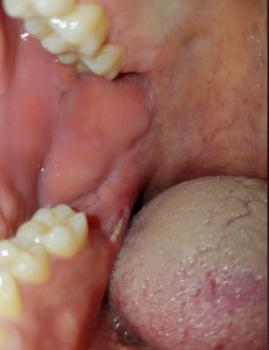
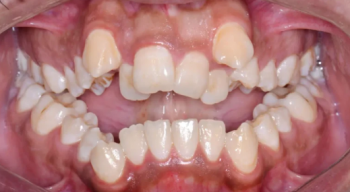
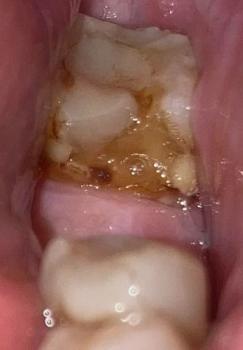
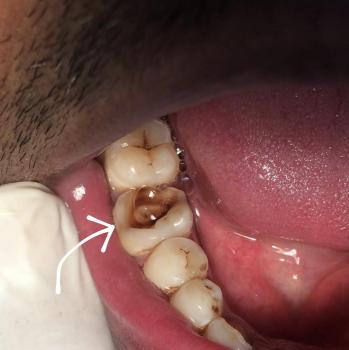
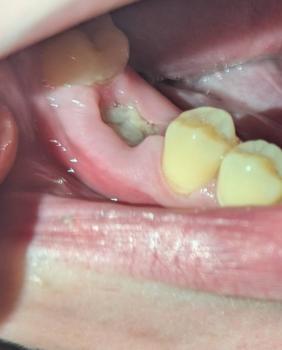
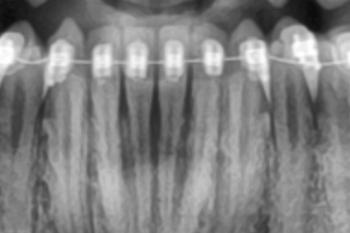
Patients with lower front gum inflammation may also experience tartar buildup, periodontal disease, gum abscesses, or tooth decay. Explore these related clinical case studies.

Other topics:
Other Dental Clinic