Your Smile, Perfected with Precision.

Root Canal Cost in Iceland & Client Reviews: Dental Hub Guide
image hero:
Country:
Root canal treatment, also called endodontic treatment or a root filling, is used to save a tooth when the dental pulp has become inflamed, infected, or irreversibly damaged.
For patients in Iceland, the important issue is not only the price of the root canal itself. The total cost may include diagnosis, X-rays, anesthesia, isolation, the root-canal procedure, restoration of the tooth, and potentially a crown.
As an Icelandic dental expert, I recommend that patients request a complete written kostnaðaráætlun — treatment cost estimate — before beginning complex restorative treatment.
1. How Much Does a Root Canal Cost in Iceland?
There is no single nationwide private price for root-canal treatment. Dental clinics establish their own fees, and the price depends strongly on the tooth being treated and the number of canals.
One Icelandic clinic, Krýna, currently publishes an estimated price list showing:
-
Root canal, one canal: approximately ISK 30,057
-
Root canal, three canals: approximately ISK 54,301
-
Dental X-ray: approximately ISK 5,750
-
Local anesthesia: approximately ISK 5,381
-
Rubber dam: approximately ISK 3,714
Krýna also states that its published prices are estimates and that each case must be evaluated individually. Its price list also notes that a specialist rate is not included.
This means that the often-quoted ISK 60,000–120,000+ range can be useful as a broad budgeting figure for more comprehensive or complex treatment, but it should not be presented as an official Iceland-wide average.
Why prices vary
A front tooth with one canal is generally less technically demanding than a molar with three or four canals.
The final price can also increase when treatment involves:
-
Difficult canal anatomy
-
Calcified or narrow canals
-
Previous unsuccessful root-canal treatment
-
Removal of an existing restoration
-
Additional diagnostic imaging
-
Endodontic specialist treatment
-
Multiple appointments
-
Temporary restoration
-
Complex final restoration
2. What Is Included in a Root Canal?
Patients sometimes compare prices without realizing that different clinics may include different components.
A complete treatment may involve:
Examination and Diagnosis
The dentist evaluates the tooth clinically and determines whether the pulp is likely to be infected or irreversibly inflamed.
Dental Imaging
X-rays help the dentist evaluate the roots, surrounding bone, and possible infection.
Local Anesthesia
The tooth and surrounding tissues are anesthetized before treatment.
Rubber Dam Isolation
A rubber dam helps isolate the tooth from saliva and provides a cleaner working environment during endodontic treatment.
Canal Cleaning and Shaping
The infected or damaged pulp tissue is removed, and the canals are cleaned and shaped.
Root Filling
The prepared canals are sealed to reduce the possibility of reinfection.
Final Restoration
The tooth still needs to be restored after the root canal. Depending on the remaining tooth structure, this could involve a filling, buildup, onlay, or crown.
3. The Crown May Be the Major Additional Expense
One of the biggest financial misunderstandings surrounding root-canal treatment is assuming that the root canal represents the entire treatment cost.
It does not.
A heavily damaged tooth may require a crown afterward to protect the remaining tooth structure.
For example, Krýna's published price list gives an estimated ISK 255,184 for a porcelain crown on a premolar, with anesthesia, a transitional crown, and dental construction included.
Therefore, a patient should ask for the cost of the entire treatment sequence, rather than simply asking:
“How much is a root canal?”
A more useful question is:
“What will the total cost be from diagnosis through the final restoration?”
4. Is Root Canal Treatment Subsidized in Iceland?
This area requires an important clarification.
Iceland Health does provide dental participation for specific groups and circumstances. Its current information states that Iceland Health contributes to dental costs for children, pensioners, and qualifying cases involving congenital defects, accidents, and diseases.
For pensioners — including people aged 67 and older and people with qualifying disability status — Iceland Health pays 75% of general dental treatment according to the applicable agreement and limitations. General dentistry specifically includes root canals.
Certain chronically ill individuals and adults with qualifying intellectual disabilities may have higher levels of participation under the applicable rules.
Dental injuries caused by qualifying accidents can also receive Iceland Health participation under specific conditions. The current information states that for qualifying dental injuries, people aged 18 and older may receive 80% of the cost according to the applicable price list, subject to restrictions.
Therefore, patients should not assume that every adult pays 100% of every dental treatment. Eligibility depends on the patient's circumstances and the applicable Iceland Health rules.
5. Iceland Health Reimbursement Is Based on Its Tariff
Another important issue is the difference between the dentist's private fee and the Iceland Health reimbursement tariff.
Iceland Health maintains dental fee schedules, including a dental treatment schedule valid from January 1, 2026.
When Iceland Health participates in treatment, the reimbursement is calculated according to the applicable rules and tariff. It does not necessarily mean that Iceland Health will reimburse a fixed percentage of whatever private price a clinic chooses to charge.
The dentist should be able to explain the expected patient contribution before treatment begins. Iceland Health specifically states that dentists have a duty to inform patients of treatment costs before treatment starts.
6. Client and Expat Perspectives
When patients discuss dental treatment in Iceland, two themes are particularly important: quality of care and financial planning.
Modern Clinical Environment
Patients and international residents often value the professional clinical environment available at Icelandic dental practices.
Modern dental practices may use digital radiography, contemporary endodontic instruments, magnification, and other technologies designed to improve diagnosis and treatment.
For international residents, English communication can also make the treatment process easier, although patients should confirm language availability with their chosen clinic.
Financial Concern
The largest concern for many patients is the total cost of complex dental treatment.
A root canal followed by a major restoration can become substantially more expensive than the initial root-canal quotation suggests.
For this reason, patients should think in terms of a complete treatment budget rather than a single procedure.
Written Estimates Are Highly Valuable
A recurring recommendation for patients is to request an itemized estimate before starting treatment.
The estimate should identify:
-
Examination
-
X-rays
-
Anesthesia
-
Rubber dam
-
Root-canal treatment
-
Specialist fees, if applicable
-
Temporary restoration
-
Final restoration
-
Crown, if required
-
Follow-up appointments
This makes it easier to compare clinics fairly.
7. Why Molars Usually Cost More
The anatomy of the tooth strongly influences treatment complexity.
A front tooth may have one relatively accessible canal.
A molar can have multiple canals, curved roots, narrow anatomy, and difficult-to-access areas.
Consequently, a molar root canal can require substantially more clinical time and technical expertise.
A patient should therefore be cautious when comparing the price of a single-canal root canal with the price of treatment for a multi-canal molar.
They are not equivalent procedures.
8. When Should You See an Endodontic Specialist?
Some root canals can be performed by a general dentist, while complicated cases may be referred to an endodontic specialist.
Referral may be considered when there is:
-
Complex root anatomy
-
Severe canal calcification
-
A previously treated tooth that remains infected
-
A separated instrument
-
Persistent infection
-
Difficult retreatment
-
Suspected root fracture
-
Unclear diagnosis
Specialist treatment can increase the cost, but the additional expertise may be valuable when saving a strategically important tooth.
Patients should ask whether the quoted price includes the specialist fee.
9. Root Canal or Extraction?
When a tooth is badly infected, some patients immediately ask whether extraction would be cheaper.
Clinically, the answer depends on whether the tooth is restorable.
A dentist should evaluate:
-
Remaining tooth structure
-
Root condition
-
Periodontal support
-
Presence of cracks
-
Amount of bone support
-
Overall prognosis
-
Cost and complexity of restoration
If a tooth can predictably be saved, root-canal treatment followed by appropriate restoration may preserve the natural tooth.
If the tooth cannot be predictably restored, extraction and replacement may be considered.
The cheapest immediate procedure is not necessarily the least expensive long-term solution.
10. Root Canal and Dental Tourism
Because dental treatment can be expensive in Iceland, some patients investigate treatment abroad.
Iceland Health confirms that certain dental treatments performed in the EEA, the UK, and Switzerland can qualify for the same type of payment participation that would apply domestically, depending on eligibility and applicable rules.
However, dental tourism should be evaluated carefully.
Patients should consider:
-
Travel expenses
-
Accommodation
-
Number of appointments
-
Emergency treatment after returning to Iceland
-
Follow-up care
-
Communication with the treating dentist
-
Quality of laboratory work
-
Warranty arrangements
-
Whether treatment abroad is clinically appropriate
For a complicated root canal, continuity of care can be particularly important.
11. How Patients Can Control the Cost
As an Icelandic dental professional, I recommend several practical steps.
Ask for an Itemized Estimate
Request a written kostnaðaráætlun before treatment.
Ask What Is Included
A low advertised root-canal price may exclude imaging, anesthesia, specialist fees, or final restoration.
Ask About the Number of Canals
Ask whether the tooth is expected to have one, two, three, or more canals.
Ask About the Final Restoration
Find out whether you will need a crown or another protective restoration.
Ask About Iceland Health Eligibility
If you are a pensioner, have qualifying disability status, have a qualifying medical condition, or are being treated for a qualifying dental injury, ask whether Iceland Health participation applies.
Compare Complete Treatment Plans
Do not compare one clinic's root-canal procedure with another clinic's full treatment package.
Compare the estimated total cost for the same clinical outcome.
12. Client Review Perspective: What Matters Most?
When evaluating patient experiences, I would recommend looking beyond comments such as “expensive” or “good dentist.”
More useful questions include:
-
Was the diagnosis clearly explained?
-
Was the treatment plan understandable?
-
Was the estimated cost provided beforehand?
-
Were unexpected costs explained?
-
Was pain managed appropriately?
-
Was the dentist able to explain the prognosis?
-
Was follow-up care provided?
-
Was the final restoration completed appropriately?
-
Did the patient understand what would happen if the tooth failed?
These factors provide a much more meaningful picture of dental quality than price alone.
13. Important Questions Before Starting a Root Canal
Before treatment, ask your dentist:
1. Is my tooth definitely restorable?
2. How many canals does it have?
3. Is a specialist required?
4. How many appointments are expected?
5. What is the estimated root-canal fee?
6. What additional fees should I expect?
7. Will I need a crown afterward?
8. What is the estimated total cost?
9. Do I qualify for Iceland Health participation?
10. What happens if the tooth remains infected after treatment?
These questions can prevent both clinical and financial surprises.
14. Expert Summary
Root-canal treatment in Iceland should be viewed as a complete restorative treatment pathway, not simply as one procedure with one price.
Published Icelandic clinic pricing demonstrates that fees can vary according to the number of canals and what is included. One current clinic estimate lists approximately ISK 30,057 for one canal and ISK 54,301 for three canals, before considering other treatment components and specialist fees.
A more complex case can therefore reach substantially higher total costs, particularly when specialist treatment and a crown are required.
For patients, the best strategy is straightforward:
Get the diagnosis.
Understand the treatment options.
Request an itemized cost estimate.
Check Iceland Health eligibility.
Understand the final restoration.
Then compare the complete treatment plan.
Dental Hub Bottom Line
Root canal cost in Iceland can vary significantly depending on tooth anatomy, number of canals, clinic fees, specialist involvement, and additional restorative treatment.
The most important financial protection is not finding the lowest advertised root-canal price. It is obtaining a clear written estimate for the entire treatment journey.
Client-review note: Patient experiences can vary considerably between clinics and individual cases. The perspectives discussed here summarize common issues patients may consider when evaluating dental treatment; they should not be interpreted as verified testimonials from specific patients.
Medical and pricing note: Dental fees and Iceland Health reimbursement rules can change. The official Iceland Health information and the treating dental clinic should be used to confirm current eligibility, fees, and reimbursement before treatment.
Related Clinical Cases
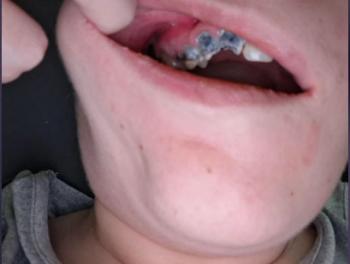
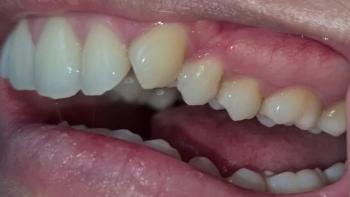
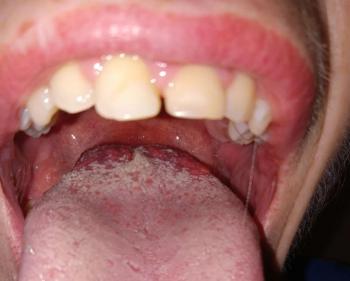
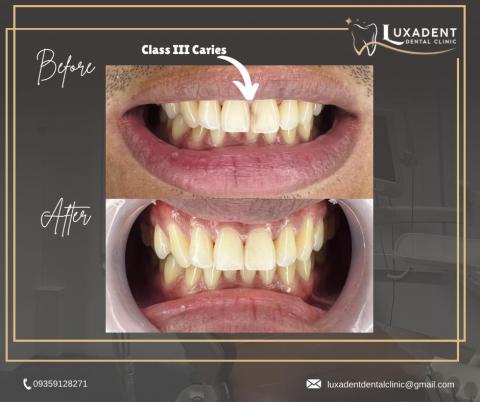
Patients with lower front gum inflammation may also experience tartar buildup, periodontal disease, gum abscesses, or tooth decay. Explore these related clinical case studies.