Smile Again with Comfort and Confidence.

Dental Crown Cost in Iceland: Overview, Prices, Insurance & Client Perspectives
image hero:
Country:
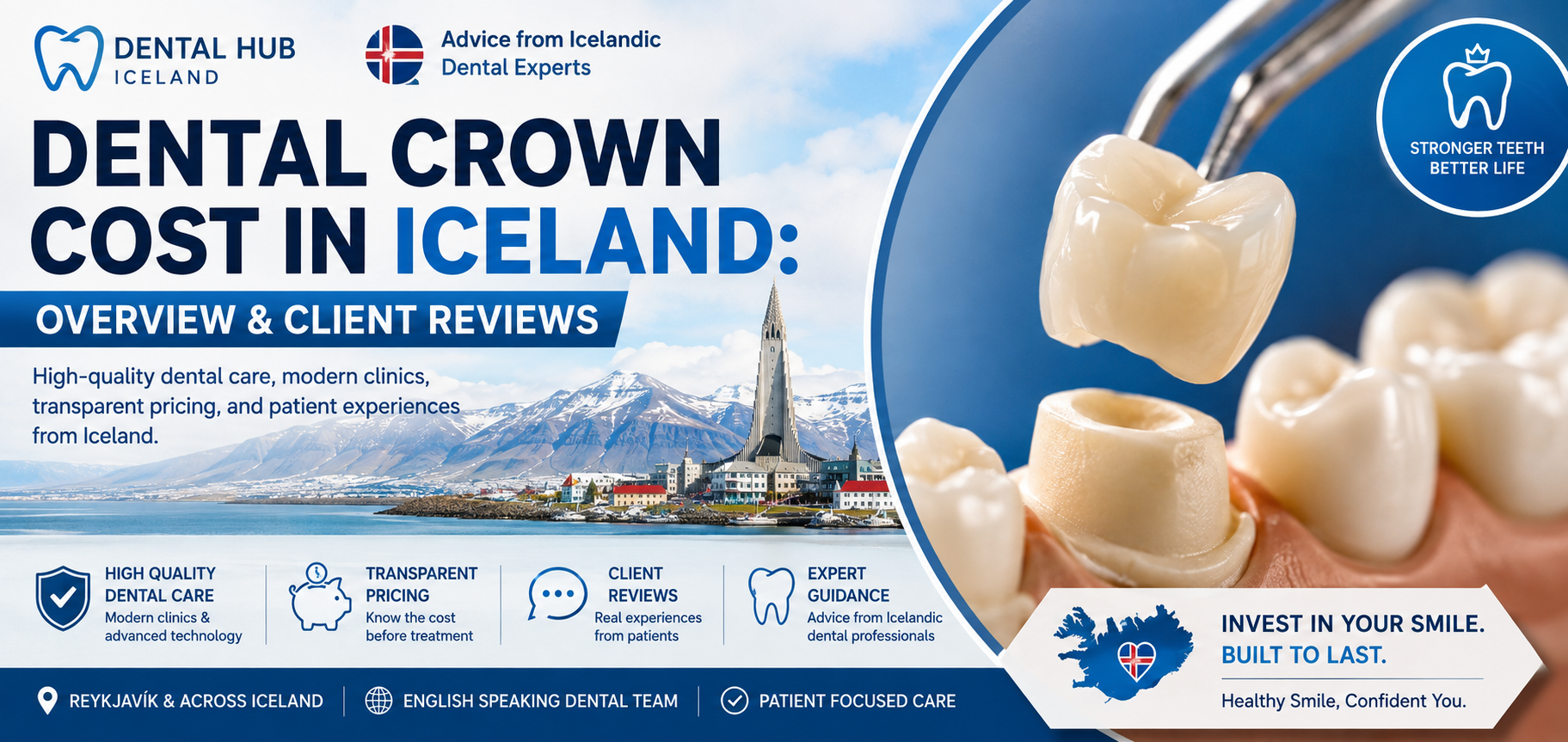
Dental crowns are among the most common restorative treatments used to protect severely damaged, fractured, heavily restored, or root-treated teeth. In Iceland, however, patients should pay close attention to the total treatment cost because private dental fees can vary substantially between clinics, materials, and individual cases.
From an Icelandic dental perspective, the most important question is not simply “How much does a crown cost?” but rather “What is included in the quoted crown price?”
A crown may require an examination, X-rays, tooth preparation, a temporary crown, laboratory fabrication, a core buildup, a root canal, or other procedures. These additional treatments can substantially change the final bill.
1. How Much Does a Dental Crown Cost in Iceland?
There is no single nationwide private price for a dental crown. Iceland Health publishes official fee schedules for treatments used when calculating eligible reimbursement, while individual dental clinics may charge their own private fees.
Current published Icelandic clinic pricing illustrates the variation.
For example, Madenta Dental Clinic currently advertises crowns from approximately ISK 106,000, while Krýna's published price list gives an example of approximately ISK 255,184 for a porcelain crown on a premolar, including anesthesia, a temporary crown, and dental laboratory work.
Therefore, patients should treat ISK 80,000–150,000+ only as a broad indicative range rather than an official national average. Depending on the clinic, crown material, tooth, laboratory work, and preparation required, the actual price can be considerably higher.
Indicative Cost Structure
| Treatment component | Possible cost situation |
|---|---|
| Dental examination | Clinic-dependent |
| X-ray | Clinic-dependent |
| Crown | Approximately ISK 100,000+ at some clinics |
| Premium/complex crown treatment | Can exceed ISK 200,000 |
| Root canal treatment | Additional cost |
| Core/post buildup | Additional cost |
| Temporary crown | May be included or charged separately |
The key lesson is to compare complete treatment plans, rather than comparing the advertised crown price alone.
2. Why Can a Crown Become Expensive?
A dental crown is rarely just a laboratory-made cap placed over a tooth.
Before a crown is fitted, the dentist must determine whether the tooth has enough healthy structure to support it.
A severely broken tooth may require a buildup. A tooth with an infected or necrotic pulp may require root-canal treatment before crown placement. A tooth with significant periodontal disease may require gum treatment before restoration.
For example, Krýna's published 2025 price information lists root-canal treatment at approximately ISK 30,057 for one canal and ISK 54,301 for three canals, illustrating how endodontic treatment can add substantially to the overall restorative cost.
From a clinical standpoint, I would therefore advise patients to ask:
“What is the estimated total cost from diagnosis through final crown placement?”
That question is much more useful than asking only for the crown price.
3. Crown Materials Matter
The material selected can influence both price and clinical suitability.
Common options include:
Porcelain-Fused-to-Metal
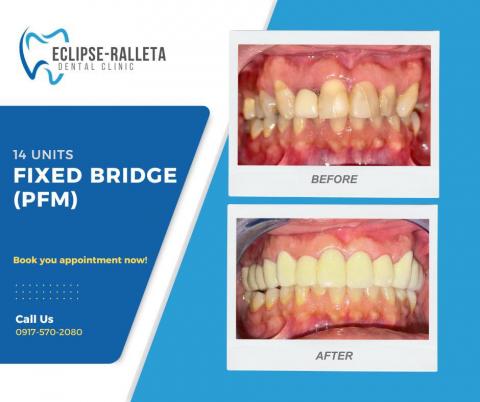
These crowns combine a metal substructure with a tooth-coloured ceramic exterior.
They can provide good strength and aesthetics and may be appropriate for particular clinical situations.
All-Ceramic Crowns
Modern ceramic crowns can provide excellent aesthetics, particularly where appearance is important.
Zirconia-Based Crowns
Zirconia is widely used in contemporary restorative dentistry because of its strength and versatility.
However, the best material is not automatically the most expensive one. The dentist should select the material according to the location of the tooth, bite forces, remaining tooth structure, aesthetics, periodontal condition, and long-term treatment plan.
4. Does Iceland Health Pay for Dental Crowns?
This point requires particular care.
It is not accurate to say that every adult aged 18–66 receives no dental reimbursement under any circumstances.
Iceland Health states that dental participation applies primarily to children, pensioners, people with disabilities, and certain serious medical, congenital, or accident-related conditions.
For example, Iceland Health currently states that:
-
Children under 18 receive substantial coverage for necessary general dental treatment under the applicable rules.
-
Pensioners and people with qualifying disabilities can receive 75% participation in general dental treatment according to the applicable tariff and limitations.
-
Certain chronically ill individuals can receive 100% participation for general dentistry according to the Iceland Health tariff.
-
Certain serious congenital conditions, diseases, and accident-related dental problems may qualify for additional reimbursement.
-
People aged 18 and older with qualifying intellectual disabilities may receive 100% participation in general dentistry according to the applicable tariff.
The important distinction is that reimbursement is based on eligibility and the applicable Iceland Health tariff, rather than simply reimbursing whatever amount a private clinic charges.
5. Private Clinic Price vs. Reimbursement Tariff
This is one of the most important financial considerations for patients.
A private clinic can charge a fee that differs from the Iceland Health tariff. Consequently, even when a patient qualifies for reimbursement, the reimbursement does not necessarily mean that the patient will receive the same percentage of the clinic's entire invoice.
Iceland Health maintains an official dental-treatment fee schedule, including a schedule valid from January 1, 2026.
Patients should therefore ask the clinic to explain:
-
The clinic's full private fee.
-
The amount potentially reimbursed by Iceland Health.
-
The patient's estimated out-of-pocket amount.
-
Which procedures are included.
-
Which procedures are excluded.
6. What Icelandic Dental Patients Should Ask Before Treatment
Before agreeing to a crown, I recommend requesting a written kostnaðaráætlun — a treatment cost estimate.
Ask whether the estimate includes:
-
Consultation and examination
-
Dental X-rays
-
Local anesthesia
-
Tooth preparation
-
Temporary crown
-
Core buildup
-
Post, if required
-
Root-canal treatment, if required
-
Dental laboratory fees
-
Final crown
-
Cementation
-
Follow-up appointments
-
Possible adjustments
This prevents an inexpensive-looking crown quotation from becoming a much larger treatment bill.
7. Client and Expat Perspectives
Publicly available clinic information and patient-oriented discussions suggest that the Icelandic dental market has two very different aspects: clinical quality and financial cost.
Patients commonly value professional clinical environments, modern equipment, and the availability of dentists who can communicate with international residents.
At the same time, the financial burden of major restorative dentistry can be significant, particularly for working-age adults who do not qualify for one of the specific Iceland Health dental-support categories.
This means that a patient requiring several crowns should not necessarily select a clinic based on the lowest advertised crown price.
Instead, compare:
Total treatment cost + material + laboratory + dentist experience + warranty/aftercare + expected longevity.
8. Why Written Estimates Are Important
Dental treatment is individualized.
A dentist cannot accurately determine the final cost of a crown simply from the fact that a patient needs “one crown.”
For example:
Case A:
A structurally sound tooth requires preparation and a straightforward crown.
Case B:
A fractured tooth requires buildup, root-canal treatment, a post, temporary restoration, and a final crown.
Both patients may be told they need “a crown,” but their final treatment costs could be dramatically different.
This is why a written treatment plan is clinically and financially important.
9. Are Dental Crowns in Iceland Worth the Cost?
The answer depends on the tooth and the alternatives.
A crown can be an appropriate investment when a tooth has lost substantial structure and requires protection against further fracture.
However, a crown is not automatically the best treatment for every damaged tooth.
Depending on the amount of remaining tooth structure, the dentist may consider:
-
Direct composite restoration
-
Inlay or onlay
-
Crown
-
Root-canal treatment followed by restoration
-
Extraction and replacement
-
Implant-supported restoration
The decision should be based on the biological condition of the tooth, not simply its appearance.
10. Dental Tourism Comparison
Because dental prices in Iceland can be high, some Icelandic patients investigate treatment abroad.
Published Iceland-focused dental-tourism websites advertise substantially lower prices in countries such as Poland and Hungary. For example, one Iceland-focused provider currently lists crowns in Poland at several hundred euros.
However, lower treatment prices abroad do not automatically mean better value.
Patients should consider:
-
Number of trips required
-
Travel and accommodation
-
Emergency treatment after returning home
-
Warranty conditions
-
Communication with the treating dentist
-
Follow-up care
-
Quality of laboratory work
-
Whether the treatment is clinically appropriate
For complex restorative dentistry, continuity of care can be extremely important.
11. Expert Clinical Advice
If you are considering a dental crown in Iceland, I recommend the following sequence:
Step 1 — Diagnosis
Have the tooth clinically examined and radiographically assessed.
Step 2 — Determine whether the tooth is restorable
A badly fractured or infected tooth may require more extensive treatment.
Step 3 — Compare treatment options
Ask whether a filling, onlay, crown, root canal, or extraction is clinically appropriate.
Step 4 — Request a written cost estimate
Make sure the estimate identifies every major component.
Step 5 — Confirm Iceland Health eligibility
If you are a pensioner, have a qualifying disability, or have a qualifying medical or accident-related condition, ask whether reimbursement applies.
Step 6 — Choose the appropriate crown material
Do not select material solely according to price.
Step 7 — Discuss long-term maintenance
A crown still requires excellent oral hygiene and regular professional monitoring.
12. Bottom Line: Dental Crown Prices in Iceland
Dental crown prices in Iceland vary considerably.
Published clinic prices demonstrate that a crown can start around ISK 100,000 or more, while some detailed treatment packages can reach well above ISK 200,000, depending on what is included.
The previously quoted ISK 80,000–150,000+ range should therefore be presented as an indicative estimate, not a guaranteed national average.
For patients, the most important financial protection is a detailed written treatment estimate.
And from the clinical perspective, the cheapest crown is not necessarily the cheapest treatment in the long term. A properly diagnosed tooth, appropriate preparation, suitable restorative material, accurate laboratory work, and good maintenance are what determine whether the treatment provides lasting value.
Final Patient Checklist
Before paying for a dental crown in Iceland, ask:
-
What is wrong with my tooth?
-
Is the tooth definitely restorable?
-
Do I need a root canal?
-
Do I need a buildup or post?
-
Which crown material is recommended and why?
-
Is the temporary crown included?
-
Are X-rays included?
-
Is laboratory work included?
-
What is the total treatment price?
-
Do I qualify for Iceland Health reimbursement?
-
How much will I personally pay?
-
What follow-up care is included?
Important: Dental prices change, and eligibility rules can change. Patients should confirm current fees and reimbursement eligibility directly with their Icelandic dental clinic and Iceland Health before treatment. Iceland Health's current dental information and fee schedules should be treated as the authoritative source for reimbursement rules.
Related Clinical Cases
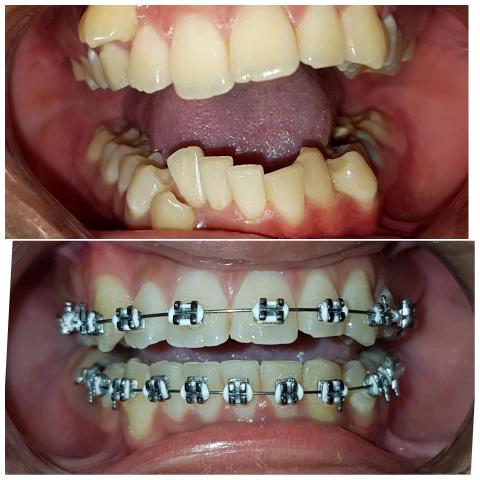
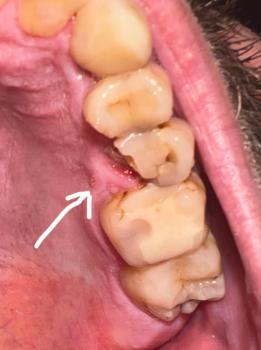
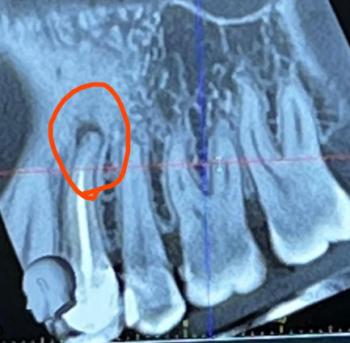
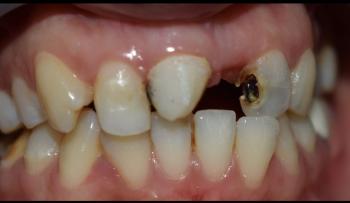
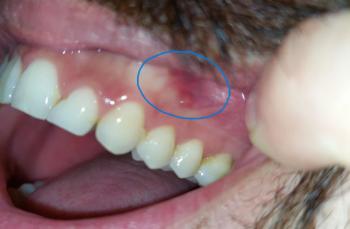
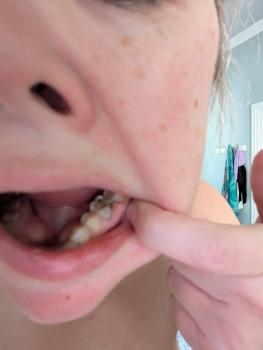
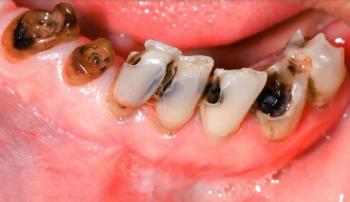
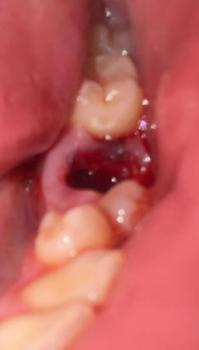
Patients with lower front gum inflammation may also experience tartar buildup, periodontal disease, gum abscesses, or tooth decay. Explore these related clinical case studies.

Other topics:
Other Dental Clinic