Dentures That Feel Natural, Look Beautiful.

Localized Gum Infection With Open Lesion - Dental Case Analysis
Image:
Severity:
Teeth Problems:
Localized Gum Infection With an Open Lesion: Causes, Treatment, Healing, and Warning Signs
Why an Open Gum Lesion Needs Professional Evaluation
An open lesion on the gum near a tooth may indicate an underlying dental problem that requires treatment. Depending on its location and appearance, it may be associated with a periodontal abscess, a tooth-root infection draining through the gum, an infected extraction site, a traumatic ulcer, or another oral condition.
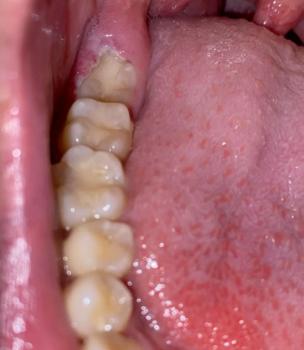
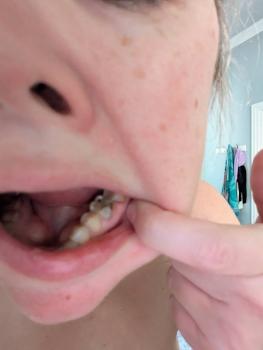
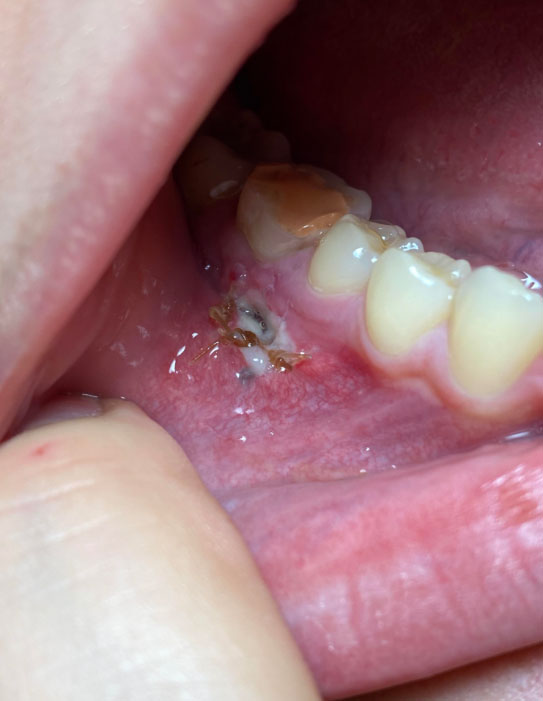
In the clinical case presented in this article, the affected gum tissue appears inflamed, with an open area and visible debris near the posterior lower teeth. These findings warrant a dental examination, but a photograph alone cannot establish the exact diagnosis or confirm whether the jawbone is infected.
Expert dental insight: When a gum lesion opens and releases pus, the pressure may decrease and the pain may temporarily improve. However, drainage does not necessarily mean that the infection has resolved. The underlying cause must still be identified and treated.
1. What Causes a Localized Gum Infection With an Open Lesion?
Several conditions can produce a similar appearance.
Periodontal abscess
A periodontal abscess develops when pus accumulates in the supporting tissues around a tooth, often in association with an existing periodontal pocket. Food debris, bacterial plaque, gum disease, or obstruction of drainage can contribute to the problem.
Possible symptoms include localized gum swelling, tenderness when chewing, pus discharge, an unpleasant taste, and sometimes increased tooth mobility.
Dental abscess caused by an infected tooth root
An infection inside a tooth can spread to the surrounding tissues near the root tip. In some cases, the infection creates a small drainage channel through the gum called a sinus tract.
The opening may look like a pimple, ulcer, or small hole in the gum. A tooth with this type of infection may hurt, but pain can also be minimal if pressure is being released through the drainage tract.
Treatment may require root canal therapy or extraction, depending on whether the tooth can be predictably restored.
Infection or delayed healing after tooth extraction
An extraction site may develop complications if healing is disrupted or infection occurs. Persistent drainage, worsening pain, swelling, or a wound that does not heal as expected should be assessed by a dentist.
An open socket alone does not prove that an infection is present. The dentist must distinguish normal healing from conditions such as an infected socket, retained material, or another local complication.
Traumatic ulcer or another oral lesion
A sharp tooth, hard food, dental appliance, or accidental injury can cause an open sore that resembles an infected lesion. Other inflammatory or oral conditions may also produce persistent ulcers.
A lesion that does not heal within approximately two weeks, or that repeatedly returns, should receive professional assessment rather than being assumed to be a simple gum infection.
2. How Does a Dentist Diagnose the Problem?
A dentist will evaluate the lesion and determine whether the source is the gum, a tooth, a recent extraction site, or another oral structure.
The examination may include:
-
Visual inspection: Checking the lesion's size, location, color, surrounding inflammation, and any discharge.
-
Periodontal probing: Measuring gum pockets and assessing the supporting tissues around nearby teeth.
-
Tooth vitality testing: Checking whether the dental pulp is likely to be healthy or damaged.
-
Percussion and bite testing: Evaluating tenderness associated with the tooth and surrounding tissues.
-
Dental X-rays: Looking for changes around the tooth roots, bone loss, or other findings that may help identify the source.
-
Additional imaging: A three-dimensional scan may be considered when conventional examination and radiographs do not provide enough information.
A dental X-ray can help identify certain bone changes, but early infection may not always be visible. Likewise, a visible gum opening does not automatically establish the presence of a deep bone infection.
3. Professional Treatment: Removing the Source of Infection
Treatment depends on the diagnosis. The goal is to control the infection, relieve symptoms, preserve the tooth when possible, and support normal healing.
For a periodontal abscess
The dentist may gently drain the abscess, clean the affected periodontal pocket, and remove plaque or other contributing deposits. Further periodontal treatment may be needed if significant gum disease is present.
For an infected tooth root
If the tooth can be saved, root canal treatment may remove infected or damaged tissue from inside the tooth. If the tooth is severely damaged or cannot be predictably restored, extraction may be necessary.
For an infected extraction site
Treatment may involve professional examination, irrigation or cleaning when indicated, drainage if an abscess is present, and management of any underlying complication. The approach depends on the stage of healing and the clinical findings.
Are antibiotics always necessary?
No. Antibiotics are not a substitute for appropriate dental treatment. For many localized dental infections, treating the source through procedures such as drainage or root canal treatment is the priority. Antibiotics may be appropriate when there are signs of systemic involvement, spreading infection, or other specific clinical indications.
A dentist should decide whether antibiotics are necessary after considering the diagnosis, severity, medical history, allergies, and risk of complications. Do not use leftover antibiotics or take someone else's prescription.
The American Dental Association provides evidence-based guidance on the responsible use of antibiotics for dental pain and swelling:
https://www.ada.org/resources/research/science/evidence-based-dental-research/antibiotics-for-dental-pain-and-swelling
4. What Can You Safely Do at Home?
Home care can help keep the area comfortable while you arrange professional treatment, but it cannot reliably eliminate an abscess or an infected tooth root.
-
Rinse gently with warm salt water: Dissolve approximately half a teaspoon of salt in a glass of warm water, rinse gently, and spit it out. Avoid swallowing the solution.
-
Maintain gentle oral hygiene: Use a soft-bristled toothbrush and clean the surrounding teeth carefully without traumatizing the lesion.
-
Choose softer foods: Avoid hard, sharp, or very hot foods that irritate the affected area.
-
Stay hydrated: Drink water regularly and avoid smoking, which can impair oral healing.
-
Use pain medication only when appropriate: Follow the product label and check with a pharmacist or healthcare professional if you have medical conditions, take other medications, or are unsure what is safe for you.
Never squeeze, puncture, scrape, or attempt to drain the lesion yourself. Do not place aspirin, concentrated peroxide, alcohol, or other irritating substances directly on the gum tissue.
Arrange an urgent dental appointment, ideally the same day or within 24 hours if an abscess is suspected. Do not wait for the lesion to close by itself.
5. How Long Does an Open Gum Lesion Take to Heal?
Healing time depends on the underlying cause, the extent of tissue damage, the treatment performed, and the patient's general health.
A small traumatic ulcer may improve within one to two weeks. After treatment of a dental infection, pain and swelling may begin to decrease over the following days, while the soft tissue takes longer to recover.
There is no single reliable healing timeline for every gum abscess or open lesion. A wound that remains open, continues to drain, or fails to improve needs reassessment.
A dentist may arrange a follow-up visit to check the tissue, confirm that symptoms are resolving, and determine whether additional treatment is required.
People with diabetes, immune-system disorders, or other conditions that affect healing may need closer monitoring.
6. Warning Signs That Require Emergency Care
A localized gum lesion can sometimes be associated with a spreading dental infection. Seek emergency medical care immediately if you develop:
-
Difficulty breathing or swallowing.
-
Rapidly increasing swelling of the face, jaw, neck, or floor of the mouth.
-
Swelling that affects the area around the eye.
-
Severe difficulty opening your mouth, especially with progressive swelling or other signs of infection.
Fever, chills, feeling significantly unwell, worsening facial swelling, or rapidly increasing pain also require urgent assessment. If you have these symptoms, contact an emergency dental service or seek urgent medical care; do not delay care while waiting for a routine appointment.
7. Preventing Another Gum Infection
Prevention depends on addressing the factors that caused the original problem.
-
Brush twice daily with fluoride toothpaste.
-
Clean between teeth daily using floss or an appropriate interdental cleaner.
-
Attend regular dental examinations and professional cleaning as recommended.
-
Seek prompt care for persistent toothache, swollen gums, a draining gum pimple, or a wound that does not heal.
-
Follow postoperative instructions carefully after tooth extraction or other oral surgery.
-
Keep diabetes and other relevant medical conditions appropriately managed with your healthcare team.
Final clinical takeaway: An open gum lesion is a finding, not a definitive diagnosis. The safest approach is to identify the source, treat the underlying condition, monitor healing, and recognize signs of spreading infection early.
Frequently Asked Questions About Localized Gum Infections
1. Can a gum infection heal on its own after it opens?
Symptoms may temporarily improve when pus drains, but the underlying infection may remain. A dental examination is necessary to determine whether further treatment is required.
2. Does a hole in the gum mean that the jawbone is infected?
No. A hole or open lesion can result from several conditions, including a draining sinus tract, periodontal disease, trauma, or an extraction-related problem. Bone involvement must be assessed clinically and may require dental imaging.
3. Why does pus come out of a small opening in the gum?
Pus can drain through a small channel when an abscess or another infected area communicates with the gum surface. The opening may reduce pressure, but it does not prove that the source has been eliminated.
4. Can a gum abscess occur without severe pain?
Yes. Some abscesses cause mild discomfort or intermittent symptoms, particularly when drainage reduces pressure. Minimal pain does not reliably indicate that the infection is harmless.
5. Should I take antibiotics for an open gum lesion?
Not automatically. Antibiotics are appropriate for selected infections, especially when there is systemic involvement or spreading infection. Many localized dental problems require treatment of the source rather than antibiotics alone. A dentist should determine the appropriate approach.
6. Is salt water enough to treat a gum abscess?
No. Gentle warm salt-water rinsing may help keep the mouth clean and soothe irritated tissue, but it cannot reliably eliminate the source of a dental abscess.
7. How do I know if the infection is spreading?
Increasing facial or jaw swelling, fever, chills, worsening pain, or feeling increasingly unwell can indicate progression. Difficulty breathing or swallowing, rapidly expanding neck or floor-of-mouth swelling, or other severe symptoms require emergency care.
8. Can an infected gum lesion cause tooth loss?
It can, depending on the cause and extent of damage. Advanced periodontal disease or a severe tooth-root infection can compromise the supporting tissues. Prompt treatment may help preserve a tooth when it remains restorable.
9. When should I see a dentist if the lesion does not hurt?
Seek prompt dental assessment even if the lesion is painless, especially if it drains, recurs, or remains open. If an oral ulcer has not healed within approximately two weeks, it should be examined.
10. Can I brush my teeth when I have an open gum lesion?
Yes, in most cases. Brush gently with a soft-bristled toothbrush and avoid directly injuring the open tissue. If brushing causes significant pain or bleeding, ask your dentist how to clean the area safely.
11. Can smoking delay healing?
Yes. Smoking can impair oral tissue healing and is associated with worse periodontal outcomes. Avoid smoking while the lesion is being treated and healing.
12. What should I do if the gum lesion returns after treatment?
Arrange another dental examination. Recurrence may indicate a persistent periodontal pocket, an infected tooth root, a foreign body, or another unresolved problem. Further testing or treatment may be necessary.
When to Seek Professional Dental Care
If you notice an open gum lesion, pus, a persistent gum pimple, or unexplained swelling, arrange a dental assessment rather than relying solely on home remedies. Bring information about when the lesion appeared, whether it drains, any recent extraction or dental treatment, and any associated pain or swelling.
To find a dental clinic, visit the CebuDentalImplants.com clinic directory:
https://cebudentalimplants.com/map-dental-clinic
Medical disclaimer: This article provides general educational information and is not a substitute for an examination, diagnosis, or individualized treatment from a licensed dental professional.
Dental Case Analysis – Localized Gum Infection With Open Lesion
Case Overview
This clinical photo shows a localized infection in the posterior lower jaw, adjacent to natural teeth. An open gum lesion with visible debris and inflammation is present, suggesting an active infection at the soft-tissue and possibly underlying bone level.
Full Analysis and Diagnosis
Clinical Findings
-
Open ulcerated area on the gingiva
-
Visible yellow-brown debris consistent with infection
-
Surrounding gum tissue is red and inflamed
-
Adjacent teeth appear intact
-
Possible previous extraction or draining sinus tract
Infection Characteristics
-
Active localized bacterial infection
-
Likely source: periodontal pocket, failed extraction site, or underlying apical infection
-
Ongoing drainage suggests chronic infection
-
High bacterial load in soft tissue
Diagnosis
-
Localized gingival abscess
-
Possible chronic periodontal or apical infection
-
Soft-tissue infection with risk of bone involvement
Deep Clinical Examination
Tissue Assessment
-
Inflamed soft tissue with breakdown
-
Delayed healing response
-
Signs of chronic irritation
-
Infection likely extending below the gum surface
Risk Factors
-
Food debris trapping
-
Poor drainage or incomplete healing
-
Possible underlying tooth or bone infection
-
Reduced immune response in affected area
Time Frame to Heal
With Proper Treatment
-
Infection control: 5–10 days
-
Soft tissue closure: 7–14 days
-
Pain and swelling reduction: within 1 week
-
Full tissue recovery: 2–4 weeks
Without Treatment
-
Infection progression
-
Increased pain and swelling
-
Spread to jawbone
-
Abscess enlargement
-
Possible tooth or bone loss
Process to Execute (14-Day Window)
Days 1–3
-
Clinical examination
-
Gentle irrigation and cleaning
-
Identify infection source
-
Antibiotics if clinically indicated
Days 4–7
-
Local debridement
-
Drainage if abscess is present
-
Address underlying tooth or socket cause
Days 8–14
-
Re-evaluation of healing
-
Monitor soft tissue closure
-
Plan further treatment if bone involvement is suspected
Issues That Will Scale Up If Untreated
-
Deeper jawbone infection
-
Chronic abscess formation
-
Facial swelling
-
Systemic spread of infection
-
Increased surgical intervention
-
Tooth loss
Clinical Comments
Open gum infections rarely heal on their own. Visible drainage often means the body is attempting to release infection, but the source must be treated to prevent recurrence. Early intervention greatly improves healing and reduces complications.
Find a Dental Clinic Near You
Use our dental clinic directory to find care near you:
https://cebudentalimplants.com/map-dental-clinic
Related Clinical Cases
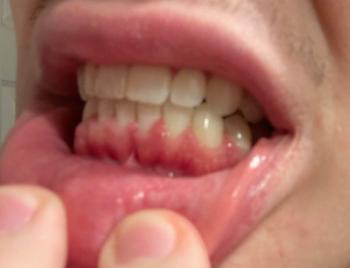
Patients with lower front gum inflammation may also experience tartar buildup, periodontal disease, gum abscesses, or tooth decay. Explore these related clinical case studies.