Missing Teeth? Find Your Smile Again.

Implant-Supported Overdentures in Cebu | Cost, Benefits & Treatment
Overdentures: Implant-Supported Stability and Comfort
What Is an Overdenture?
From a dentist’s perspective, one of the most important goals of tooth replacement is not simply to replace missing teeth, but to provide stability, function, comfort, and confidence in everyday life.
An overdenture is a removable dental prosthesis that uses strategically placed dental implants to provide additional support and retention. Instead of relying entirely on the gums and underlying tissues for stability, the denture can connect to implants through specialized attachments.
For the right patient, this approach can provide a balance between the removability of a denture and the additional stability provided by dental implants.
Why Consider an Overdenture?
Traditional removable dentures can sometimes move during speaking, eating, or chewing, particularly when there is significant bone loss.
An implant-supported overdenture can help address some of these concerns by using implants as additional points of support and retention.
Depending on your clinical situation, an overdenture may provide:
-
Better stability — Implants can help reduce unwanted movement of the denture.
-
Less movement — Improved retention may make the prosthesis feel more secure during everyday activities.
-
Improved chewing confidence — Greater stability can make patients feel more confident when eating.
-
Greater comfort — A more stable prosthesis may reduce the frustration associated with a loose or moving denture.
-
Easier removal and cleaning — Because many overdentures remain removable, patients can generally take them out for routine cleaning and maintenance.
-
A lower implant requirement — In selected cases, fewer implants may be needed compared with replacing every missing tooth individually.
Is an Overdenture the Same as Fixed Dental Implants?
No.
This distinction is important when discussing treatment options.
An overdenture is generally removable by the patient, while a fixed implant restoration is designed to remain in place and is not normally removed by the patient.
The appropriate solution depends on factors such as the amount of available bone, gum health, bite, number and position of implants, restoration requirements, cleaning ability, expectations, and budget.
What I Advise Patients to Consider
After many years of dental practice, I believe patients should avoid choosing an implant treatment based on the number of implants or the advertised price alone.
The better question is:
“Which treatment is appropriate for my mouth, my anatomy, my function, and my long-term needs?”
A treatment that works very well for one patient may not be the right solution for another.
Before recommending an overdenture, your dentist should evaluate your oral condition and determine whether the available bone and soft tissues can adequately support the planned implants and restoration.
Your Examination May Include
-
Dental examination
-
Dental X-rays
-
3D CBCT imaging when indicated
-
Bone-volume assessment
-
Gum-health evaluation
-
Bite assessment
-
Digital treatment planning
These findings allow your dentist to develop a treatment plan based on your actual clinical condition rather than making assumptions from photographs or a general price list.
Who May Benefit From an Overdenture?
An overdenture may be considered for patients who have multiple missing teeth or complete tooth loss and want more stability than a conventional removable denture may provide.
It can be particularly useful when the treatment goal is to improve denture retention while maintaining the ability to remove the prosthesis for cleaning.
However, not every patient is automatically a candidate. Implant treatment requires an individual assessment.
Bone quantity and quality, gum health, existing medical considerations, bite forces, oral hygiene, smoking, previous dental treatment, and the design of the final restoration can all influence treatment planning.
Overdenture vs. Replacing Every Missing Tooth
One advantage of an overdenture approach is that the treatment does not necessarily require an individual implant for every missing tooth.
Strategically positioned implants can provide retention and support for a removable prosthesis.
This may make an overdenture an option worth discussing for patients who want improved stability but do not necessarily want—or need—a fixed implant restoration replacing every missing tooth.
The exact number and position of implants should be determined by your dentist after examination and imaging.
The Most Important Step: Proper Treatment Planning
Implant dentistry is not simply about placing implants.
The final restoration, bite, bone anatomy, gum condition, implant position, and patient's ability to maintain good oral hygiene all need to work together.
A properly planned overdenture should be designed around the patient's individual anatomy and functional requirements.
A Simple Way to Think About It
Examination → Imaging → Treatment Planning → Implant Placement → Overdenture → Maintenance
Each stage contributes to the long-term function of the treatment.
Before You Decide
If you are currently wearing a loose denture, having difficulty chewing, or considering replacing missing teeth, ask your dentist about all appropriate treatment options rather than assuming that a fixed implant bridge is the only solution.
An overdenture may offer an attractive middle ground for selected patients: more stability than a conventional removable denture while retaining the convenience of a removable prosthesis.
Your dentist should explain the advantages, limitations, expected maintenance, number and position of implants, restoration options, treatment timeline, and total estimated cost before you make a decision.
The goal should not simply be to place implants. The goal is to create a restoration that you can comfortably use, clean, and maintain for the long term.
Related Clinical Cases
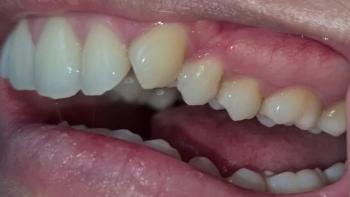
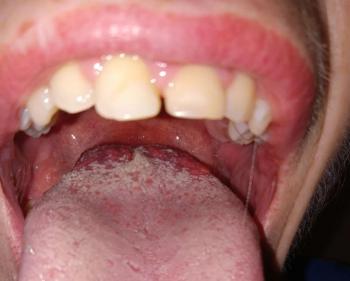
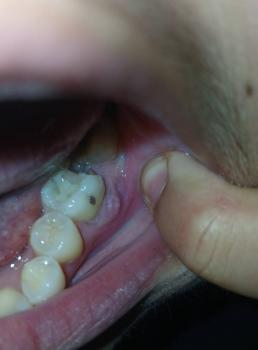
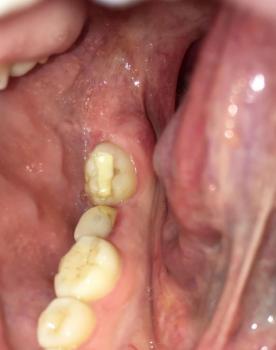
Patients with lower front gum inflammation may also experience tartar buildup, periodontal disease, gum abscesses, or tooth decay. Explore these related clinical case studies.



Other topics:
Other Dental Clinic
 |
 |
 |
 |