From Pain to Perfect — We Care for Your Smile.

Dental Implants vs Dentures: Which Costs Less in the United States?
If you are missing teeth, cost is an important part of choosing a treatment. In the United States, traditional dentures usually cost less upfront than dental implants, but the initial price is only one part of the decision.
Over many years, maintenance, repairs, replacements, and the condition of your jawbone can also affect the total cost.
How Much Do Dentures Cost?
Traditional removable dentures are generally one of the more affordable ways to replace multiple missing teeth.
A typical cost may range from approximately $1,000 to $3,000 per arch, although prices vary depending on the dentist, materials, location, and complexity of treatment.
Dentures may be a good option for patients who:
-
Need to replace several or all missing teeth
-
Want a non-surgical treatment
-
Have a limited budget
-
Need a relatively quick tooth-replacement solution
However, dentures do not last forever. They can become loose as the shape of the jaw changes over time and may eventually require adjustment, relining, repair, or replacement.
How Much Do Dental Implants Cost?
Dental implants generally require a larger initial investment.
A single implant-supported tooth may cost approximately $3,000 to $6,000 or more, depending on what is included in the treatment and whether additional procedures, such as bone grafting, are necessary.
For patients missing many teeth, implant-supported restorations can cost substantially more.
Implants may be attractive because they provide a fixed tooth replacement and can help maintain bone around the implant.
Why Are Dentures Cheaper Initially?
Dentures do not require an implant to be surgically placed into the jawbone. They can therefore be produced with fewer surgical steps and usually have a lower initial cost.
For someone who needs teeth replaced quickly and wants to minimize immediate expenses, traditional dentures may be the most affordable choice.
But lower upfront cost does not necessarily mean lower total cost over many years.
The Long-Term Cost of Dentures
One important consideration is that the mouth changes after teeth are lost.
The jawbone in an area where a natural tooth has been removed can gradually shrink. As the supporting tissues change, a denture that originally fit well may become less comfortable or stable.
Over time, a patient may need:
-
Denture adjustments
-
Relining
-
Repairs
-
Replacement dentures
-
Adhesive products
-
Professional cleaning and maintenance
The timing and cost of these services vary from patient to patient.
The Long-Term Value of Dental Implants
Dental implants cost more initially, but they are designed to provide a long-lasting replacement for a missing tooth.
An implant integrates with the jawbone through a process called osseointegration. The implant can then support a crown, bridge, or denture.
With proper oral hygiene and professional care, implants can remain functional for many years. However, no dental treatment is guaranteed to last a lifetime, and the crown or other components may eventually need repair or replacement.
Which Is Cheaper: Implants or Dentures?
The answer depends on what you mean by "cheaper."
If you are looking at the initial cost:
Dentures are usually less expensive.
If you are looking at long-term value:
The answer is more complicated. The total cost depends on how long the treatment lasts, maintenance requirements, replacement costs, your oral health, and the specific treatment you choose.
For a patient missing one tooth, an implant may be worth considering because it does not require reducing healthy neighboring teeth like a traditional bridge does.
For someone missing most or all of their teeth, traditional dentures may remain the most economical option.
Can Churches Help With Dental Care Costs?
For many Americans with limited income, paying for dental treatment can be difficult. Even basic dental care may become unaffordable when someone does not have dental insurance or has a high out-of-pocket cost.
Some churches and faith-based organizations operate free or low-cost dental clinics, while others partner with dentists, community organizations, or charitable programs to help people access care.
Availability varies by location, eligibility, and funding, so patients should contact the organization directly to ask about current dental services.
Some faith-based organizations that have supported dental or medical outreach programs include:
-
Catholic Charities USA — provides health and social services through local Catholic Charities agencies in communities across the United States.
-
United Methodist Committee on Relief (UMCOR) — supports humanitarian and community health initiatives through the United Methodist network.
-
Seventh-day Adventist Church — many local Adventist organizations and ministries have participated in health and dental outreach programs.
-
Church of Jesus Christ of Latter-day Saints — local congregations and humanitarian programs have supported health-related community assistance.
-
Christian Medical & Dental Associations (CMDA) — connects Christian healthcare professionals with opportunities for charitable medical and dental service.
-
Remote Area Medical (RAM) — a nonprofit rather than a church, but an important faith-community partner and provider of free pop-up medical and dental clinics.
Before Choosing a Dental Clinic
If you have limited income, don't assume that you cannot receive dental care.
Ask local churches, faith-based organizations, community health centers, dental schools, and nonprofit clinics whether they offer:
-
Free dental examinations
-
Emergency dental treatment
-
Dental extractions
-
Low-cost fillings
-
Dentures or denture assistance
-
Dental referrals
-
Financial assistance programs
Programs can change, and not every location offers dental services. Call ahead to confirm eligibility, services, appointment availability, and whether there is any cost.
For a dental emergency involving severe swelling, difficulty breathing or swallowing, uncontrolled bleeding, or rapidly worsening infection, seek urgent professional medical or dental care rather than waiting for a charity clinic.
What About Implant-Supported Dentures?
There is also a middle-ground option: implant-supported dentures.
These dentures attach to dental implants, providing greater stability than conventional removable dentures. They can be especially useful for patients who have difficulty keeping traditional dentures secure.
They generally cost more than conventional dentures but less than some full-arch fixed implant restorations.
Does Dental Insurance Cover Implants or Dentures?
Insurance coverage varies significantly between U.S. dental plans.
Some plans provide benefits toward dentures, while implant coverage may be limited or subject to specific conditions. Your dentist's office can review your benefits and provide an estimate of your expected out-of-pocket cost.
Financing or monthly payment plans may also be available at some dental practices.
Which Option Is Right for You?
Cost should be considered together with your dental health and treatment goals.
Your dentist may evaluate:
-
Number of missing teeth
-
Condition of your remaining teeth
-
Gum health
-
Jawbone volume
-
Overall oral health
-
Your budget
-
Insurance benefits
-
Desired stability and appearance
-
Your willingness to undergo surgery
A dental examination and appropriate X-rays are needed before deciding which treatment is best.
Bottom Line
Dentures are usually the less expensive option upfront, while dental implants require a larger initial investment. However, the cheapest treatment today is not necessarily the least expensive over the long term.
The best choice is the treatment that provides an appropriate balance between cost, function, appearance, durability, and your oral health.
Talk with a U.S.-licensed dentist about your specific situation before making a decision. Your dentist can compare the expected costs and benefits of dentures, implants, bridges, and implant-supported restorations based on your needs.
Related Clinical Cases
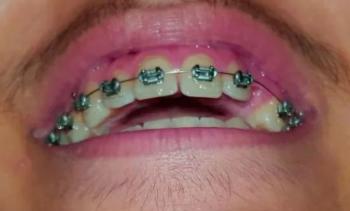
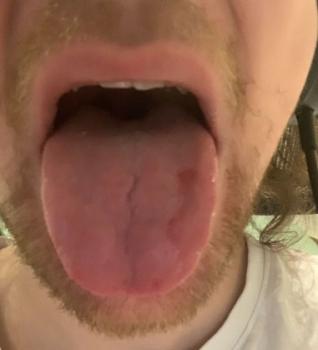
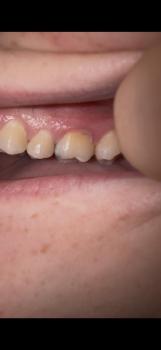
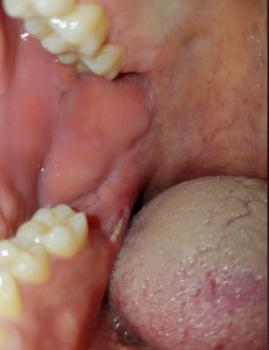
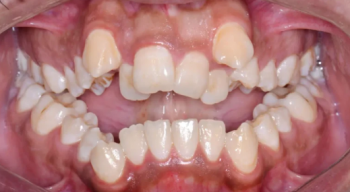
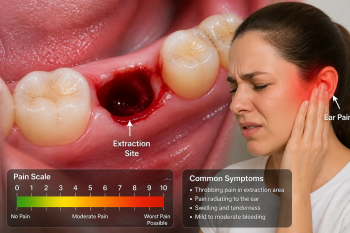
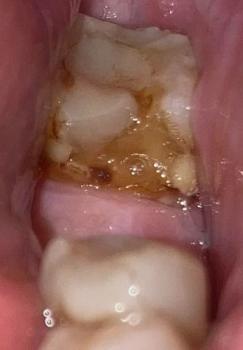
Patients with lower front gum inflammation may also experience tartar buildup, periodontal disease, gum abscesses, or tooth decay. Explore these related clinical case studies.

Other topics:
Other Dental Clinic