Missing Teeth? Find Your Smile Again.

Wisdom Tooth Pain: Symptoms, Causes & When to Get Them Removed
Wisdom teeth can be surprisingly emotional.
One day, everything feels normal. Then you wake up with a sore jaw, swollen gums, a bad taste in your mouth, or pain that seems to shoot toward your ear. You may wonder: “Is this just a normal wisdom tooth coming in—or is something wrong?”
For many people, wisdom teeth don't have enough room to erupt properly. When they become trapped beneath the gum or bone, they can create problems for themselves and the neighboring teeth.
The good news is that wisdom tooth pain is treatable, and knowing the warning signs can help you avoid a much bigger problem later.
What Is an Impacted Wisdom Tooth?
Wisdom teeth are the third molars at the very back of the mouth. They usually develop during the teenage years and early adulthood.
A wisdom tooth is impacted when it cannot fully erupt into a healthy, functional position.
It may become trapped:
- Under the gum
- Partially beneath the gum
- Against the neighboring molar
- Inside the jawbone
- At an abnormal angle
Some impacted wisdom teeth never cause symptoms. Others can become a recurring source of pain and infection.
Common Wisdom Tooth Problems
1. Pericoronitis: The Gum Around the Wisdom Tooth Becomes Inflamed
One of the most common problems occurs when a wisdom tooth partially erupts.
A flap of gum called an operculum can remain over part of the tooth. Food particles and bacteria can become trapped underneath it, creating an environment where inflammation and infection can develop.
You may notice:
- Pain or throbbing at the back of the mouth
- Swollen or tender gums
- Bad breath
- A foul taste
- Difficulty opening your mouth
- Pain extending toward the ear or jaw
- Swelling around the wisdom tooth
This can be extremely uncomfortable—and sometimes the pain seems to appear almost overnight.
2. Damage to the Neighboring Tooth
An impacted wisdom tooth can press against the second molar beside it.
Depending on its position, this may contribute to:
- Tooth decay
- Gum disease
- Bone loss
- Damage to the neighboring tooth
- Root resorption in some cases
This is one reason dentists evaluate both the wisdom tooth and the tooth next to it.
3. Cavities and Gum Disease
Wisdom teeth are difficult to reach with a toothbrush and dental floss.
When a wisdom tooth is partially erupted or positioned awkwardly, plaque can accumulate around it. The second molar can also become difficult to clean.
Over time, this can contribute to:
- Cavities
- Gum inflammation
- Periodontal pockets
- Localized bone loss
Sometimes the wisdom tooth isn't the tooth causing the greatest long-term concern—the second molar beside it may be at risk.
4. Cysts and Other Jaw Lesions
Less commonly, a fluid-filled cyst or another lesion can develop around an unerupted tooth.
These lesions may initially produce no symptoms. Larger lesions can potentially expand within the jaw and affect surrounding bone or structures.
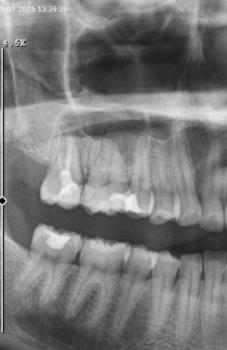
That is why dental X-rays are important when evaluating an impacted wisdom tooth.
When Should Wisdom Teeth Be Removed?
Not every wisdom tooth automatically needs to be extracted.
The decision depends on factors such as the tooth's position, symptoms, ability to maintain hygiene, damage to neighboring teeth, periodontal health, and findings on dental imaging.
Extraction may be considered when a wisdom tooth causes or contributes to:
| Problem | Why It Matters |
|---|---|
| Repeated pericoronitis | Recurring inflammation or infection can continue returning |
| Severe or non-restorable decay | The tooth may not be reasonably repairable |
| Damage to the second molar | The neighboring tooth may be placed at risk |
| Periodontal disease | Bone and gum support can deteriorate |
| Cyst or other pathology | Abnormal tissue may require surgical management |
| Significant symptoms | Repeated pain or infection can interfere with daily life |
| Interference with planned dental treatment | Removal may be recommended as part of a broader treatment plan |
A dentist or oral surgeon should evaluate the individual situation rather than assuming that every impacted wisdom tooth requires removal.
Why Wisdom Tooth Pain Can Feel So Severe
Wisdom tooth pain isn't always limited to one small spot.
Inflammation at the back of the jaw can make discomfort feel like it is spreading toward the:
- Ear
- Temple
- Jaw joint
- Throat
- Neck
The combination of swelling, inflammation, limited mouth opening, and pressure can make an ordinary day suddenly feel miserable.
And if you've ever tried to sleep with a throbbing wisdom tooth, you know how difficult it can be to ignore.
What Is Wisdom Tooth Extraction Really Like?
One of the biggest fears patients have is:
“Will it hurt?”
During an extraction, the goal of local anesthesia is to prevent sharp pain. However, you may still notice pressure, pushing, pulling, vibration, or unusual sounds.
That sensation can be surprising if nobody explains it beforehand.
Sedation options may also be available for appropriate patients, depending on the procedure, medical history, and treatment setting.
A good surgical team should explain what you are likely to feel before the procedure begins.
Recovery: What Patients Often Don't Expect
The extraction itself may be over relatively quickly, but recovery takes longer.
Swelling, jaw stiffness, and soreness can become more noticeable during the first several days. Eating may also be inconvenient because chewing around the surgical area can be uncomfortable.
Patients should follow their dentist or oral surgeon's specific postoperative instructions.
Common instructions may include:
- Keep the extraction area clean as directed
- Follow recommended pain-control instructions
- Eat soft foods initially
- Avoid smoking or vaping during the recommended healing period
- Avoid actions that can disturb the blood clot, such as unnecessary vigorous rinsing or spitting
- Attend follow-up appointments when recommended
What Is Dry Socket?
Dry socket, also called alveolar osteitis, can occur when the protective blood clot is lost or breaks down too early after extraction.
It can cause significant pain, often several days after the procedure, and the pain may radiate toward the ear or temple.
If pain becomes substantially worse after initially improving, contact your dentist or oral surgeon.
When Is Wisdom Tooth Pain an Emergency?
Seek urgent dental or medical evaluation if you develop:
- Rapidly increasing facial or jaw swelling
- Fever or chills
- Difficulty swallowing
- Difficulty breathing
- Significant difficulty opening your mouth
- Severe worsening pain
- Swelling extending into the face or neck
Difficulty breathing or swallowing with facial or neck swelling is an emergency.
The Emotional Side of Wisdom Tooth Treatment
There is another part of wisdom tooth care that doesn't always get discussed: fear.
Many patients worry about the procedure long before they sit in the dental chair. They imagine unbearable pain, frightening surgical sounds, severe swelling, or a complication they can't control.
Clear communication can make a tremendous difference.
Knowing what will happen, what sensations are normal, how long recovery may take, and exactly when to call for help can turn an intimidating experience into something much more manageable.
Bottom Line
Wisdom teeth aren't automatically a problem—but an impacted or partially erupted wisdom tooth can become one.
Persistent pain, swollen gums, bad taste, difficulty opening your mouth, repeated infections, or damage to the neighboring molar should not be ignored.
A dental examination and appropriate imaging can show how the wisdom tooth is positioned and whether treatment is necessary.
If your wisdom tooth is hurting today, don't simply wait for the pain to disappear. The important question isn't only “How do I stop the pain?”—it's “Why is this tooth hurting in the first place?”
Related Clinical Cases
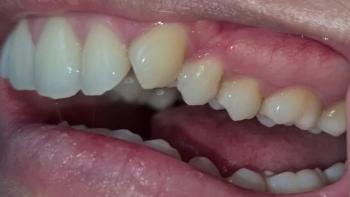
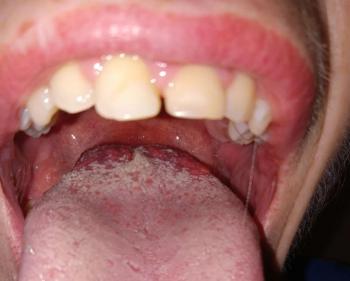
Patients with lower front gum inflammation may also experience tartar buildup, periodontal disease, gum abscesses, or tooth decay. Explore these related clinical case studies.




Other topics:
Other Dental Clinic