Dentures That Feel Natural, Look Beautiful.

Severe Tooth Decay From Excessive Sugar: Causes, Clinical Concerns, Treatment & Prevention
image hero:
Country:
Clinical Impressions and Concerns
-
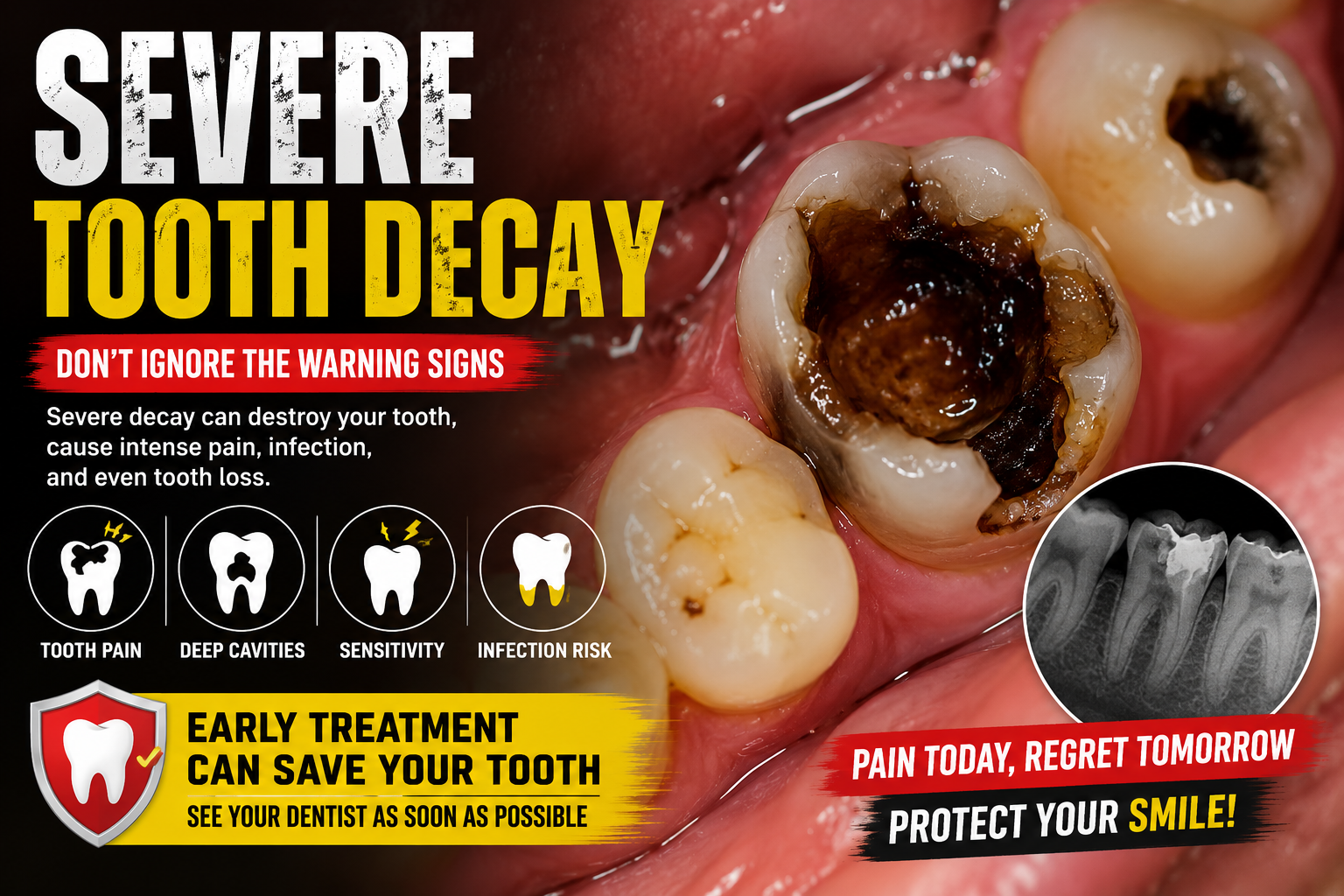
Extensive Coronal Destruction: The loss of a very large portion of the chewing surface (extensive cavitation) means the tooth has lost its primary mechanical integrity. Without sufficient natural tooth structure, remaining walls are highly vulnerable to catastrophic vertical fracture or splitting under normal chewing forces.
-
Advanced Caries vs. Staining: The dark brown or black coloration strongly points to deep-seated, chronic dental caries (tooth decay), though a definitive assessment requires a physical dental probe and a clinical tactile examination to differentiate softened, infected dentin from arrested decay or extrinsic staining.
-
Pulp/Nerve Involvement: Because the cavitation appears deep, bacteria and their byproducts are likely close to or already invading the dental pulp (the nerve and blood vessel center). This raises a high probability of irreversible pulpitis (inflammation of the nerve) or pulp necrosis (tissue death), which often presents as lingering sensitivity to hot, cold, or sweet stimuli, spontaneous throbbing pain, or tenderness to biting pressure.
Recommended Next Steps
-
Urgent Dental Evaluation: Schedule an appointment with a dentist as soon as possible. Delaying treatment increases the risk of acute infection, severe pain, or progression into a periapical abscess (a pocket of pus at the root tip).
-
Diagnostic Imaging: The dentist will need to take periapical and/or panoramic X-rays to assess the depth of the decay relative to the pulp chamber, check for bone loss, and evaluate the health of the roots and surrounding jawbone.
-
Potential Treatment Pathways:
-
Root Canal Therapy: If the pulp is irreversibly inflamed or infected, a root canal will be necessary to remove the compromised nerve tissue, clean the canals, and seal them.
-
Coronal Restoration (Core Build-up and Crown): Because so much of the chewing surface is missing, a simple filling will not suffice. The tooth will typically require a protective core build-up followed by a full-coverage dental crown (or an onlay/endocrown) to restore function and prevent fracture.
-
Extraction: In the event that the decay extends below the bone level or the root is fractured beyond repair, the tooth may be non-restorable, necessitating extraction and subsequent consideration for replacement options (such as an implant or bridge).
-
Related Clinical Cases
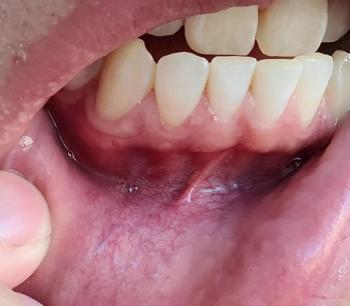
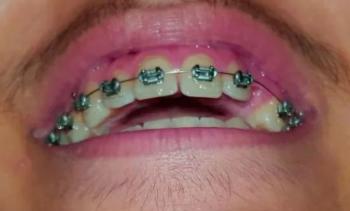
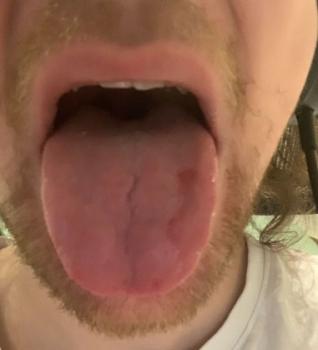
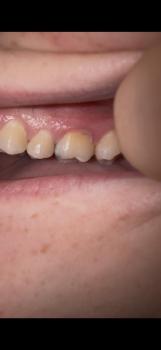
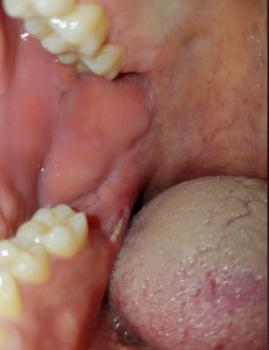
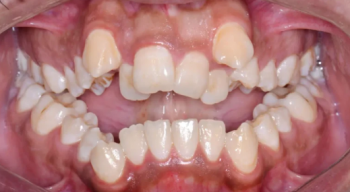
Patients with lower front gum inflammation may also experience tartar buildup, periodontal disease, gum abscesses, or tooth decay. Explore these related clinical case studies.


Other topics:
Other Dental Clinic