Modern Dentistry, Timeless Smiles.

Dental Implants Cost: California vs. Philippines — What Patients Should Know Before Choosing
Dental implants can restore missing teeth, but the cost can vary dramatically depending on where treatment is performed. For patients comparing California with the Philippines, the decision involves much more than the advertised implant price.
California generally has higher dental costs because of clinic overhead, professional fees, laboratory expenses, and other operating costs. The Philippines can offer substantially lower treatment fees, particularly for patients considering multiple implants or full-mouth rehabilitation.
However, the lowest price is not necessarily the best value. Patients should compare the complete treatment plan, implant system, dentist's qualifications, diagnostic technology, prosthetic materials, travel requirements, and long-term follow-up before making a decision.
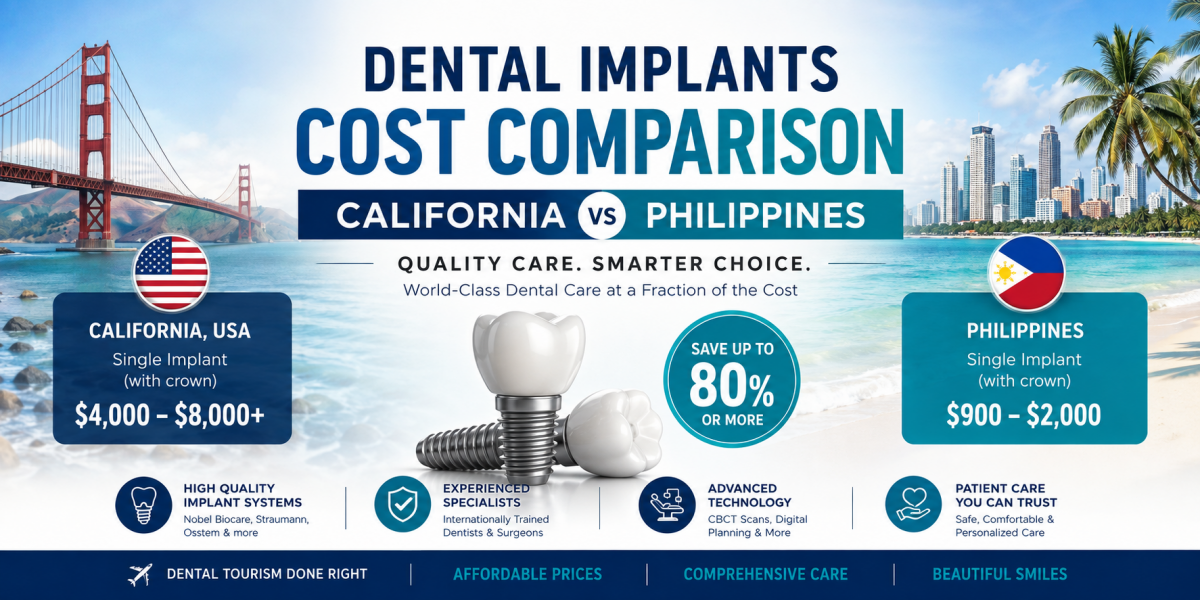
California vs. Philippines Dental Implant Cost
Approximate private-pay prices can vary considerably from one clinic and patient to another. A complex case may require additional procedures such as tooth extraction, bone grafting, sinus augmentation, temporary teeth, or sedation.
| Treatment | California — Approximate Range | Philippines — Approximate Range |
|---|---|---|
| Single implant + crown | $4,000–$8,000+ | $900–$2,000+ |
| Bone grafting | $600–$3,000+ | $150–$800+ |
| Multiple implants | Highly variable | Highly variable |
| Full-mouth / All-on-4 / All-on-6 | $30,000–$90,000+ | $8,000–$28,000+ |
These figures are illustrative ranges rather than guaranteed prices. A proper consultation and diagnostic examination are necessary before a dentist can provide an accurate treatment estimate.
Why Is California More Expensive?
Dental implant treatment in California may include costs associated with:
-
Specialist consultation
-
CBCT or other 3D imaging
-
Surgical planning
-
Implant surgery
-
Bone grafting
-
Abutments
-
Temporary restorations
-
Dental laboratory fees
-
Custom crowns or bridges
-
Sedation, when appropriate
-
Follow-up appointments
The quoted price may also differ depending on whether treatment is performed by a general dentist, periodontist, oral and maxillofacial surgeon, or prosthodontist.
Why Can Dental Implants Cost Less in the Philippines?
The Philippines has a lower overall operating-cost structure than California. Dental practices may have lower facility expenses, staffing costs, laboratory costs, and professional fees.
Major cities such as Cebu and Manila also have established private dental practices serving both local patients and international visitors.
But a lower price should never be interpreted as proof that every clinic provides the same quality of care.
A patient should investigate the actual dentist and clinic, not simply the country where treatment is performed.
What Should You Compare Besides Price?
1. Who Is Performing the Surgery?
Ask about the dentist's education, postgraduate training, implant experience, and the number and type of implant cases they routinely perform.
For complex cases involving significant bone loss, multiple implants, sinus procedures, or full-mouth rehabilitation, patients may need treatment involving several dental specialties.
2. Which Implant Brand Is Being Used?
Patients should receive the exact manufacturer and implant system being proposed.
Recognized implant systems may have established documentation, compatible restorative components, and long-term clinical evidence. However, brand name alone does not guarantee treatment success.
Ask:
-
What implant system will be used?
-
What is the exact implant model?
-
Is the implant genuine and traceable?
-
Who manufactures the abutment?
-
What material will be used for the final crown?
-
Will I receive implant documentation after treatment?
Keeping these records can become particularly important if future maintenance is required.
3. Is a CBCT Scan Included?
Three-dimensional imaging can be an important part of implant planning, particularly when the available bone, nerves, sinus anatomy, or implant positioning needs detailed evaluation.
A dentist may use CBCT imaging to assess:
-
Bone height and width
-
Important anatomical structures
-
Sinus position
-
Tooth roots
-
Existing infection
-
Potential implant positions
The imaging should be interpreted as part of a complete clinical examination rather than used as a substitute for one.
4. How Much Time Will Treatment Take?
This is one of the biggest differences between ordinary dental treatment and implant treatment.
An implant is not simply placed and immediately finished with a permanent crown in every case.
Depending on the patient's condition and treatment plan, the process may involve:
Consultation → Imaging → Extraction, if necessary → Bone grafting, if necessary → Implant placement → Healing/osseointegration → Abutment/restoration → Final crown or prosthesis
Osseointegration can take several months, although the exact timeline varies according to the patient, implant location, bone quality, surgical approach, and restoration plan.
Dental Tourism Requires Careful Scheduling
A patient traveling from California to the Philippines may need more than one trip.
For example:
Trip 1: Examination, imaging, extraction or grafting, and implant placement.
Healing period: Several months of healing and routine dental maintenance.
Trip 2: Implant assessment, impressions or digital scanning, and placement of the definitive restoration when clinically appropriate.
Some cases can follow different timelines, so patients should obtain a written treatment schedule before purchasing flights.
The Hidden Cost of Dental Tourism
The advertised dental fee is only one part of the total cost.
Patients should also consider:
-
Round-trip airfare
-
Hotel or accommodation
-
Local transportation
-
Meals
-
Time away from work
-
Companion travel
-
Additional appointments
-
Emergency return visits
-
Treatment required if complications occur
-
Follow-up care after returning to the United States
A treatment plan that appears dramatically cheaper on paper may become less attractive once travel and contingency costs are included.
For extensive implant treatment, however, the overall cost can still be substantially lower in some cases.
Example: A California Patient Considering Treatment in the Philippines
Consider a hypothetical patient with several missing posterior teeth who requires multiple implants and localized bone augmentation.
A California treatment plan might reach approximately $24,000, depending on the number of implants, grafting requirements, surgical fees, and final restorations.
A Philippine treatment plan could potentially be considerably less expensive.
However, the correct comparison should not be:
$24,000 vs. $6,000
Instead, compare:
Complete California treatment cost
versus
Philippine dental treatment + airfare + accommodation + transportation + follow-up + contingency costs
For example, a hypothetical two-trip treatment plan might look like:
Trip 1
-
Comprehensive examination
-
CBCT imaging
-
Treatment planning
-
Necessary extractions
-
Bone grafting where indicated
-
Implant placement
-
Post-operative examinations
Healing Period
The patient returns home and continues appropriate dental hygiene and maintenance. Any concerns should be communicated promptly to the treating dental team.
Trip 2
After the appropriate healing period:
-
Implant evaluation
-
Digital impressions or conventional impressions
-
Abutment/restorative procedures
-
Definitive crowns or prosthesis
-
Final bite and function evaluation
The final financial result depends on the actual treatment plan and travel expenses.
This is a hypothetical example, not a guarantee of treatment cost or outcome.
California: The Biggest Advantage Is Continuity of Care
For many patients, the primary advantage of staying in California is not simply convenience.
It is continuity of care.
If a patient develops swelling, discomfort, a loose component, bite problems, prosthetic complications, or another concern, the treating team is geographically nearby.
Patients can also establish a long-term relationship with the dentist who performed the treatment.
This can be especially valuable for complicated implant cases requiring maintenance over many years.
Philippines: The Biggest Advantage Can Be Cost
For carefully selected patients, the Philippines may offer a significant financial advantage.
Many Filipino dentists receive extensive professional training, and major urban centers have modern private dental practices equipped with technologies such as digital radiography and CBCT imaging.
English is also widely used in professional and healthcare settings.
But patients should still perform their own due diligence.
Do not choose a clinic simply because it has excellent reviews or the lowest advertised price.
What About Online Patient Reviews?
Reviews can help patients identify patterns in communication, scheduling, cleanliness, customer service, and overall experience.
But reviews have limitations.
A five-star review cannot tell you whether:
-
The implant was correctly positioned
-
Bone quality was properly assessed
-
The implant system was appropriate
-
The patient's bite was correctly managed
-
Long-term maintenance was successful
Conversely, one negative review does not necessarily prove that a dentist provides poor clinical care.
Look for consistent patterns and ask the clinic for appropriate information about the dentist's qualifications, treatment process, materials, and follow-up policy.
Questions to Ask Before Paying a Deposit
Before traveling internationally for implant treatment, ask the clinic:
-
Who will perform the implant surgery?
-
What are the dentist's implant qualifications and experience?
-
What implant manufacturer and model will be used?
-
Is CBCT imaging included?
-
Will I receive a written treatment plan?
-
What happens if bone grafting is required?
-
How long should I remain in the Philippines after surgery?
-
How many visits will probably be necessary?
-
What happens if an implant fails?
-
Who handles complications after I return to California?
-
Will you provide implant passports or component records?
-
What is included in the quoted price?
-
What costs are excluded?
-
What type of final crown or prosthesis is included?
-
What maintenance will I need after treatment?
Is It Better to Get Dental Implants in California or the Philippines?
There is no universal answer.
California may make more sense for patients who prioritize proximity, easier follow-up, and long-term continuity of care.
The Philippines may make financial sense for some patients who have extensive treatment needs and are prepared to manage international travel, multiple appointments, and the logistics of follow-up.
The important question is not simply:
“Where are dental implants cheaper?”
The better question is:
“Where can I receive appropriate implant treatment from a qualified dental team with a clear plan for surgery, restoration, maintenance, and complications at a total cost I can realistically manage?”
Final Dentist's Advice
Dental implants are a long-term medical and dental investment. A lower treatment price can be attractive, but quality of diagnosis, surgical planning, implant positioning, restoration design, oral hygiene, and maintenance matter far more than geography alone.
If you are considering dental tourism, obtain your records and diagnostic images, compare complete treatment plans, verify the implant system, understand the healing timeline, and have a realistic plan for follow-up care after returning home.
Do not choose an implant clinic based solely on price. Choose based on qualifications, evidence-based treatment planning, transparency, communication, and the ability to provide appropriate long-term care.
Medical and dental information in this article is for educational purposes only and does not replace an examination by a qualified dentist. Implant treatment is individualized, and costs, timelines, risks, and outcomes vary from patient to patient.
Related Clinical Cases
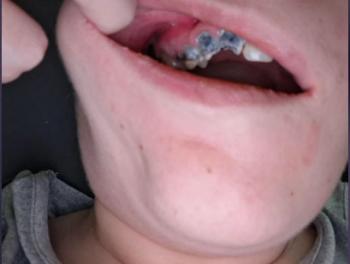
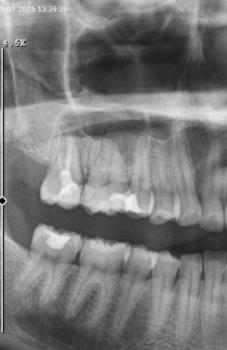
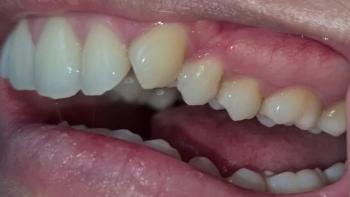
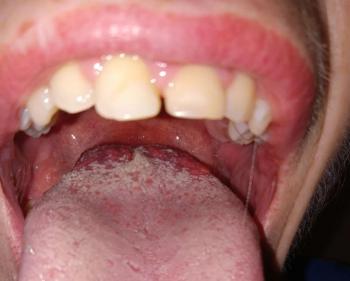
Patients with lower front gum inflammation may also experience tartar buildup, periodontal disease, gum abscesses, or tooth decay. Explore these related clinical case studies.




Other topics:
Other Dental Clinic