Strong Teeth, Fresh Breath, Brighter You.

Are Dental Implants Covered in Iceland? 2026 Reimbursement, Eligibility, and Patient Guide
image hero:
Country:
One of the most common questions we hear from patients considering dental implants in Iceland is:
"Will Iceland Health pay for my dental implant?"
The answer is not simply yes or no.
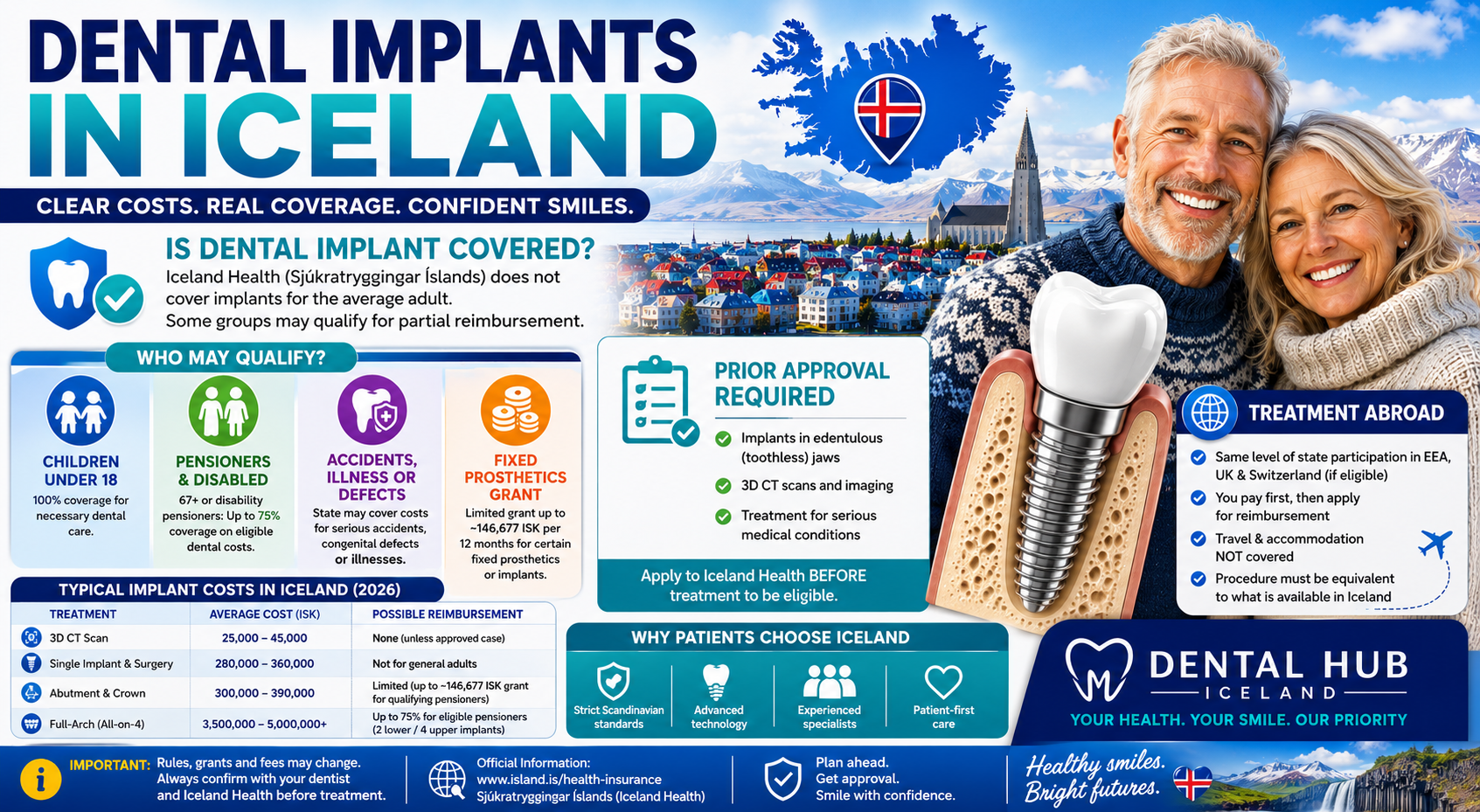
Iceland's public health insurance system, Iceland Health (Sjúkratryggingar Íslands), provides dental cost participation for specific groups and circumstances. Routine adult dental treatment is not universally covered, but important exceptions exist for children, pensioners, people with certain disabilities or chronic illnesses, and patients whose dental problems result from qualifying congenital defects, accidents, or diseases.
For dental implants specifically, the rules depend on the patient's circumstances and whether the jaw is dentate—meaning natural teeth remain—or edentulous, meaning no natural teeth remain in that jaw.
Another important point for 2026 is that the commonly quoted figure of 153,108 ISK should not be presented as the current standard implant grant without qualification. The current Iceland Health information states a maximum of 146,677 ISK for qualifying dental implants or fixed prostheses in a dentate jaw in front of the 12-year molars during each 12-month period.
The following guide explains the current framework and how patients should approach the financial planning of implant treatment.
1. Does Iceland Health Cover Dental Implants?
For the average working-age adult requiring a routine single-tooth implant, there is no universal public reimbursement covering the complete implant treatment.
That does not mean that Iceland Health never participates in dental implant costs.
The current Iceland Health framework specifically provides dental participation for:
-
children;
-
pensioners;
-
certain people with serious consequences of congenital defects;
-
qualifying accident-related dental conditions;
-
certain diseases and medical circumstances;
-
specific implant-supported treatment for eligible pensioners.
Therefore, the correct statement for patients is:
Dental implants are not universally covered for adults in Iceland, but specific patients and treatment categories can qualify for financial participation from Iceland Health.
This is much more accurate than saying that all adult patients receive zero reimbursement.
2. Children Under 18
Children receive substantially greater dental support than ordinary adult patients.
Iceland Health states that it pays 100% of dental costs for children up to age 18 for covered necessary dental treatment under the applicable agreement and limitations. There is also an annual dental fee of 3,500 ISK for children registered with a dentist.
Covered general dental services include:
-
examinations;
-
diagnosis;
-
X-rays;
-
regular check-ups;
-
dental procedures;
-
root canal treatment;
-
periodontal treatment;
-
tooth extraction.
This is important because describing the system simply as "free dentistry for children" can overlook the specific rules and annual fee.
3. Young Adults With Certain Congenital Conditions, Diseases, or Accidents
There is also a special category for young adults who have serious dental consequences resulting from:
-
birth defects;
-
diseases;
-
accidents occurring before age 18.
Iceland Health states that necessary treatment in these circumstances can receive 100% participation under the applicable rules, with authorization valid until the individual reaches age 30. The dentist must submit the application electronically before treatment begins.
This can be particularly important for patients whose dental reconstruction needs are related to a significant medical or developmental condition rather than ordinary tooth loss.
4. Pensioners and Disability Status
Iceland Health defines pensioners for its dental participation rules as including:
-
people aged 67 or older; and
-
individuals with more than 75% disability.
For eligible pensioners, Iceland Health pays 75% of covered general dental costs according to the applicable agreement and limitations.
General dental treatment includes services such as:
-
examination;
-
diagnosis;
-
X-rays;
-
routine dental treatment;
-
root canal treatment;
-
periodontal treatment;
-
tooth extraction.
However, patients should not automatically assume that the same 75% participation applies to every implant component.
Dental implants have their own reimbursement rules.
5. Dental Implants in a Dentate Jaw
This is one of the most important distinctions in the Icelandic system.
A dentate jaw is a jaw in which one or more natural teeth remain.
For qualifying pensioners, Iceland Health states that participation may be available for:
-
dental implants; or
-
other fixed dental prostheses
in a dentate jaw, specifically in front of the 12-year molars.
The current maximum stated by Iceland Health is:
Up to 146,677 ISK per 12-month period
The 12-month period is calculated according to the treatment date.
The dentist reduces the patient's bill by the applicable grant amount, so this is not simply a later cash refund paid directly to the patient.
Example
Suppose a qualifying pensioner's complete implant-supported tooth costs substantially more than 146,677 ISK.
The patient should not assume that Iceland Health will pay 75% of the entire invoice.
Instead, the applicable implant/fixed-prosthesis grant can reduce the bill by the eligible amount, subject to the applicable rules.
The remaining balance is the patient's responsibility.
6. The Ten-Year Rule
There is another important limitation that patients should understand before planning replacement work.
Iceland Health states that it does not contribute to restoration of dental implants or fixed dentures when less than 10 years have passed since an implant or fixed denture was placed on the same tooth or dental position.
This means patients should retain their dental records.
Keep:
-
implant manufacturer;
-
implant model;
-
implant dimensions;
-
treatment date;
-
crown information;
-
abutment information;
-
radiographs;
-
treatment invoices.
These records can become important when future reimbursement eligibility is assessed.
7. Dental Implants in a Completely Toothless Jaw
The reimbursement situation changes when the patient has no natural teeth remaining in the jaw.
This is called an edentulous jaw.
For qualifying pensioners, Iceland Health states that it pays 75% of the pensioner's cost for insertion of dental implants into an edentulous jaw in support of dentures, subject to approval and the applicable rules. It may also participate in the cost of fixed dentures.
If the application is approved, Iceland Health states that participation can apply to the first:
-
2 implants in the lower jaw, or
-
4 implants in the upper jaw.
This does not mean that Iceland Health automatically pays 75% of any full-arch "All-on-4" package advertised by a private clinic.
The eligible amount is determined under Iceland Health's rules and applicable fee framework.
8. Prior Approval Is Critical for Edentulous Implant Treatment
For implant treatment in an edentulous jaw, the dentist must apply for Iceland Health participation and wait for approval before treatment begins.
This is a critical financial safeguard.
The correct sequence is:
Clinical examination → treatment plan → application → Iceland Health approval → treatment
not:
Treatment → reimbursement application → hope for approval
If prior approval is required and the patient proceeds without obtaining it, the reimbursement position can be affected.
Iceland Health's 2024 guidance specifically confirmed that pre-approval requirements for certain implant treatment apply to dentists in Iceland and to applicable treatment abroad.
9. Is a CBCT Scan Automatically Covered?
Patients should be careful with statements claiming that every implant patient must have a CBCT scan or that every CBCT scan automatically qualifies for reimbursement.
CBCT is an important diagnostic tool in implant dentistry, but whether it is clinically necessary depends on the patient's anatomy, treatment plan, and surgical requirements.
A CBCT may be used to evaluate:
-
bone volume;
-
implant positioning;
-
nerve anatomy;
-
sinus anatomy;
-
ridge dimensions;
-
surgical risks.
The clinical decision to order CBCT and the separate question of whether Iceland Health participates in its cost should not be confused.
Iceland Health publishes specific rules governing CBCT participation, so patients should ask their dentist to confirm the applicable reimbursement category before assuming the scan will be covered.
10. Dental Treatment After Accidents, Illness, or Congenital Defects
Iceland Health also provides participation in dental costs related to qualifying:
-
congenital defects;
-
accidents;
-
diseases.
The important word is qualifying.
Not every dental problem associated with a medical condition automatically results in complete reimbursement.
The dentist may need to provide:
-
diagnosis;
-
clinical justification;
-
imaging;
-
treatment plan;
-
documentation of the underlying condition;
-
estimated costs.
In cases requiring authorization, approval should be obtained before treatment begins.
11. Chronically Ill and Other Special Categories
Iceland Health also has additional dental participation rules for certain chronically ill patients and adults with intellectual disabilities.
For example, Iceland Health states that certain chronically ill individuals can receive 100% participation in general dentistry according to the applicable tariff, subject to the defined eligibility requirements.
Similarly, individuals aged 18 and older with qualifying intellectual disabilities can receive 100% participation for general dentistry according to the applicable price list.
These categories demonstrate why a patient's individual circumstances matter.
A general statement such as "adults pay everything themselves" is therefore too broad for a professional Dental Hub article.
12. What Does the Patient Actually Pay?
The patient's financial responsibility can be summarized as:
Total Dental Fee − Iceland Health Participation = Patient Out-of-Pocket Cost
But the calculation depends on the treatment category.
Example: Ordinary Working-Age Adult
Implant treatment: 600,000 ISK
General public implant reimbursement: Not universally available
Patient responsibility: Potentially the majority or entire eligible private fee
Example: Qualifying Pensioner — Dentate Jaw
Complete implant treatment: 600,000 ISK
Potential Iceland Health grant: Up to the applicable maximum, currently 146,677 ISK for qualifying work
Remaining balance: Patient pays the remainder
These are illustrative calculations, not individual reimbursement determinations.
13. Why Patients Should Obtain an Itemized Dental Quote
Before accepting an implant treatment plan, ask the clinic to separate:
| Treatment component | Ask whether included |
|---|---|
| Examination | Yes / No |
| X-rays | Yes / No |
| CBCT | Yes / No |
| Extraction | Yes / No |
| Bone graft | Yes / No |
| Sinus lift | Yes / No |
| Implant fixture | Yes / No |
| Implant surgery | Yes / No |
| Abutment | Yes / No |
| Temporary restoration | Yes / No |
| Final crown | Yes / No |
| Laboratory fee | Yes / No |
| Follow-up | Yes / No |
| Maintenance | Yes / No |
This is particularly important because the word "implant" can refer to only the titanium fixture, while the patient's actual treatment involves surgery and a prosthetic tooth.
14. Dental Treatment Abroad
Some Icelandic patients consider dental treatment in another country because private dental treatment can be expensive.
Iceland Health states that insured individuals can seek qualifying dental treatment within the EEA, United Kingdom, and Switzerland, with payment participation assessed under the Icelandic framework.
However, there are several important conditions.
First: The foreign treatment must qualify
Iceland Health assesses participation based on Icelandic laws, regulations, applicable agreements, and fee schedules—not simply according to the price charged by the foreign clinic.
Second: The patient normally pays first
For dental treatment abroad, the patient pays the foreign provider and then submits the required documentation for reimbursement.
Third: Some treatment requires prior approval
Dental implants in an edentulous jaw are among the treatments for which prior approval is required.
15. Travel Expenses Are Not the Same as Dental Reimbursement
This is another area where patients can become confused.
For ordinary dental treatment abroad, Iceland Health states that travel expenses and accommodation are not reimbursed as part of the dental payment participation framework.
Therefore, a patient comparing Reykjavík with a foreign clinic should calculate:
Dental treatment
plus
Airfare
plus
Hotel
plus
Transportation
plus
Meals
plus
Time away from work
plus
Potential local follow-up
before deciding whether international treatment actually saves money.
16. How Long Does Reimbursement Take?
Processing time can be significant.
Iceland Health currently lists:
-
Domestic dental invoices: approximately 7–10 business days;
-
General domestic applications: approximately 6–8 weeks;
-
More extensive domestic applications: potentially 16–24 weeks;
-
Foreign dental expenses: approximately 16–24 weeks;
-
Dental treatment abroad requiring an application: approximately 4–6 weeks.
These are average processing times and can change.
Iceland Health also notes that delays can occur, including during holiday periods.
Practical advice
If you are planning expensive dental treatment abroad, do not build your financial plan around receiving reimbursement immediately.
Maintain enough funds to cover the treatment while the reimbursement process is completed.
17. What Documentation Should Patients Keep?
For treatment abroad, Iceland Health requires appropriate documentation, including itemized invoices and payment confirmation, and it can request additional information.
Patients should request documentation in English whenever possible.
Keep:
-
itemized invoice;
-
payment receipt;
-
clinical diagnosis;
-
treatment plan;
-
X-rays;
-
CBCT records when appropriate;
-
implant identification;
-
surgical report;
-
prosthetic information;
-
treatment dates;
-
dentist information.
Iceland Health notes that if documents need translation, translation costs are not reimbursed.
18. What About Private Dental Insurance?
Because Iceland Health does not universally cover routine adult implant treatment, patients may investigate additional financial options.
These can include:
-
private dental insurance;
-
employer benefits;
-
union-related sickness funds;
-
clinic payment plans;
-
staged treatment.
However, coverage terms vary significantly.
Patients should not assume that a union sickness fund or private insurer covers implants without checking the current policy or benefit rules.
The question to ask is:
"How much will my specific implant procedure be reimbursed under my current plan?"
Get the answer in writing before treatment.
19. Clinical Case: Working-Age Adult With One Missing Tooth
Patient
A 46-year-old patient loses a lower molar.
Clinical examination shows:
-
healthy adjacent teeth;
-
adequate bone;
-
no active infection;
-
stable periodontal health.
The dentist recommends:
Diagnosis → appropriate imaging → implant placement → healing → abutment → crown
The patient should ask Iceland Health whether any reimbursement category applies.
For an ordinary working-age adult without a qualifying special circumstance, the patient should plan for a substantial private payment.
The important financial question is therefore:
What is the complete treatment price, and does any Iceland Health participation apply to my specific case?
20. Clinical Case: Pensioner With a Missing Tooth
Consider a 70-year-old pensioner with a missing tooth in the front part of the jaw.
The patient may qualify for the specific implant/fixed-prosthesis grant applicable to qualifying pensioners.
The current published maximum is 146,677 ISK during each 12-month period for qualifying implants or fixed prostheses in a dentate jaw in front of the 12-year molars.
The dentist applies the applicable participation directly to the bill.
This is different from a general 75% reimbursement of the entire implant.
21. Clinical Case: Pensioner With a Completely Edentulous Jaw
Now consider a pensioner with no natural teeth remaining in the upper jaw.
An implant-supported denture may be clinically appropriate.
Iceland Health states that, when the application is approved, participation can apply to the first four implants in the upper jaw.
The dentist must apply and obtain approval before treatment begins.
This is an example of why a patient's dental anatomy and treatment category can dramatically change the reimbursement calculation.
22. Do Not Confuse Reimbursement With Free Treatment
Even when Iceland Health participates, patients should understand that reimbursement does not necessarily make an implant treatment free.
A patient may still have substantial expenses for:
-
advanced prosthetics;
-
premium materials;
-
laboratory work;
-
additional surgical procedures;
-
bone grafting;
-
sinus augmentation;
-
treatment outside the eligible category;
-
maintenance.
Therefore, always ask:
"What will I personally pay after Iceland Health participation?"
That is the number that matters for household budgeting.
23. How I Would Advise an Icelandic Implant Patient
As a dental expert perspective, I recommend following this sequence:
Step 1 — Establish the diagnosis
Do not begin with the question:
"How much is an implant?"
Begin with:
"What is the best treatment for my dental condition?"
Step 2 — Obtain the complete treatment plan
Ask for all surgical and prosthetic components.
Step 3 — Determine eligibility
Ask the dentist whether your case qualifies for Iceland Health participation.
Step 4 — Confirm the amount
Do not rely on an estimated percentage.
Ask:
"How many ISK will Iceland Health contribute?"
Step 5 — Confirm approval requirements
If the treatment requires prior approval, obtain it before treatment begins.
Step 6 — Compare alternatives
Consider:
-
local treatment;
-
bridge;
-
removable prosthesis;
-
implant;
-
staged treatment;
-
qualifying treatment abroad.
Step 7 — Calculate the true out-of-pocket cost
Do not compare advertised prices alone.
24. Final Dental Hub Assessment
The statement that "Iceland does not cover dental implants" is incomplete.
A more accurate 2026 description is:
Routine adult dental implants are not universally covered by Iceland Health, but specific groups and treatment circumstances qualify for dental cost participation under Icelandic rules.
The most important categories include:
Children: broad dental participation under the applicable agreement.
Pensioners: 75% participation for covered general dentistry, with separate rules for implants and fixed prostheses.
Qualifying congenital defects, accidents, and diseases: potentially substantial participation when the statutory conditions are met.
Dentate-jaw implants for qualifying pensioners: grant of up to 146,677 ISK per 12-month period under the current published rules.
Edentulous-jaw implants for qualifying pensioners: 75% participation subject to approval and the applicable limits, including the first two lower-jaw or four upper-jaw implants when approved.
Treatment abroad: possible participation within the EEA, UK, and Switzerland under the applicable Icelandic rules, but patients generally pay first and seek reimbursement afterward; travel and accommodation are not part of ordinary dental reimbursement.
25. The Most Important Advice for Patients
Before you schedule implant surgery, ask your dentist these six questions:
-
Do I qualify for Iceland Health participation?
-
How many ISK will Iceland Health contribute?
-
Does my treatment require prior approval?
-
What is my complete out-of-pocket cost?
-
Which parts of treatment are not covered?
-
If I travel abroad, will my specific treatment qualify for reimbursement?
Do not rely on an old reimbursement figure, an online advertisement, or a social-media comment.
Iceland Health's rules and fee schedules can change, so patients should verify the current position before committing to treatment. Iceland Health publishes its current dental fee schedule, including the dental treatment tariff effective from January 1, 2026.
Bottom Line
Dental implants in Iceland are not universally free, but neither are they universally excluded from public financial participation.
The patient's age, disability status, medical circumstances, dental condition, jaw status, treatment location, and specific procedure can all affect eligibility.
For an expensive implant procedure, the safest approach is:
Diagnosis → written treatment plan → reimbursement assessment → prior approval when required → treatment.
That sequence protects the patient from making a major financial decision based on an incorrect assumption about government coverage.
Official Iceland Health References
Medical and financial disclaimer: This Dental Hub article is for educational purposes and does not determine an individual's eligibility for Iceland Health reimbursement. Dental treatment eligibility, clinical necessity, reimbursement, and prior-approval requirements must be confirmed with the treating dentist and Iceland Health before treatment begins.
Related Clinical Cases
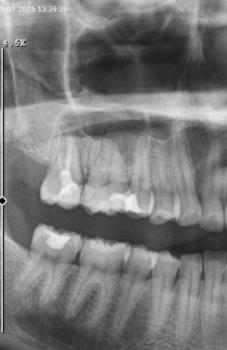
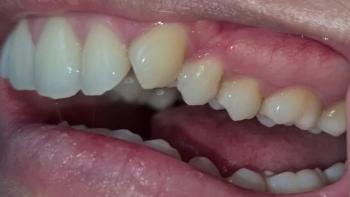
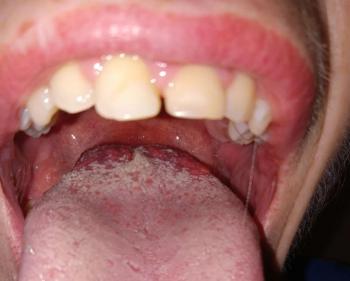
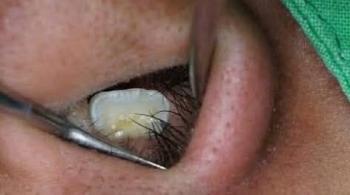
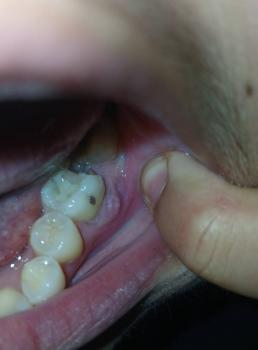
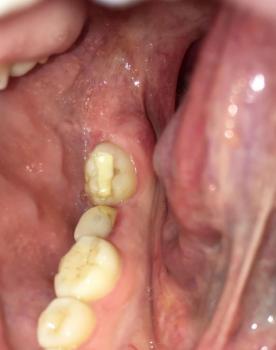
Patients with lower front gum inflammation may also experience tartar buildup, periodontal disease, gum abscesses, or tooth decay. Explore these related clinical case studies.


Other topics:
Other Dental Clinic