
Building Confidence One Smile at a Time.
How Many Root Canals Can a Tooth Have? Understanding 3, 4, 5, and 6-Canal Molars and Why Hidden Canals Cause Root Canal Failure
podcast audio:
Understanding the Layers of Root Canal Complexity
Think of a tooth like a tree.
- The crown is the top of the tree.
- The roots are underground.
- The canals are like tunnels running through the roots on your teeth.
- Smaller accessory canals are like side branches just image vividly so it will be easy to understand.
A dentist must locate, clean, disinfect, and seal every significant canal. Missing even one infected canal can allow bacteria to survive and cause persistent infection.
Severe Tartar on Lower Front Teeth: Hidden Gum Disease, Bone Loss Risk, Treatment Process & 14-Day Healing Timeline
Severity:
Teeth Problems:
I examined the photograph at 100% resolution and focused especially on the circled lower-front region. This is a clinical-photo assessment, not a definitive diagnosis; periodontal probing and appropriate X-rays are needed to determine whether there is bone or attachment loss.
Dental X-Ray Case Analysis: Severe Tooth Crowding, Eruption Problems, and What Happens If Treatment Is Delayed 14 Days
Severity:
Teeth Problems:
The image appears to be an anterior dental occlusal radiograph, likely showing a developing/mixed-dentition situation. However, an X-ray alone cannot provide a definitive diagnosis or replace an in-person examination.
1. What I can see
The most important finding is crowding/overlap of the anterior teeth with developing or unerupted teeth positioned behind/among the erupted teeth.
Lower Teeth Calculus and Floor-of-Mouth Lesion: Comprehensive Dental Case Analysis and 14-Day Treatment Guide
Severity:
Teeth Problems:
Full Dental Case Analysis
1. Overall Photographic Assessment
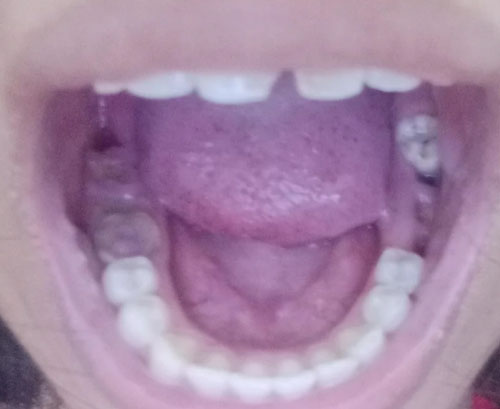
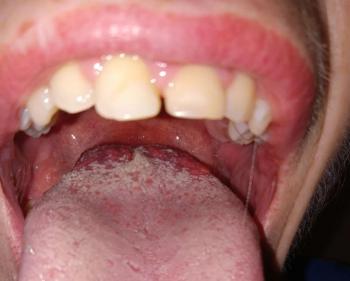
The photograph provides a good view of the lower teeth, tongue, floor of the mouth, and surrounding oral tissues.
The most noticeable dental finding is a visible accumulation of yellowish to brownish material along the tongue-facing surfaces of the lower anterior teeth. This appearance is compatible with dental calculus, commonly called tartar.
There also appears to be localized gingival irritation around the lower teeth.